In an era defined by viral misinformation, corporate spin, media manipulation, and political demagoguery, truth is not just an abstract ideal—it is a battleground. To build a more just world, movement leaders and organizers must ground their campaigns in empirical reality and unshakeable logic.
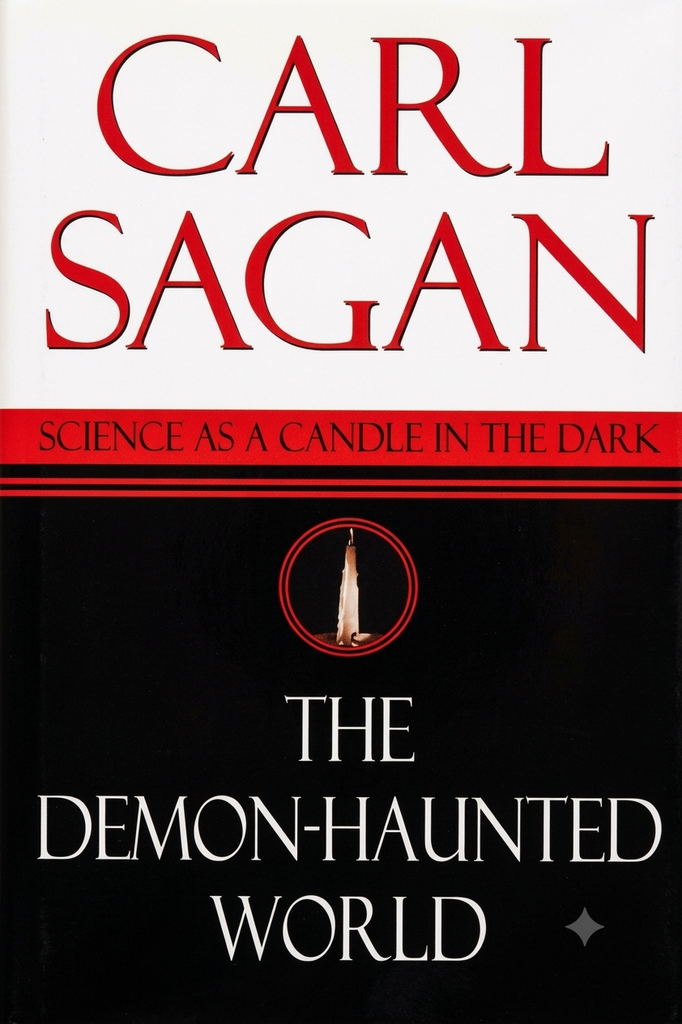
Carl Sagan’s 1995 masterwork, The Demon-Haunted World: Science as a Candle in the Dark, stands as one of the most vital manifestos for critical thinking ever written. While framed around scientific skepticism, its core message is profoundly radical: without the tools to question authority and spot deception, a society cannot remain free.
The Central Threat: Credulity and Power
At the heart of Sagan’s book is a warning about what happens when critical faculties decline. Sagan demonstrates that superstition, pseudoscience, and unchecked conspiracy theories are not harmless hobbies—they are vulnerabilities that powerful actors exploit.
When populations lose the ability or willingness to demand evidence, they become easily manipulated by demagogues, exploited by corporations, and distracted from systemic injustices. Sagan reminds us that the struggle against “demons”—whether historic witch hunts or modern disinformation campaigns—is ultimately a struggle against ignorance weaponized for power and profit.
The Baloney Detection Kit: An Organizer’s Defense System
For activists, the centerpiece of Sagan’s work is Chapter 12: “The Art of Baloney Detection.” Sagan equips readers with a practical toolkit for dissecting flawed arguments, propaganda, and bad-faith claims.
Key rules from the kit every organizer should deploy include:
- Demand Independent Confirmation: Claims must be verified by independent sources, especially when coming from institutions of power.
- Question Authority: Arguments from authority carry little weight. Power does not guarantee truth; evidence does.
- Encouraging Debate: Substantive, evidence-based debate among knowledgeable viewpoints strengthens a movement; dogma weakens it.
- Spin Multiple Hypotheses: Don’t settle for the convenient explanation. Test alternative reasons for why an issue or injustice exists.
- Falsifiability: If a claim cannot be tested or disproven, it cannot be used as a basis for meaningful action or policy.
Sagan’s famous allegory of the “Dragon in My Garage”—an invisible, intangible, fireproof dragon that no test can detect—serves as the ultimate metaphor for unfalsifiable claims used by politicians and lobbyists to evade accountability.
Skepticism Driven by Compassion
Crucially, Sagan rejects cold or arrogant elitism. He advocates for a skepticism rooted in deep empathy. People often turn to bad information or comforting myths out of a human need for hope, safety, and understanding in a chaotic world.
For activists, this distinction is vital. Our goal should not be to mock or belittle those who have been misled, but to dismantle the systems of deception while offering a grander, evidence-based vision of human potential and collective liberation.
The Bottom Line
Critical thinking is not an academic exercise; it is a civic duty and an essential tool for resistance. The Demon-Haunted World reminds us that light is better than darkness, truth is stronger than propaganda, and a rational, evidence-based public is the ultimate defense against authoritarianism.
Leave a Reply