The Legend of the Wishing Well
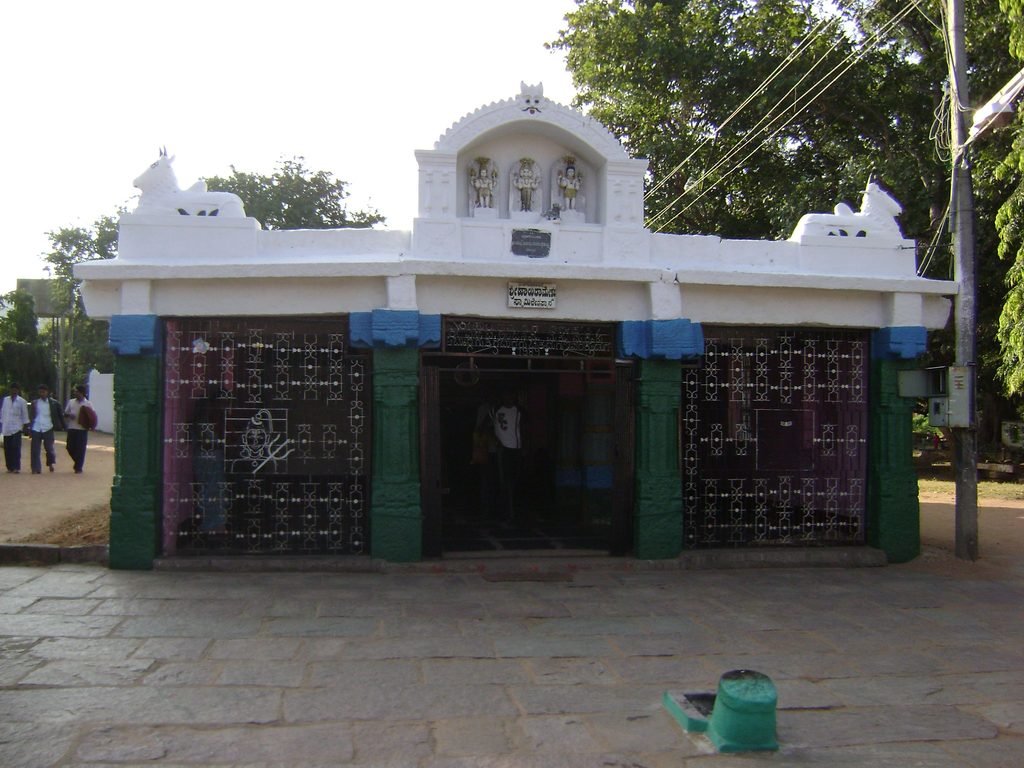
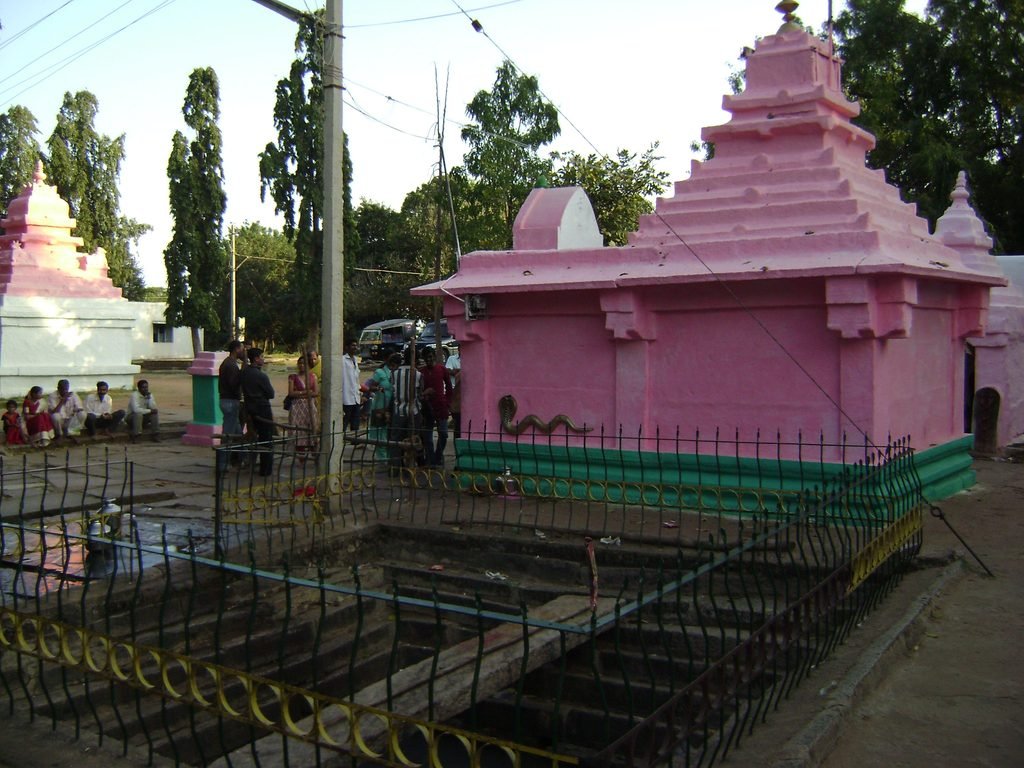
In 2007, a Kannada television channel broadcast a sensational documentary on a Shiva temple named Halu Rameshwara (Fig. 1 and 2) in Karnataka. Located at Hosadurga in the Chitradurga district, this modest shrine features—according to the TV anchor—a “wishing well” from which everyday articles miraculously pop up. Items such as bananas, rice (including well-cooked curd rice!), flowers, betel leaves, bangles, and coconuts appear, supposedly matching the specific desires expressed by devotees. The anchor claimed this phenomenon had been occurring for decades, yet no one had unravelled the mystery behind it. A local legend claims that when the wife of one of the Maharajas of Mysore remained childless after years of marriage, she visited the temple and offered prayers. Out of nowhere, a miniature replica of a cradle surfaced from deep inside the well! Soon after, the Maharani gave birth to an heir.
I recently had the opportunity to visit this temple while in Chitradurga on official business. As a passionate traveler, I routinely use my free evenings and weekends during work trips to explore nearby historical sites and cultural points of interest. When I asked Pradeep, a colleague at our Chitradurga office, about local landmarks, he initially listed well-trodden destinations such as the Chitradurga Fort (a magnificent structure indeed), the Chandravalli Caves, and the Jogimatti Hill Station. Knowing my particular interest in so-called “miracles,” he also happened to mention the temple at Hosadurga and its miraculous well. He was the first to tell me about the television documentary and offered to drive us—myself and Ravishankar, another colleague from Bangalore—to the site. Eager for a chance to examine a “miracle” firsthand, we jumped at the opportunity.
A Detour to Gavirangapura
On Saturday, 16 December 2007, we set out from Chitradurga early in the morning. Hosadurga, a small town, is a comfortable three-hour drive away. Upon arrival, our colleague Balraj was waiting for us. A resident of Hosadurga and a gracious host, he had offered to guide us. After enjoying a delicious breakfast at his home, we set off for the day.
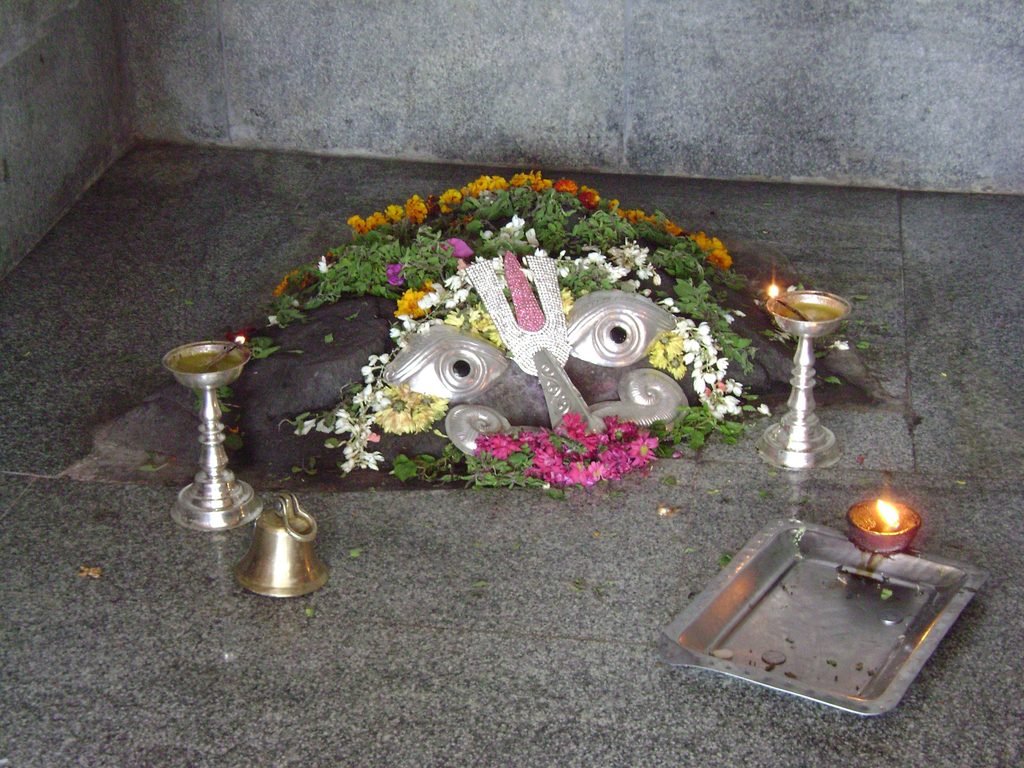
Because my three colleagues were religiously inclined, they decided to first visit another prominent temple in the nearby village of Gavirangapura. The presiding deity there is a tortoise—representing the Kurma avatar of Lord Vishnu (Fig.3). This is one of only two temples in India dedicated to Vishnu’s tortoise incarnation, the other being located in Andhra Pradesh.
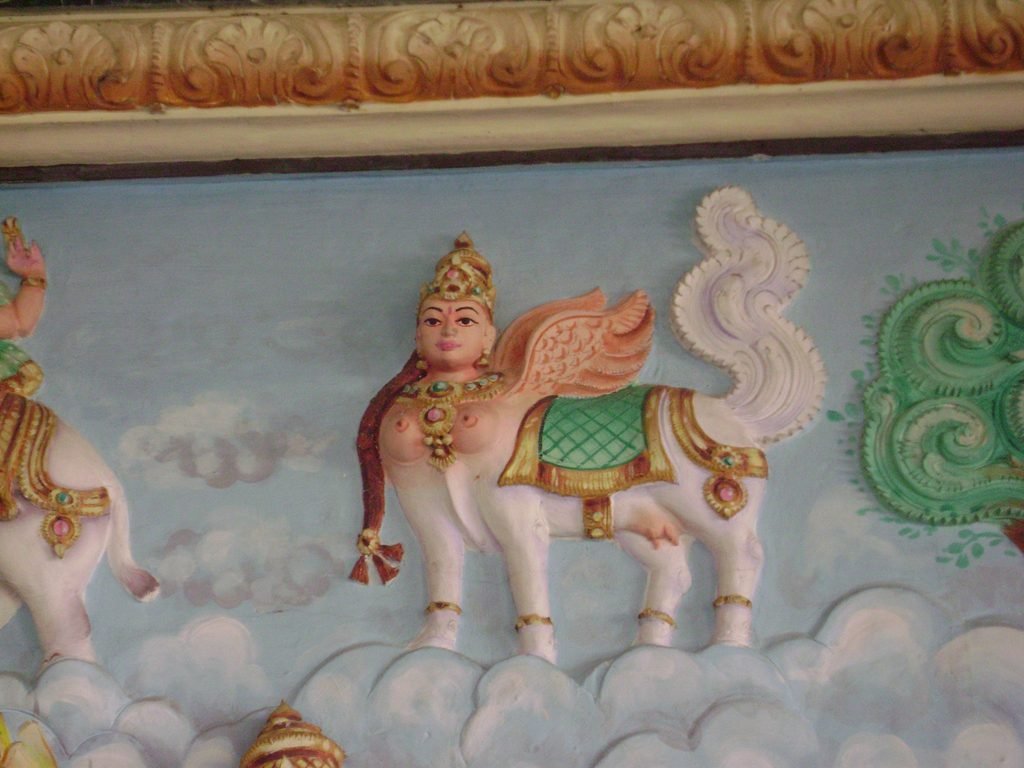
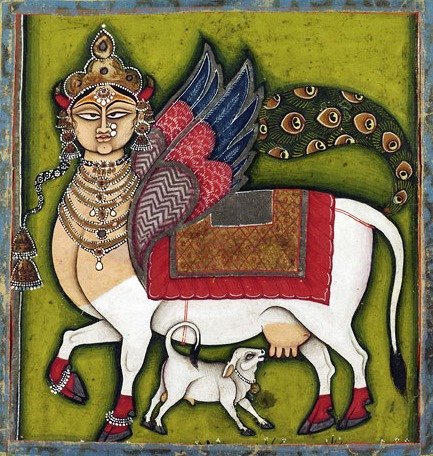
While at Gavirangapura, a garish wall painting—likely executed by a local artist—caught my attention. It depicts (Fig. 4) the goddess Kamadhenu with the body of a cow and a human female bust. Though Kamadhenu is traditionally portrayed with a human head or torso (Fig. 5), here the artist took a somewhat overzealous approach to realism: rendering explicit human breasts while retaining the cow’s udder—resulting in a figure endowed with two sets of mammary glands!
Observations at Halu Rameshwara
Sidetracking aside, let us return to our primary subject: Halu Rameshwara and its wishing well. We left Gavirangapura around 1:45 PM and stopped for lunch at a roadside eatery (dhaba) in Hosadurga. By the time we reached Halu Rameshwara, it was roughly 4:00 PM. We observed numerous vehicles parked outside the temple compound. Based on the license plates, it appears the shrine draws devotees from across Karnataka, including Bangalore. Judging by the stream of visitors, “divine favor” remains a flourishing local enterprise!
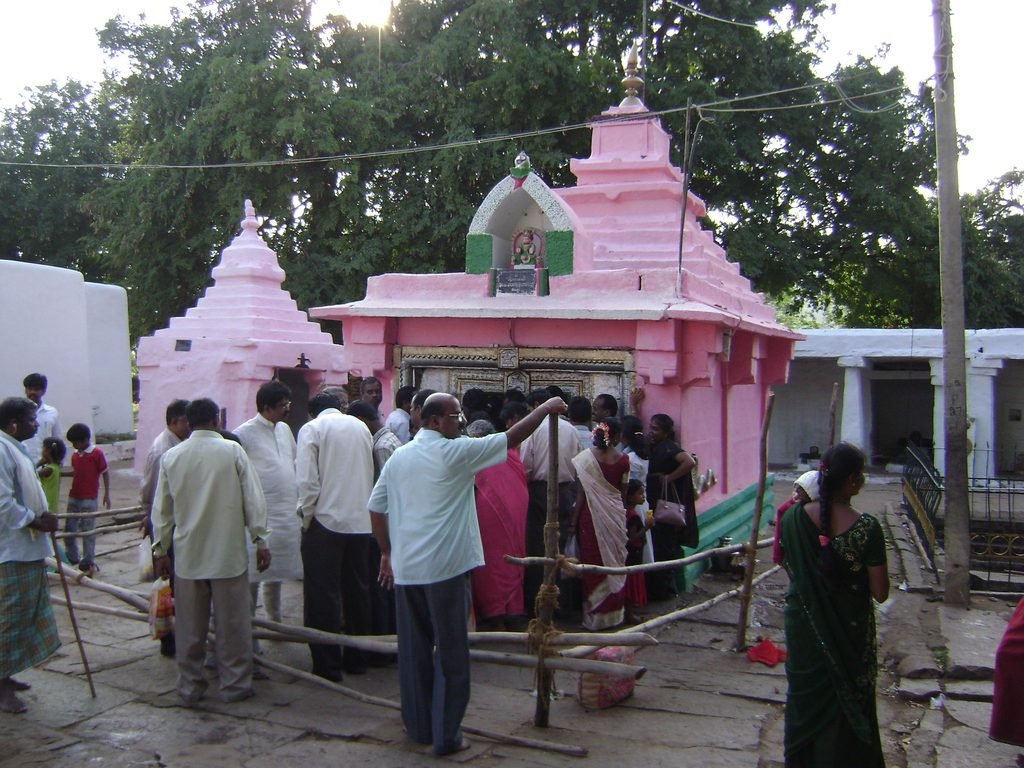
The temple complex comprises two primary structures: a larger building at the entrance and a smaller enclosure at the rear. The wishing well is situated inside the smaller structure. Except for two elderly women and a temple priest, the main temple was empty when we arrived (Fig. 1). The true center of gravity was undoubtedly the wishing well (Fig.2 and 6), around which a crowd of men and women—both young and old—had gathered. Everyone was awaiting their turn to witness and participate in the miracle.
To experience the phenomenon, one must purchase a token from the office and present it to the attendant at the well. The tokens are numbered, and devotees are called in sequential order (unless, of course, one happens to be a VIP) to offer their prayers. Balraj purchased a token for our group, and we settled in to wait. Because the crowd was sizable, I decided to take a stroll around the premises, calculating it would take at least an hour for our turn to arrive.
The well inside the temple is connected to an external pond. The water flowing out of the temple had an off-white hue (Fig. 7) due to the ritual offerings made to the idol. As part of the ceremony, the priest breaks the coconuts brought by devotees and pours the coconut milk into the well. Pieces of coconut and bananas are dropped directly into the water. I also observed a woman washing laundry on the steps of the outer tank. Consequently, the water in the tank had turned a murky, milky white. This milky appearance is likely why the temple is called Halu Rameshwara (halu means “milk” in Kannada). After walking around, I returned to the temple entrance. By then, the crowd had thinned, and with a bit of jostling, I managed to position myself near the doorway for an unobstructed view of the proceedings inside.
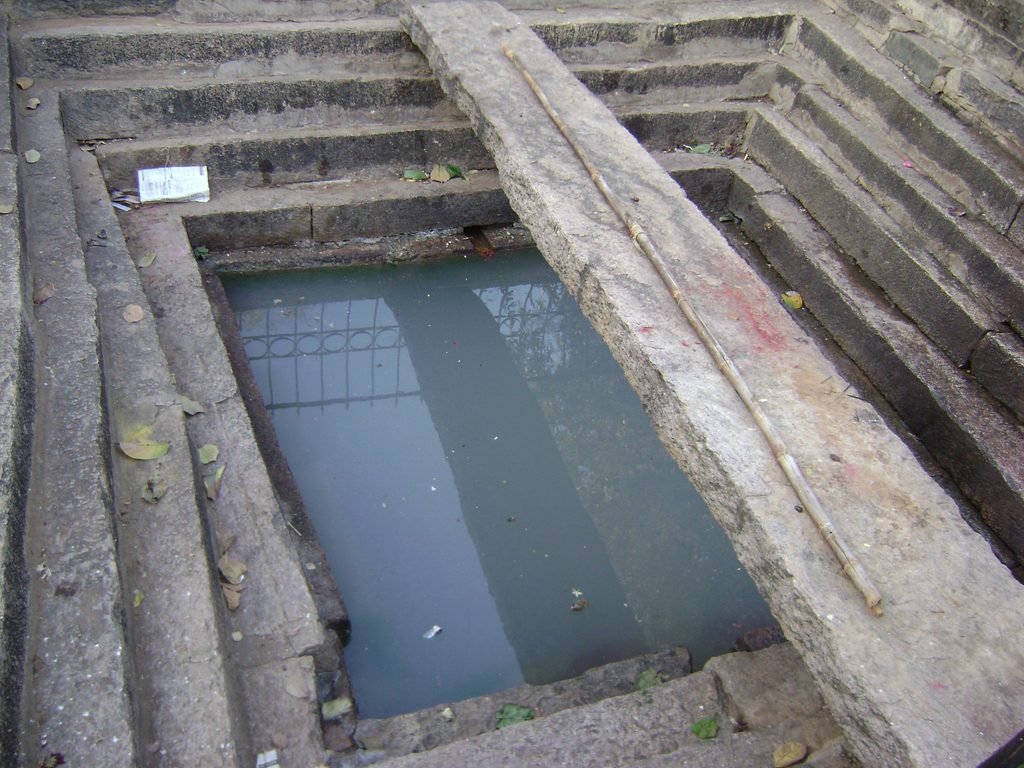
Aside from oil lamps and a sliver of faint daylight filtering through the doorway, there was no interior lighting (the structure lacks windows). Consequently, visibility was poor. Although electric lightbulbs were mounted inside, they were either switched off or the power supply was down. The well—which resembles a small pool—is rectangular. Its water source appears to be a natural spring within the basin. A marble walkway, two to two-and-a-half feet wide, surrounds the well on all four sides (Fig. 8 and 9). The walls of the temple are built so close to this walkway that there is barely room to move freely, nor is anyone permitted to do so. Visitors must step down a few stairs to reach the water level. An idol rests on a stone beam laid across the well, flanked by piles of flowers, bananas, and betel leaves. A priest sat on the stone paving to the left, while a young man in his early twenties stood directly in the water on the right.
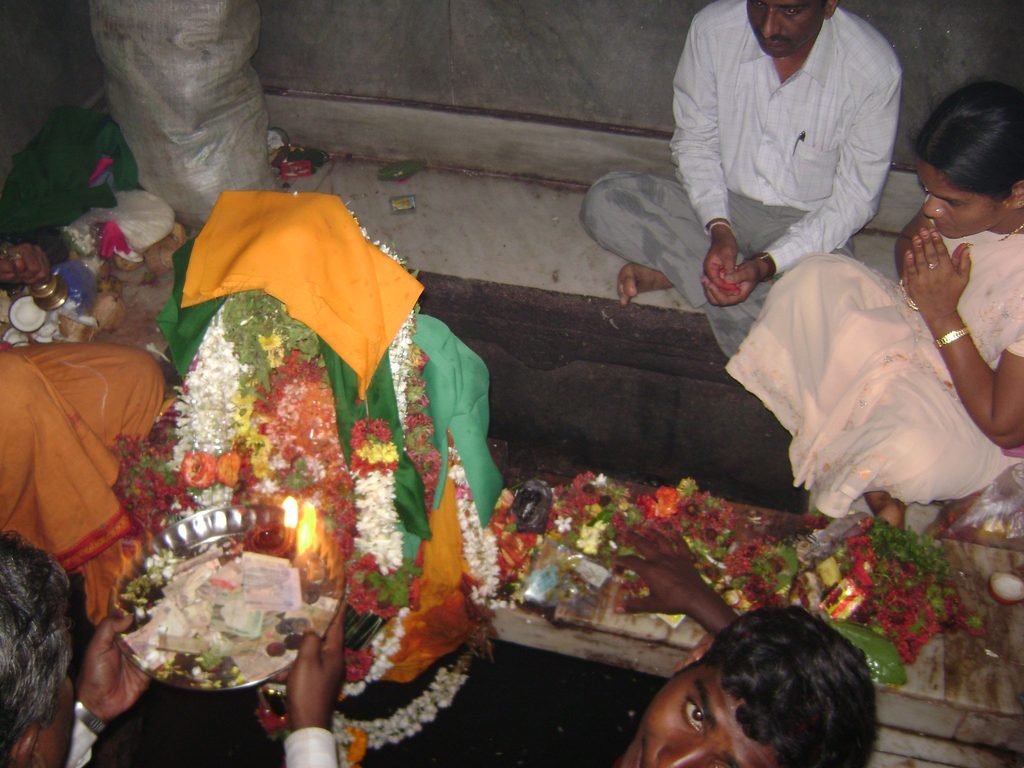
Just then, a new token number was called, and the holder squeezed his way inside. He handed a coconut, a few ripe bananas, and a cluster of flowers to the priest, who set the fruit and flowers on the pavement to his left before smashing the coconut against the stone. The coconut milk and fragments fell directly into the well. The devotee was instructed to perform a prayer before the idol, then sit at the far-right corner of the pool with closed eyes to pray for his wishes. (Meanwhile, another number was called, and the process repeated.)
I had expected the promised items to rise spontaneously from the depths of the pool, but I observed nothing of the sort. (Ravishankar later mentioned seeing a single piece of banana surface while the water was still.) Instead, the man standing in the pool vigorously stirred the water with his hand, searched the basin, and pulled out a torn betel leaf and a piece of mashed banana, which he presented to the devotee. He then offered an “interpretation” of the miraculous gift, claiming the betel leaf signified that all the devotee’s wishes would soon be fulfilled!
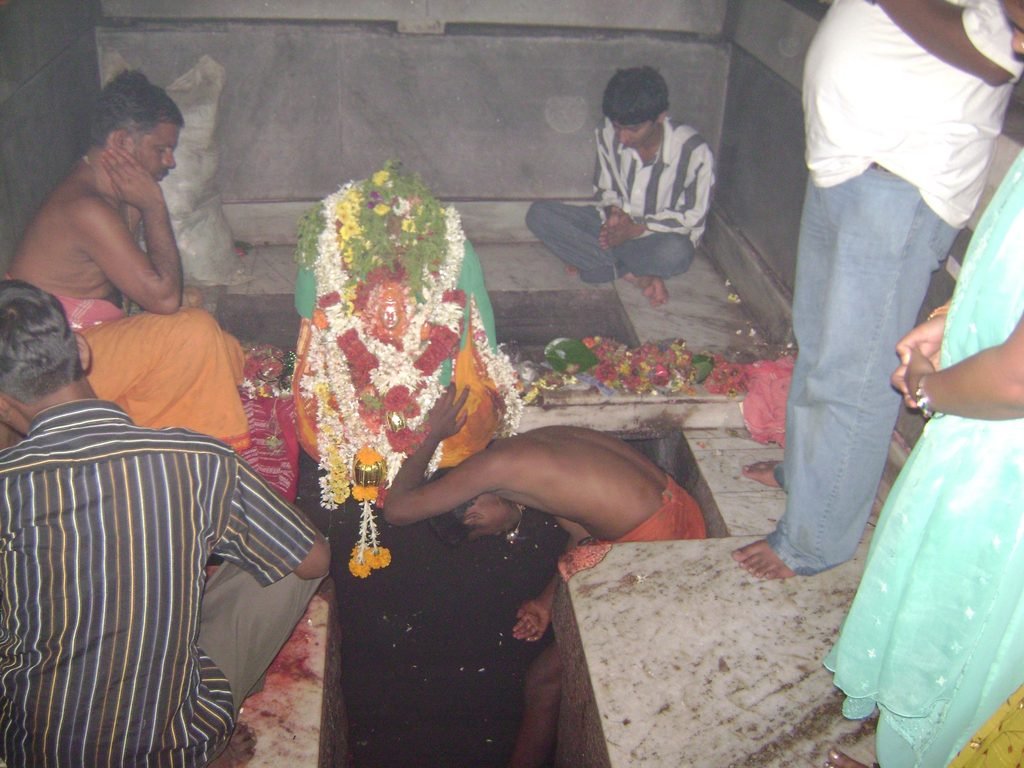
This ritual was repeated for several more devotees, each receiving a betel leaf, a flower, or a chunk of mashed banana. None received a miniature cradle or any object that unequivocally symbolized their specific wish without requiring the handler’s theological interpretation. Perhaps one must belong to royalty for the divine to deliver an unequivocal message; commoners, it seems, must content themselves with decaying organic debris! The entire spectacle was so transparent that I lost interest, yet I stayed to wait for our turn.
We agreed that Balraj would conduct the prayer while I stepped forward to receive the miraculous prasad. When our token number was called, Balraj performed the ritual with fitting devotion, and I stepped to the rear of the well to accept the offering. However, we hit an unexpected snag. The young attendant announced that we would not receive a gift because the denomination of our token was insufficient! It covered only a basic prayer. Unaware of a recent price hike, Balraj had purchased a lower-tier token.
I was disappointed, thinking I would lose the chance to observe the mechanics up close. But Balraj, a seasoned marketing professional and an assertive local, refused to back down. He told me to wait, then confronted the handler picking out the offerings: “Hey, look, we are locals—give us the prasad!” Realizing it was futile to argue with Balraj, the man bent over, churned the water, and—lo and behold—pulled out a fully peeled, mashed banana! Persistence pays. As he handed me the banana, he reminded me to take it home and perform a prayer so my wishes would come true. Little did this divine interpreter know that my wish had already been granted—the illusion of a divine manifestation had, for me at least, completely dissolved.
Evaluating the Claim: Miracle vs. Naturalistic Explanation
Try as I might, I could find no trace of genuine divine intervention in the drama enacted at the temple. What I observed was an environment engineered to exploit credulity. By suspending critical inquiry, visitors accept as supernatural what can easily be explained by basic physics and deliberate human agency. Had these worshippers paused to ask a few fundamental questions, they would not have fallen victim to this costly illusion:
- Epistemic Inconsistency: Why would an omnipotent, omnipresent deity choose to manifest exclusively through a small, murky pool in Hosadurga and nowhere else?
- Verification of Legend: Is there any documented historical record of the Maharani of Mysore’s visit, or is this simply an urban legend generated to confer prestige upon the site?
- Proportionality of Evidence: Even if the legend were true, why would the deity produce a miniature cradle for a queen while ordinary people must settle for flowers, betel leaves, and rotten bananas? Why would divine favor yield to royalty while offering commoners scraps that require priestly interpretation? Wouldn’t it have been far more impressive (and convenient for the queen) if an actual infant had emerged from the well?
- Methodological Interference: Why does the retrieval process require continuous manual agitation of the water? If the phenomenon were truly self-sustaining, why must it be coaxed into existence by hand?
- Arbitrary Output: Why did the deity produce a banana for me—a non-believer—only after my friend Balraj demanded (and practically insisted upon) one?
Investigating the Phenomenon: An Empirical Framework
To conduct a rigorous, empirical investigation into this claim, full access and cooperation would be required—conditions virtually impossible to secure from temple managers. However, assuming access were granted, a sound scientific protocol would proceed as follows:
- Baseline Inspection: Thoroughly drain and clean the well and its surrounding basin.
- Hydrographic Mapping: Identify and inspect the source and flow rate of the incoming spring water.
- Isolation of Variables: Prevent temple staff from approaching the well while a devotee performs the ritual.
- Input Control: Prohibit devotees and staff from dropping any materials into the well during the process.
- Unassisted Verification: Require any object or prasad to rise to the surface entirely on its own, without physical intervention from temple staff, devotees, or bystanders.
If an organic item were to surface unassisted under these controlled, double-blind conditions, one could legitimately consider an unexplained physical or miraculous phenomenon.
A Rational Reconstruction
In the absence of a controlled empirical test, standard naturalistic principles provide a complete explanation of the mechanics at play:
- Pre-loading: Temple staff can easily submerge items inside the well before opening access to the public.
- Concealed Inputs: The priest sitting beside the idol can discreetly drop bananas, betel leaves, and flowers into the water at regular intervals or under cover of dim lighting.
- Proximity Dropping: Offerings placed on the stone beam next to the idol can easily be slipped into the water unnoticed by onlookers.
- Devotee Contributions: Devotees themselves unwittingly drop items into the well during their rituals.
- Natural Buoyancy: Submerged organic matter, propelled by the upward hydrodynamic pressure of the natural spring, naturally surfaces over time.
- Mechanical Agitation: The frequent, vigorous churning of the water dislodges submerged items trapped near the bottom or along the basin walls.
- Blind Spots: The assistant retrieving the items pulls them not only from visible areas of the pool but also from shadowed corners—including the dark water directly beneath where the priest sits.
My experience at Halu Rameshwara only reinforces a foundational premise of empirical skepticism: where extraordinary claims are made, one rarely finds miracles—only unexamined physical mechanisms and credulous observers.

This essay originally appeared in the April 2008 issue of Bangalore Skeptic, an e-zine. The accompanying photographs were taken by B.R. Ravishankar during the author’s visit to the temple in December 2007.
Leave a Reply