among the multiplicity of Indian philosophical schools and systems I have
chosen as the subject of my paper the Carvaka – or Lokayatamata – which as a
particular school has disappeared long ago from India, and which was so greatly
looked down upon that according to Brahminical orthodoxy, no sin could be
compared with nastikya.
pay attention to it, because the study of its sheds new light n this many-sided
activity of the Indian mind which had, and has, so many aspects and tendencies
that there is perhaps no Western thought that was not anticipated in
India. We are proud of our absolute
idealism which seems to us to be one of the greatest conquests of the European
mind, because it veils the materialism and the practical mechanicism which
constitute the real essence of our civilization.
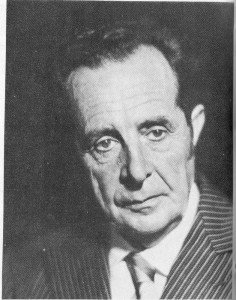 |
| GiuseppeTucci (5 June 1894 – 5 April 1984) |
Evidently it is ignored that
Nagarjuna, Asanga and Vasubandhu were the greatest and unsurpassed forerunners
of the same principles which Hegel started and our contemporary Italian school,
with Bendetto Croce and Giovanni Gentile at its head, has emphasized. On the contrary, our colleagues of China and Japan are quite right when they
assert that the Eat has its own idealistic philosophy which is far better than
any other western system, as it is born in its own country and harmonizes,
therefore, with its spiritual exigencies; and when they consider, as their
text-book, the Vijnaptimatrasiddhisastra of Vasubandhu. In fact, this book is
one of the greatest monuments of Indian thought; and I hope that in the near
future the collaboration of Chinese scholars and Indian pundits will restore
the Sanskrit text, which seems hopelessly lost.
European philosopher who rightly appreciates the value of Indian philosophy,
nobody would deny that the fundamental characteristic of Indian thought is an
idealistic one. .
traditionally believed to have been the country of thinkers and yogins,
Brahmins and ascetics; a country which, plunged in dreams of mysticism and
abstraction, denied life and any form of activity. Even now, this is the most
prevalent opinion on India
we have in Europe.
according to the more orthodox Indian conception, life is considered the result
of kama, artha and dharma. As in individuals
there is a time when kama and artha predominate, so in the history of Indian
civilization, side by side with the Upanisads and Buddhism we find Lokayatas
and Carvakas, hedonists and politicians who were so outspoken in defence of
that Wille zum Leben which mysticism
seemed to check, that perhaps we ourselves in the West cannot vie with them.
saints and hermits: she not only prayed and meditated, but also had her
struggles and her history. Without men working in this life and for this life
it is not possible that this eternal drama, of which God only knows the end and
the goal and which we call history, can take place. Those who know only an
ascetic India do not understand
India, that India
who is revealed by her poems, her dramas, her nitis. On the contrary, you find that this home of idealism has
produced the crudest form of hedonism and political science that we know, a
political science compared with which the principles of Machiavelli or Hobbes
would appear quite soft.
Materialism1, I think that I have succeeded in giving a general idea of what
Indian materialism was. But as this book is written in Italian, that is, in a
language which is not yet largely known in India, I shall try to expose some
results about the principal materialistic schools that I could gather from the
philosophical literature I have perused.
text has come down to us; therefore the principal tenets of the school can be
restored only on the basis of the more or less detailed exposition of the Lokayatamata that is to be found in the purvapaksa of many Brahminical or
Buddhist philosophical works, and in some quotations we can meet with in books
on Nyaya. But from this to assume, as some scholars did, that Lokayata texts
never existed, is to go too far. I cannot give all the arguments which I have
collected to refute this opinion, without taxing your patience; I shall only
briefly expose some of the facts which, it seems to me, clearly point out that
Lokayata texts were known in ancient times. A Lokayata Sastra is quoted in
Candrakirti’s commentary to Mulamadhyamakarika,
or rather to the Prajnasastra, as its
original title seems to me to have been; in Aryadeva’s Satasastra, recently translated by me from the Chinese,2 there
is a quotation from the Brhaspati Sutra; according to the unknown author of the
marginal notes to the apabhramsa work,
Tisatthimahapurisa-gunalankara of
Pupphadanta, the Purandara named in the text was a Carvakamate granthakarta, 3 according to Krsna Misra, Carvaka was an ancient
master of the school to whom Brhaspati transmitted his doctrine. And in an
ancient well-known authority, namely the Vartika
of Pataiijali, we find a nastika
master named Bhaguri expressly mentioned. Moreover, the tradition attributes to
Brhaspati himself the first treatise of the system called after him Barhaspatya,
and I do .not know why we should not accept it; of course, we cannot assume
that the Brhaspati Sutra edited by
Prof. Thomas is the original book of the school, inasmuch as it bears a clear
Brahminical character: but in spite of that you will find some quotations in it
on the Lokayata, which arc likely to have been taken from an ancient but now
lost compilation of a peculiar Lokayata character. Certainly, we cannot accept
the tradition when we are told that the author of this book was Brhaspati
himself who, according to the Maitri Up.
(Ed. An. As. S.s. p. 466), Visnupurna (III, 17,41), Matsyapurana (47, 184)
conceived this devilish doctrine in order to spread untruth and disbelief among
the Asuras; but what must chiefly interest us is only that Brahminical
authority too, that should have had some interest in freeing their heavenly
representative from such a responsibility, did not object the authorship of the
doctrine and the book to Brhaspati. How, moreover, can we explain the
similarity in many a quotation from the Lokayatamata
which can be found in the most different texts? This similarity, besides, is
not only to be met with in recent philosophical literature, but also in
ancient texts; as, for instance, between the tenets attributed to Ajita Kesakambalin
in the Dighanikaya and the principal
school of the Akiriyavada in the
Jaina Suyagadanga, in which the commentator Silanka recognizes the Lokayatika
or Barhaspatya.
first Lokayata text issue? This is a question difficult to answer; because
materialism is a general name under which we can collect man y tendencies and
systems, as the multiplicity itself of names for materialist seems to point
out: nastika, Carvaka, Lokayata,
Barhaspatya, Svabhavika, Bhutavadin, Icchantika. Without discussing here the
etymology and the different meanings of all these names, I shall point out that
even if in later times they became almost synonymous, we are not authorized to
assume that this actually did happen in ancient times. But of course it is
evident that there must have been a common store of general and fundamental
principles that characterized these heretical schools and distinctly
diversified them from the Brahminical ones; so that, owing to such a connection
even among their own peculiarities, they went under the general name of nastika. But what did they deny? What
was their nastikya? To answer this
question it is necessary to remember two things. First, that materialism means
either a conception of the reality which explains everything on the basis of
mechanical laws and denies the existence of every transcendent being, or, in
the usual vulgar sense, an epicurean manner of life which ignores every
religious feeling and whose only goal is to enjoy life. The theory of Viharabhadra
in the Dasakumaracarita (p. 193, Nirnaya
Sagara edition, Bombay 1898) can be considered a peculiar type of this
hedonistic conception. Secondly, that Indian religious conception differs in
some points from ours. Certainly, according to Brahminical sources, it was
sufficient not to admit of the authority of the Vedas in order to be called a
nastika: these are the vedavadapaviddha
of Mahabharata (XII, 2, 15), the
vedanindaka of Manu (11, 11), the asraddadhana
of Gita (IV, 40).4
or pantheism a nastika can also be
one who does not believe in any God. But even if to some strict Brahmins,
disbelief in Isvara seemed to be nastikya,
atheism is so often to be met with in India that it cannot be considered
the principal characteristic of the Lokayatamata. Buddhism was atheistic-I do
not speak of course of later Mahayana Buddhism, and Buddhist literature is full
of treatises aiming at refilting the Isvaravada. I quote the Isvarakartrtvanirakrti-visnorekakartrtva-nirakarana
attributed to Nagarjuna, the Isvarabhangakarika of Kalyana Raksita, the Badhicaryavatara Santideva (IX,
119-126). The Jainas followed their example and the refutation of God made by
Mallisena Suri in his Syadvadamanjari can well be considered a standard work
of Indian atheism. It is quite useless for me to remind you that “Sankhya
– although included among orthodox systems – was atheistic, at least in its
ancient form. And that the same thing is to be said for Vaisesika was already
pointed out by Faddegon, and is demonstrated by a very important treatise of
Aryadeva on the nirvana of heretics
recently translated by mc from the yet extant Chinese text. Mimamsakas also did
not believc in a personal God, and owed their epithet of’ 5 (prayenaiva hi loke mimams lokayatikrta) Lokayatika to the refutation
of the personal God as we can see in the Prakaranapancika
of Salikanatha 6
or in the Slokavartika of Kumarila.
characteristic of the Lokayata must be found elsewhere. They denied the
turning-point around which Indian philosophy, theology, theosophy, religion
ever moved; consequently, they opened a chasm between themselves and other
orthodox schools, giving birth to this nastikyakarmanam
already quoted in Manu (III, 65) which is so characterized in some Buddhist
texts: natthi sukata-dukkatanam kammanam
phalam vipako.
Indian materialism and the principle of many important consequences. If there
is no karman, there is no atman,
there is no paraloka. King Prasenajit
who is a supporter of the natthikaditthi,
in the Dighanikaya, tries to defend
his thesis that there is no atman, and that our atman is only our body.
Jaina Rayapaseniya and some passages
of Samaraicchakaha7 cannot be explained as mutual borrowings, but
rather as various derivations from real doctrines followed in ancient times.8
rejection of every transcendency and of the coming back to the enjoyment of
life, a tendency began in India
which we can call a realistic one.
to the Indian vision of life which conveyed that our aim is not to be 3ttained
in this life, but in a higher world: not loka,
but nirvana is to be sought.
reaction to this thought as they teach that only that which can be perceived (pratyaksena) exists, direct experience
is the only pramana for men; what we
cannot see is mere fancy: so that one may be induced to consider them the
forerunners of scientific research, as Mr. Rhys Davids9 and Prof. Franke10 did.
They believed that the Lokayatamata, to be met with in Buddhist texts, was a
doctrine specially aimed at studying nature and the laws of nature. But I
cannot accept their opinion. Loka
never had, in Sanskrit, the meaning of nature for which it is used: pradhana, or prakrti or svahhava; so
that Buddhist texts when discussing cosmological questions, in order to avoid
misunderstanding, are obliged to prefix to loka
the word bhajana when they conceive
the cosmos as a material thing: while loka
in itself has, rather, the meaning of human world or class of beings, lokayatra, lokokti, lokavada, devaloka.
Therefore the interpretation we have to give to the name Lokayata is quite
different. It is but a science which has for its only object the loka, that is, this world; and this
interpretation is quite in accordance with the Chinese translation of the word
by Shun she or Shun su: ‘those who follow the world or the customs of the
world’. Therefore this Lokayata, which has for its aim the lokayatra, is the forerunner of niti
and arthasastra, that is of a science
which was attributed by Brahminical sources also to Brhaspati from whom
Lokayata is called Barhaspatya as well as Barhaspatyamata and had the meaning
of niti; in his translation of Lalitavistara, Devakara, in order to
render the name of the Barhaspatyamata included in the list of sciences known
by the young Bodhisattva, uses the Chinese expression: wang lung, that is, the doctrine of the king; Khattavijja (Ksatravidya) according to which attano attho kametabbo11 as Lokayata teaches that arthakamau are purusarthau.
include this science among the philosophical systems as previously, the Kautilyarthasastra had quoted the
Lokayata along with Sankhya and Yoga. 14
doctrine represented the science of the purohita
who on earth assisted his King, as in heaven Brahaspati assisted Indra: artha and dharma for a certain period followed the same way. So that we find
the Lokayata included in the list of the sciences studied by Brahmins in the
stereotyped formulas of the Pali or Sanskrit Buddhist texts; and according to
the Vinayapitaka there were also some
Buddhist monks who endeavoured to study it, were it not that the Buddha
prevented them. 15
But political intrigues and religious purity cannot go together, and in fact,
signs of a real contrast between artha
and dharma can be traced back to the
times of Yajnavalkya 16, and of Narada. 17 Vijnanesvara, quoting Brhaspati,
distinguishes the Lokajna from the Dharmajna. 18 In course of time, among the
masters of this political science there were some who refused to acknowledge
any authority of dharma and proclaimed that in this world of men, God and
priests should not interfere: Trayi
samvaranamatram. As it happens in such a case, the reaction of the artha against the dharma went further: artha
not only broke up any relation with dharma,
but rose against it. From this time onwards we have, therefore, two artha schools: the orthodox one which
remained under the authority of dharma and was generally included in the dharmasastra; and the other following
its heretical principles until at the end asserting artha and kama to be the
only goal of humanity (arthakamau purusarthau)
dandaniti and vartta the only science, denying God and karman, and assuming an increasingly materialistic, hedonistic
character, splitting, by and by, into a number of schools and sects.
everything had to be demonstrated: it was not sufficient to assert a
principle, it was necessary to defend it with logical arguments against the
attacks of opponents. Two aspects in particular were to be demonstrated:
- That no karman
exists. - That pratyaksa is
the only means of knowledge.
assumption offended the well-known principle karmana sarvam idam tatam generally admitted and to which orthodox
schools found good support in the vaicitrya
which can be seen in the world. The Lokayata sought to escape this difficulty
raised by their opponents appealing to the Svabhava theory, which, having
evolved from the same principles that brought about the formulation of Sankhya,
is sufficiently attested in the epics, and which can be traced back to the
Aupanishadic times: Makkhali Gosala and Purana Kassapa were strictly related to
it. This svabhavavada, although having with the Lokayatamata only one, but the
most important point in common, that is, the negation of the Karma theory, had
striking analogies to the fatalistic schools of Kalavada or Parinamavada
inasmuch as it maintained that everything which happens on earth is only the
effect of the various c0mbinations of material elements: human effort is
useless: not enjoyment, therefore, of life, but the accomplishment by destiny of
its own ends. The Lokayata accepted this theory; it is not necessary to assume karman in order to explain the vaicitrya: everything happens svabhavena, according to the various
combinations of the four elements which constitute the body of every being. As
to the second point, that is, only that which is demonstrated pratyaksena exists, they had to have
recourse to all variety of logical subtleties in order to support it.
expositions of Indian philosophical schools like the Sarvadarsanasangraha, or the Sarvdarsanasamuccaya
of Haribhadra with the commentary of Gunaratna, to all special treatises on
Nyaya, are pregnant with arguments aiming at refuting their assumption, which
are of the greatest interest to the history of Indian logic, concerning,
particularly, the syllogism and the theory of vyapti.
lost its original character; it was no more a niti, as we presume it was at its very beginnings, but became a hetuvidya, a tarkavidya full of logical subtleties. The dhurta-carvaka became a susiksita-carvaka.
Those who did not recognize any value to pramanas
other than pratyaksa were obliged, as
justly the Bhamati (III, 3, 54), the Nyayatatparyadipika (p. 88), the Nyayakandali (p. 259) and other Nyaya
works remark, to have recourse everywhere to inference.
have disappeared; but its doctrines still remained occasionally accepted by
disbelievers or materialists, who always exist in every country–even in a
country which can b~ called the fatherland of idealism.
refutation of the Carvakamata, even though as a school this actually was dead,
this fact is owed only to a traditional custom.
- Linee di una
stovia del materialismo indiano, in memorie della R. Accademia dei Lincei, Ser. V. Vol.
XVII, fasc. VII, 1924 (Part I). - Studie
materiali di storia delle religioni, 1925 rase I-II, p. 76 - Bhavisyattakaha,ed. by C. D. Dalal (Gaekwad’s Or
series. XX). p. 42. - Accodmg to Sankara the asraddadhana are those who believe that for moksa sacrificial karman only is sufficient.
- Slokavartika
i. IO - Pp.137-140 (Chow. S. S.)
- Pp.II3-117(ibid)
- Pp. 170 ff.
- A later refutation of atman is contained in the
commentary of Gunaratna to the Sarvdarsanasamuccaya
of Haribhadra (Bibl. Ind.,
pp. 139 ff.) - Dialogues o Buddha,
I, p. 168 - Dighanikaya
in Auswahl ubersetzt, Gottingen, 1913, p.
19, n.3. - Jataka,
V.228 - Mahabodhijataka 20,21.
- P.3 (S. B. E. I. p. 6).
- One might object that in this book Lokayata is not
the Barhaspatya, because Brhaspati along with Usanas is quoted before one
of the masters of the artha-school
which seems, therefore, to be quite distinct from the Lokayata. But it
must be observed that here, we have to do more with methods than with
systems. In fact~ interference between philosophy and other sciences IS
ascertained in the same chapter when Kautilya says that anviksiki is the best guide in
every discipline, in vartta as
well as in dandaniti and anviksiki, according to Vatsyayana,
had two aspects. It is not only an atmavidya,
but also a htluvidya. - Cullavagga V, 33.2.
- 11,21.
- E.39.
article was originally published in the Proceedings
of the First Indian Philosophical Congress, 1925
Leave a Reply