 |
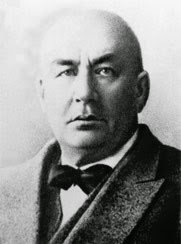
| Th. Stcherbatsky |
Another approach that we find in India is that of raising the practical question of the aim of human life and of the prevalence of material aims therein. Here, materialism is distinguished from all other trends by the fact that it negates the law of so-called karma, ie, retribution for good or bad works. The greater abstraction of the Indian mind, as compared with other ancient civilizations is expressed int he fact that there the moral law is not embodies in the person of God, the judge, but in the form of impersonal karma which may be characterized as the law of moral progress, as the faith in the fact that the world is rules bya special mechanism directing it evolution from the forms of low and unjust to good and perfection.
Normal
0
MicrosoftInternetExplorer4

st1:*{behavior:url(#ieooui) }
/* Style Definitions */
table.MsoNormalTable
{mso-style-name:”Table Normal”;
mso-tstyle-rowband-size:0;
mso-tstyle-colband-size:0;
mso-style-noshow:yes;
mso-style-parent:””;
mso-padding-alt:0in 5.4pt 0in 5.4pt;
mso-para-margin:0in;
mso-para-margin-bottom:.0001pt;
mso-pagination:widow-orphan;
font-size:10.0pt;
font-family:”Times New Roman”;}
law is fully negated by the extreme Indian materialists. Nowhere, perhaps, has
the spirit of negation of and resentment to the fetters of traditional morals
and the religion connected thereto been expressed so clearly as among the
Indian materialists. This is evidenced, for instance, by the following verses of
Indian materialism.
The
Agnihotra, the three Vedas, the ascetic’s three staves, and smearing oneself
with ashes,-The
three authors of the Vedas wereAll
the well-known formulae of the pandita-s-jarphari, turphari, etc.And
all the obscene rites for the queen commanded in the AsvamedhaThose
were invented by buffoons, and so all the various kinds of presents to the priests,There
is no other hell than the mundane pain produced by purely mundane causes as
thorns etc;The
only supreme is the earthly monarch whose existence is proved by all the
world’s eyesight;And
the only liberation is the dissolution of the body.[iv]
to the generally accepted system, in ancient India,
the human life was regulated by three main aims: the property, love and duty.
By the first were meant the various occupations giving means for life –
cultivation, cattle breeding, trade and industry. The Government control with
all its ramifications also came under this category. By the second aim was
meant the family life, the children and also extra-family satisfaction of
passions. What was meant by the third was mainly the religious duty, control of
passions, with a view to secure award in the next life in one form or the other
of eternal divinity. The normal life of man, according to the views of the
orthodox Hindu, must have all these three aims in view. It is his duty to
create family and to provide for it: this is interpreted as the service of love
even to material aims. Later, having established his family, the Hindu may
forsake it, become sannyasin, i.e. a poor homeless wanderer, directing all his
thoughts to eternal bliss.
individual cases, however, this equilibrium among the three aims of life was
destroyed in favour of one of them. The materialists, naturally, did not give
any importance to the aim of religious duty and openly proclaimed the property
and love as the only aims of man.
the other hand, there were many people in India
who fully renounced all property and avowed celibacy, rather complete
annihilation of all desires. They formed communities of wandering poor monks.
These communities sometimes became so numerous that they became a real calamity
for the working population which had .to support them somehow or other.
all other Indian teachings, Indian materialism was the speciality of a specific
school, which preserved its traditions, developed its teachings and put them
into practice. Its origin goes back to the hoary antiquity. As early as c.1000
B.C., in the Upanisads, there is a reference to the teaching which does
not acknowledge anything except matter[v].
Five hundred years before Christ, about the time of Buddha, thene were
certain schools which did not acknowledge anything except matter, or as put at
that time, the four great elements: earth, fire, water and air. There were also
some who added a fifth element, ether, thinner than air, and filling the whole
space.[vi]
was, on the one hand, very close to materialism, since it also negated the
existence of God and eternal soul. But the two differed sharply in that
Buddhism accepted the law of karma, i.e. retribution for good and bad
works. In all the proceedings of the initial sermon of Buddha, his hostile and
sharp attitude towards all the theories which accepted the existence of soul is
clearly manifest. But at the same time, it was with equal resoluteness that
Buddha opposed Indian materialism which did not accept the moral law or the
so-called karma.
at a time when the Mauryas built a large and blossoming empire in Northern
India, the materialists worked out a specific philosophical
school. Canakya, the Minister to the King Candragupta, has left a treatise on
politics,[vii] in which
he enumerates the existing philosophical systems. There, he refers to
materialism as one of the main systems which the future ruler must study. [viii]
this epoch, all the three main aims of man in life-property, love and duty-are
treated scientifically. During this period, we have the practical sciences (arthasastra),
the science of love (kamasastra) and the science of religious duty (dharmasastra).
Among the practical sciences, that of governing the country occupies the first
place. With his teaching, Canakya himself marked the beginning of a special
school of politicians. Quite independently of Canakya and probably at the same
time, there also was the theoretician Usanas, whose political teaching differed
considerably from that of Canakya. The latter was the representative, so to
say, of the official political doctrine, according to which it was necessary to
support religion with all force and which was convinced that the temporal power
was illuminated with religious basis. Usanas, on the other hand, did not
consider it necessary to found temporal power on religious base. According to
him, there is only one science and that is the science of punishment, or
literally, the science of rod (dandaniti).[ix] Brhaspati,
to whom the main schools of Indian materialists are attributed, also was first
a founder ‘of a school of politicians. But his political school diverged from
religion still further and remained known in history as the ardent hater of
religion and advocate of theoretical materialism. It was called either Brhaspati
school after the name of its founder, or Carvaka’s school, i.e., of the
materialists proper who cared for daily bread alone.[x] Another
name for it is Lokayata, that is, the people who care only about the earth and
not about the heaven. No complete texts or works of this school have reached
us; however, several extracts and passages preserved in the works of other
schools, enable us to form a notion of its main aspects and the methods, by
which they are proved. A list (as complete as possible) of the works, in which
there are references to the teaching of the Carvakas and excerpts from their
works, will be given below.
I shall dwell on two such works in which have been found extracts from the
works of Carvakas unknown till now. The first of them is the Nyayamanjari
by the well-known philosopher Jayantabhaga.[xi]
Here the materialists have been mentioned twice. Speaking of the number of the sources
of valid knowledge he refers to the first main aphorism or sutra of their main
work.[xii] Some sutra-s
had already been restored from various sources by Prof. Hillebrandt.[xiii] It is
now possible for us to restore the first one also. It reads:
tattvak vyakhyasyama iti
the word tattva is set against the word dharma, which is prominent in
orthodox schools. This sutra means: In our work, we shall talk of reality and
not of duty. From the interpretation of this sutra, it is clear that the
materialists then were divided into two camps: those who held the extreme view
and fully negated consciousness and considered the human body a simple
mechanism (jada) without any consciousness, and those who were moderate
in their views and acknowledged its existence but only in the form of special
function of the body. Jayanta calls the former Sophists (dhurta). It is
the latter whom he calls the real scholars.[xiv] And
in fact, the discussions of the former appear to be of sophistic nature.
fact (tattva) mentioned in the first sutra cannot be either
calculated or classified. Also, even the methods of its cognition cannot be
found out, and all the attempts made in this connection proved futile. Thus,
for instance, sitting in a dark room, we nevertheless know that there are
fingers on our hands and that there is distance between them. We could not have
known it by sight because it is dark. We did not know it by sense of touch too,
for the skin is the organ of sense of touch and it cannot touch itself. We also
cannot know it even from inference. Hence, it is proved by this method that all
the accepted teachings about the sources of valid knowledge do not withstand
criticism. Once it is seen that the cognition cannot be determined, it follows
here from that it does not exist and that the processes however conscious, are
in reality, mechanical phenomena (jada).[xv]
distinguishes the highly educated materialists from these
materialists-sophists. They claimed as follows:
is undoubtedly a sole conscious element, localized in the whole living body. We
also allow that this consciousness is subject to synthesis and other mental processes.
One would hardly argue against this; but that this continues to exist after
death cannot be proved. The consciousness, leaving one body, naturally cannot
settle in another. Had this been possible, we would have remembered about those
things which we did in our previous births, exactly in the same manner as in
this birth, we remember about things done in the childhood. We cannot show any
reason why the same eternal soul, living now in one and sometimes in another
body, has different memory: it remembers what it undergoes in one body and does
not what it does in the other bodies. Having been convinced, therefore, that
there is no soul after the death of the body it is necessary to do away with
any talk of future life, which is traced back to the theory of eternal soul,
and to try to live happily, according to the, principle:
long as we live, we shall be happy!
is none here who will not die;
he dies and is turned to ashes,
where is he to appear again?”
extract, to which we would like to draw attention, occurs in the work of
Vacaspatimisra, in his interpretation of Nyayasutra 3.2.39.[xvi] The school of Indian realists
supposes that matter consists of particles moving in and combining in the body.
Like Aristotle, they assume that the natural motion of all particles is
rotatory (parispanda). The conscious motion (kriya), ie, the
following up and achievement of aims, is under the influence of impulse from
the side of psychic elements. This impulse was represented in semi-anthropomorphic
features. The main argument of the materialists was that a conscious act could
be fully explained by the motion of particles of matter. The difference between
the two motions is only superfluous. Just as the different material elements,
connected with each other, may form such a substance as alcohol which does not
resemble the substances of which it is made, in the same manner the different
material elements, connected in the living body, develop a new quality, a
conscious act, which is not similar to them.
to this, the Naiyayikas raise the following objection: In a drink, each
particle has alcohol whereas in case of material elements of the body, each one
individually does not have consciousness. Any property of the matter, as for
instance weight, must be wherever matter is. If the consciousness and the will
were also the qualities of matter, they would then have been everywhere where
there was matter. However, we do not see this, for instance, in a pot and
similar objects. One cannot, therefore, contend that consciousness and will
appertain to matter.
materialist objects thus:[xvii] Consciousness and will are not
at all such properties as belong to matter in general, as for instance weight.
They belong to it only in known combinations. Just as the seed kinva,
mashed and fermented, gives us alcohol, exactly in the same manner, the
elements of matter, having formed a body, may be converted into a kind of
consciously moving objects.
this the Naiyayikas reply[xviii] that every particle of alcohol, taken
individually, has intoxicating effect. This power is not inherent in the known
organized whole consisting of parts. Similarly even the parts of the body would
have to think, each taken separately. One cannot affirm arbitrarily that matter
thinks as a whole but does not think in parts of the body. It is possible to
separate out three or four members, and the thought will continue to work. If
it be assumed that thinking is inherent in parts of a body, a whole series of
thinkers would have to be there in one body.
the Naiyayika replies. We see that
different people, if they are self-dependent, have different aims and all of
them cannot do one work together, for there is no such law that many people
accidentally should have one aim and would do one work. Besides in case of one
person, in one body, the separate thoughts are in agreement among themselves;
this is not the case with different bodies. This can be explained only by the
fact that in one body, there is only one organ of thought. After the sensual
sensation and its object change, there remains, nevertheless, their cognition
in memory and we have a right to conclude that the cognition is not a property
of either the organ of feelings or its object. Exactly, in the same manner,
although the body changes, as evidenced by changing age – infancy, youth and
old age – nevertheless the same memory remains.
one cannot affirm that consciousness is a property of body. Besides, speaking
of conscious motion, we have in view not merely a motion which is possessed by
all particles of matter, but a conscious attainment of aim, achievement of what
is desired and avoiding of what is not desired. The materialist, not paying any
attention to this difference, founds his thesis on motion, in general, and not
on the fact of motion towards aim.
- Madhavacarya,
Sarvadarsanasarrgraha, ed. Bibl. Ind. 1858, pp. 1-7 - Haribhadra,
$a¢dadanasamuccaya, ed. L. Suali, Bibl. Ind. 1905, p. 300ff. - Gunaratna,
Tarkarahasyadipika, ib. - Jayanta,
Nyaya-manjari, Benares 1895, pp. 64, 466ff. - Vatsyayana,
Nyaya-bhasya on Nyaya-sutra iii. 2. 39. - Uddyotakara,
Nyayavartika. - Vacaspati
Misra Nyayavartika-tatparya-tika. - Sankaracarya,
Sarvasiddhantasarrgraha, ed. & tr. by M. Rangacarya, Madras
1909. - Samkhya–sutra–vrtti,
iii. 17-22 - Samkhya-tattva-kaumudi,
on Karika 5 - Samkaradigvijaya.
- H. Jacobi,
Zur Fruhgeschichte der indischen Philosophie (Sitzb. K. Preuss. Ak. d. w.
1911). - L. Suali,
Materiaux pour servir a l’Histoire du Materialisme Indien, Le
Museon, N. S. 9, Louvain,
1908. - Pizzagalli,
Nastika Carvaka e Lokayatika, Pisa
1907. - A.
Hillebrandt, Zur Kenntniss der indischen Materialisten. - Ego-khe,
Ueber Materialisten und Skeptiker, Alt-Indian, Breslau
1890. p. 168ff. - Statii
R. Garbe & L. de la Vallee Poussin in Hasting’s Encyclopaedia.
viii. 138 & 93. - John
Muir, in Journal of the Royal Asiatic Society, 1861. - Hopkins,
Great Epic, 1901, p. 86. - Dahlmann,
Samkhya, p. 208. - Max
Muller, Six Systems, p. 94.
(Bibl. Ind.) p. 3. cf. Sarvasiddhantasamgraha ii. 15. [The English
translation given here are of Cowell and Gough]
6.
Verhaeltniss des Vedanta zum Samkhya, E. Kuhn’s Festschrift, p. 38.
Stand der indischen Philosophie, p. 53
ed. Suali, p. 300
Jayantabhatta, ed. Gangadhara Sastri Tailanga, Benares,
1895. Vizianagram Series, Vol. viii
Kenntniss der indischen Materialisten, E. Kuhn’s Festschrift, p. 24
p. 467
Nyayavartika-tatparya-tika, Vacaspati Misra, ed. Gangadhara Sastri Tailanga,
Viz. Series, Vol. xiii, p. 400ff

Leave a Reply