-
Business and Politics of Blind Faith
Ram Puniyani Sanal Edamaruku, a rationalist is facing the legal trap for abusing others’ faith. (April 2012) At the same time in another event, Nirmal Baba, who is supposed to be having divine powers and who has been flashing his paid programs in over 40 TV channels, advising people on solving their problems with various’…
-

Are Natural Foods Always Non-toxic?
Radha Gopalan No. There are several naturally occurring toxins in plant and animal foodstuffs. Toxins are poisonous substances of natural origin and can be harmful to human beings. But food poisoning, in our mind, is usually associated with microbes or environmental contaminants. A foodstuff is not always safe just because it is natural. Concern about…
-
Were Our Ancient Ancestors Scientifically Advanced?
J V Narlikar [This essay, written by the eminent Cosmologist Jayant V Narlikar, first appeared in the April 1985 issue of Science Age, a magazine now defunct, brought out by Nehru Centre, Bombay. Though the essay is almost three decades old, it continues to be as relevant as most of the criticisms on pseudoscience are. While…
-

Kṛṣnamiṡra’s Prabodhacandrodya – A Critical Introduction
Dr. Sita K. Nambiar provides a critical analysis of Kṛṣṇa Miśra’s 11th-century allegorical drama, Prabodhacandrodaya. She explores its historical background, dating, and allegorical framework while examining its detailed presentation of the Cārvāka/Lokāyata materialist tradition. Her study highlights the play’s dual significance as both a Vedāntic treatise and an essential source on ancient Indian materialism.
-
Carvaka Philosophy in Prabodhacandrodaya
Kṛṣṇa Miśra’s 11th-century allegorical drama Prabodhacandrodaya offers a critical secondary source on ancient Indian materialism. Translated by Dr. Sita K. Nambiar, the excerpted dialogue features Grand Delusion and Cārvāka advocating perception-based epistemology, physicalism, and sensory pleasure while rejecting Vedic ritualism, karmic retribution, and an immortal soul.
-
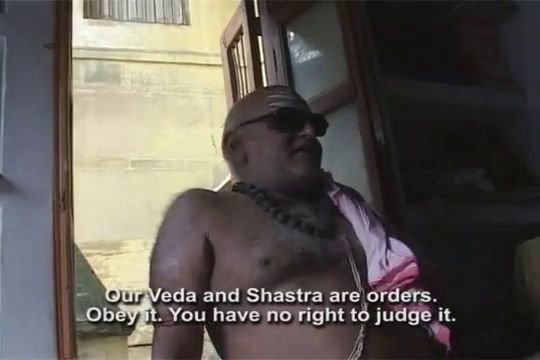
India Untouched – A Documentary
[It is a widely held belief among the ruling, upper caste circles that the question of caste is no more an issue in India. We have chanced upon a documentary that unmasks this myth articulated by the very same people who practise casteism in a myriad of ways . This documentary is directed by Stalin,…
-
Rationalism in Bengal: An Overview
Ramkrishna Bhattacharya traces rationalism in Bengal from ancient Cārvāka roots and Sanskrit-Arabic intellectual traditions to the nineteenth-century Renaissance. Highlighting Rammohun Roy, Iswarchandra Vidyasagar, Akshaykumar Datta, Derozio’s Young Bengal, and the Positivists, he demonstrates how indigenous logical lineages and European Enlightenment thought combined to drive social reform, secular pedagogy, and scientific temper.
-

Politics through Food Habits
Ram Puniyani In the middle of April 2012 Osmania University (OU) witnessed an unusual violence on the issue of eating beef. A section of dalit students’ were demanding that University Hostels should have beef on the menu. They also organized a beef festival in which a large number of students ate beef biryani. The festivity…
-
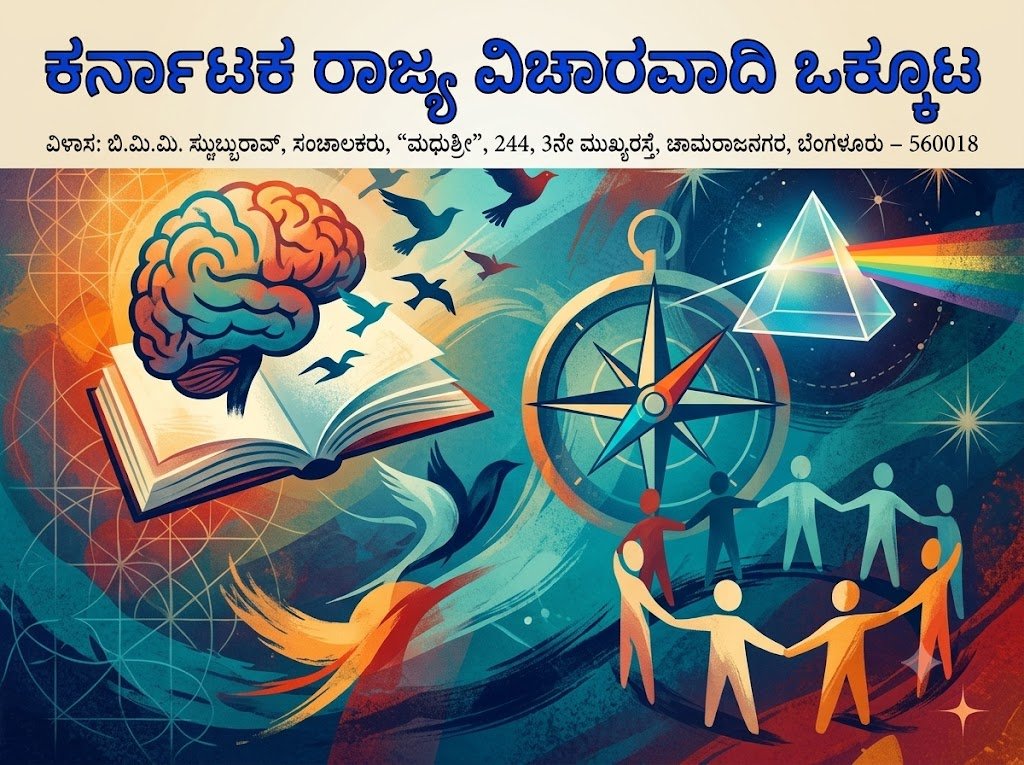
Federation of Karnataka State Rationalist Associations: First State Conference
The Federation of Karnataka State Rationalist Associations (Karnataka Rajya Vicharavadi Okkootta) is organizing its first State-Level Rationalist Conference in Shravanabelagola on May 18 and 19, 2012.
-
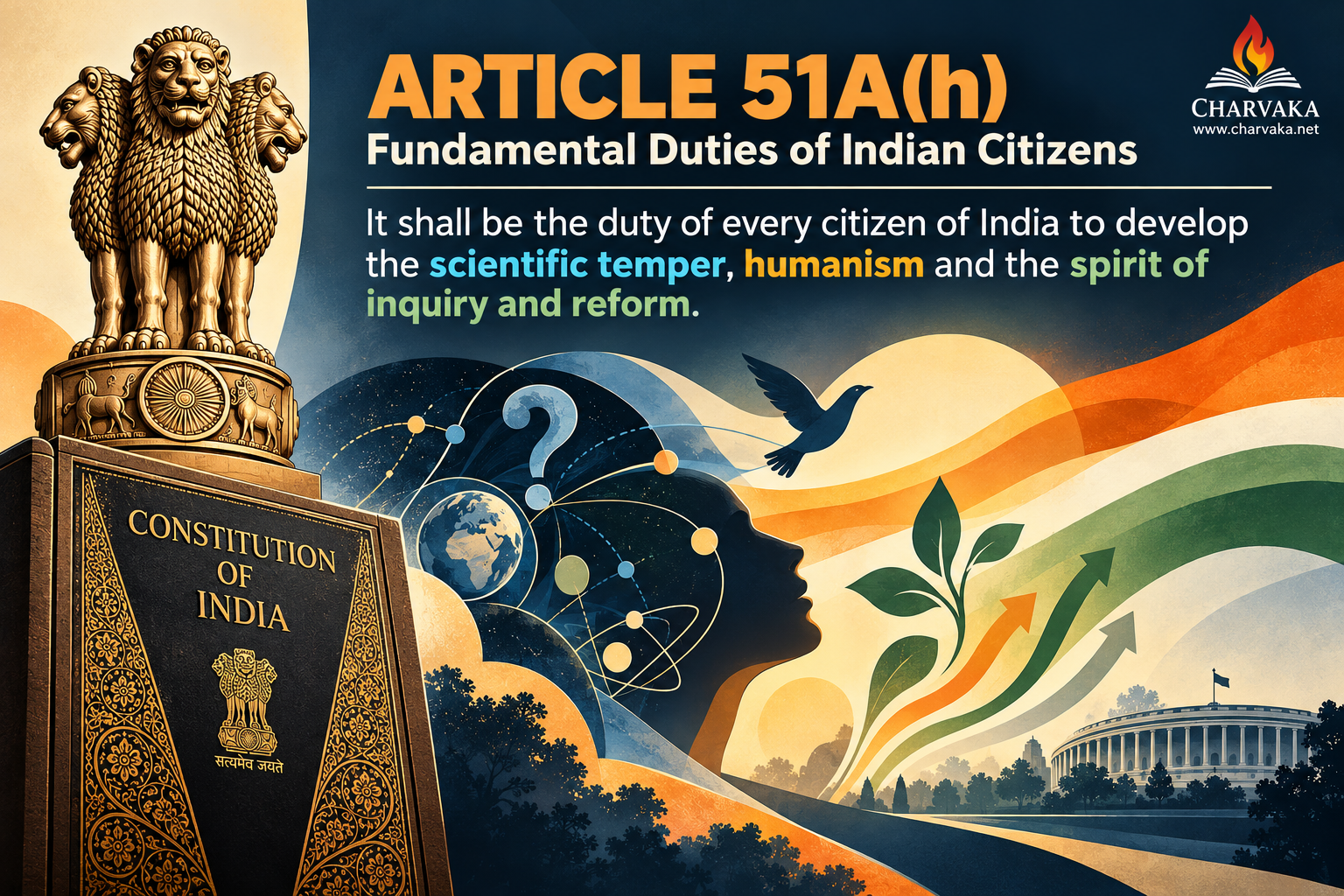
India’s Blasphemy Law: Section 295A of IPC
Laws like Section 295A of the Indian Penal Code have no place in a civilized society and need to be consigned, along with many such laws, to the trash bins of history. This is to be contrasted with Article 51A(h) of the Constitution of India which states “It shall be the duty of every citizen…
-
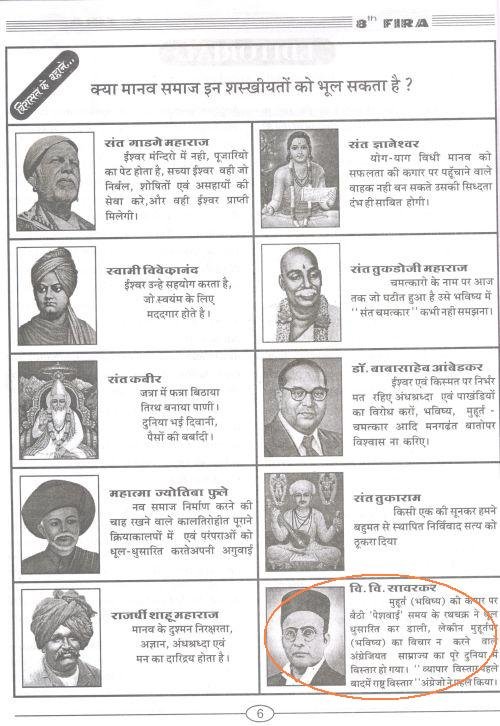
Savarkar: Was He a Rationalist?
R.A. Jahagirdar We publish this essay by Justice RA Jahagirdahr (1927-2011) on the Hindutva ideologue Vinayak Damodar Savarkar in the context of the 8th National Conference of Federation of Indian Rationalist Associations (FIRA) held in Nagapur on 11-12 February 2012. The official souvenir brought out during the conference had a photograph of Vinayak Savarkar with the astonishing…
-
Electoral Equations and Secular Values
Ram Puniyani The UP Assembly elections results (Feb 2012) gave a clear mandate to theSamajvadi Party of Mulayam Singh. Congress was claiming that the results of UPwill be a shocker, meaning a surprisingly better performance of Congress. Asresults came through Congress was nowhere close the claims it made or theresults it expected were nowhere close…
-
The Materialism of the Samkhya Philosophy
Attributed to Kapila, Sāṃkhya presents an uncreated, materialist universe governed by eternal matter (prakṛti). Rejecting divine creation, it explains development through the causal evolution and equilibrium of three natural forces (guṇas): mass, energy, and potential consciousness. Sāṃkhya demonstrates an early systematic understanding of material transformation and the conservation of physical substance.
-
Cārvāka Miscellany – I
The notes propose to throw light on certain aspects of materialism in ancient India and point out some longstanding errors that have gone unnoticed. Some links are also sought to be established between the pre-Cārvāka materialism and the Cārvāka/Lokāyata system that emerged in or around the sixth/seventh century CE.
-
Elements of Materialism in the Nyaya and Vaisesika Philosophy
Founded by Gotama and Kaṇāda, the Nyāya and Vaiśeṣika systems contain significant materialist foundations. Nyāya emphasizes empirical logic and sensory perception as primary tools for acquiring reliable knowledge. Meanwhile, Vaiśeṣika introduces early atomism, proposing that indivisible, eternal physical atoms interact in space under natural laws to construct all observable reality and consciousness.
-
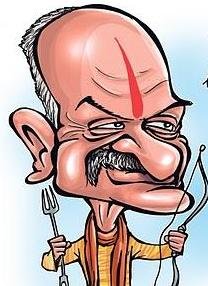
Manufacturing a Riot
Ram Puniyani In Saidabad and Madannapeth areas of Hyderabad (April 1st week, 2012) violence was unleashed against the local Muslims. In this violence several houses were damaged, many a people were injured and women were raped. Just before the incident Praveen Togadia had given an inflammatory speech in the area. There was news that fundamentalists…
-
The Materialism of the Charvakas Lokayatikas
Ancient Indian materialism, represented by the Cārvāka Lokāyata school, sharply rejected Vedic authority, priestcraft, and supernatural deities. The doctrine asserts that the universe originates solely from four material elements—earth, water, fire, and air. Direct sense perception serves as the only valid source of genuine knowledge, denying any existence after physical death.
-

Sleeping On a Bed of Nails
<!– /* Style Definitions */ p.MsoNormal, li.MsoNormal, div.MsoNormal {mso-style-parent:""; margin:0in; margin-bottom:.0001pt; mso-pagination:widow-orphan; font-size:12.0pt; font-family:"Times New Roman"; mso-fareast-font-family:"Times New Roman";} @page Section1 {size:8.5in 11.0in; margin:1.0in 1.25in 1.0in 1.25in; mso-header-margin:.5in; mso-footer-margin:.5in; mso-paper-source:0;} div.Section1 {page:Section1;} B. Premanand <!– /* Style Definitions */ p.MsoNormal, li.MsoNormal, div.MsoNormal {mso-style-parent:""; margin:0in; margin-bottom:.0001pt; mso-pagination:widow-orphan; font-size:12.0pt; font-family:"Times New Roman"; mso-fareast-font-family:"Times New Roman";} @page Section1…
-
Abraham Kovoor’s Case Diary: Submarine Telepathy
Abraham Kovoor On September 17th 1963, the ‘DAILY SKETCH’ (London) carried an article by one Leslie Mallory, headed ‘NEW SCIENCE BACKS THE MIND-READER’, dealing mainly with the claims of the Russian Professor Leonid Vasiliev, who regularly put men and women to sleep by telepathy and awakened them at set intervals”. But the professor, we are…
-

Abraham Kovoor’s Case Diary: Extra-Sensory Perception
Abraham Kovoor Perception is the process by which an organism becomes aware of its environment. Normally perceptions are of five types – all of a stimulus-response pattern. The five sensory stimuli in man and other highly evolved animals are the senses of touch, smell, sight, taste and hearing. In some animals like the homing pigeons,…
-
The Heterodox Schools of Indian Thought
Donald H. Bishop examines the origins, metaphysics, epistemology, and ethics of Cārvāka materialism. He highlights its rejection of ether, inference, and theistic dogmas in favor of empirical perception and hedonism. Challenging priestly orthodoxy, Cārvākism provided a vital skeptical counterweight that shaped heterodox traditions like Buddhism and Jainism in ancient India.
-
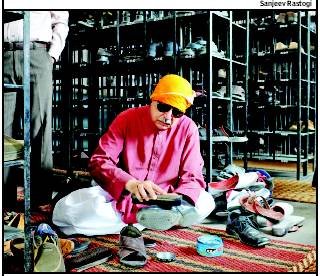
Bridges for Harmony
Ram Puniyani Life is full of paradoxes, and not all of them are intriguing. Some of them give a pleasant cozy feeling too. Recently (25 March, 2012) people saw the Pakistan’ Deputy Attorney General, Muhammad Khurshid Khan, Polishing the shoes of devotees in Gurudwara Rakab Ganj Delhi. This work is part of Seva (service) in…
-
Marx and the Materialist Tradition in Indian Philosophy
Ramkrishna Bhattacharya applies Karl Marx’s classical philological method—used in analyzing Greek fragments—to reconstruct Indian materialism. Rejecting uniform historical linearity and uncritical acceptance of anti-materialist representations, Bhattacharya highlights internal epistemological developments, showing how Cārvāka thinkers accepted perception-based inference while rejecting scriptural dogma and later revisionist interpretations.
-
Ancient Indian Materialism
In Marxism Today (January 1962), Dipak Nandy reviews D. P. Chattopadhyaya’s landmark book Lokayata. He explores how ancient Indian materialism, Tantrism, and Sāṃkhya philosophy emerged from early agricultural tribal communities, dismantling the anti-Marxist myth that materialist thought is fundamentally alien to Indian tradition.