“Skepticism or debunking often received the bad rap reserved for activities—like garbage disposal—that absolutely must be done for a safe and sane life, but seem either unglamorous or unworthy of overt celebration.”
— Stephen Jay Gould, evolutionary biologist, in his foreword to Michael Shermer’s Why People Believe Weird Things.
Dr. Stephen Jay Gould’s observation holds only partially true for Professor Abraham Kovoor, the celebrated Sri Lankan rationalist who passed away in September 1978. While Gould was right that debunking is vital for a safe and sane society, the pursuit was far from unglamorous for Kovoor.
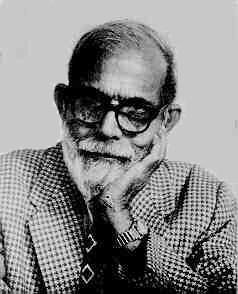
After retiring from teaching, Kovoor pursued debunking as a full-time calling, gaining immense public fame across India and Sri Lanka—the country where he took up citizenship after leaving Kerala. He became a popular radio host in Sri Lanka and maintained a close relationship with Prime Minister Sirimavo Bandaranaike.
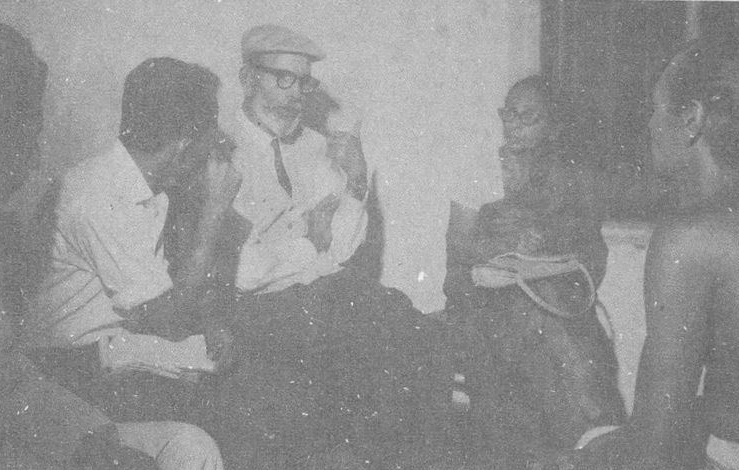
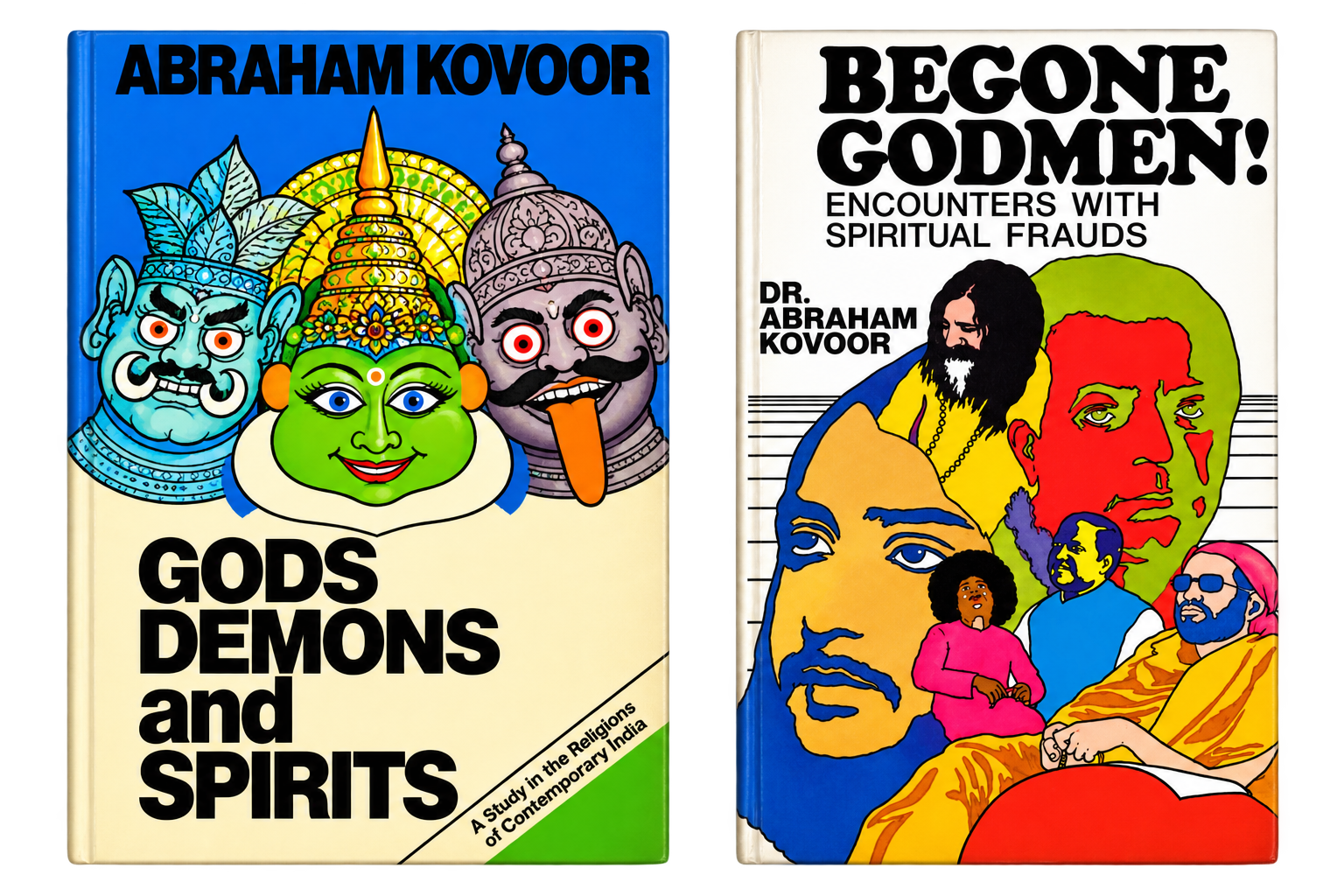
His work even reached mainstream cinema. The 1970s Malayalam blockbuster Punarjanmam, directed by K.S. Sethumadhavan, was based on Kovoor’s case diary (Son and Mother) and featured Kovoor playing himself. Following its box-office success, the film was remade in Tamil as Maru Piravi. Furthermore, the two essay collections published during his lifetime—Begone Godmen and Gods, Demons, and Spirits (Jaico Books)—remained long-term bestsellers, translated into several regional languages including Hindi, Kannada, Malayalam, Punjabi, and Tamil. Abraham Kovoor was, in every sense, a celebrity rationalist.
Roots of a Rationalist
Born in Tiruvalla, Kerala, on April 10, 1898, Kovoor was the son of Rev. Kovoor Eipe Thomma Katthanar, a Vicar General of the Mar Thoma Syrian Church of Malabar. After completing his education in Kerala and Kolkata, Kovoor entered academia, teaching briefly in Kottayam before relocating to Sri Lanka.
Despite his strict Christian upbringing, Kovoor rejected Christianity in adulthood, stating he “could not accept the Bible as the word of an omniscient God.” He settled in Sri Lanka because, in his view, “most Sri Lankans follow Gautama Buddha, who taught a philosophy more rational and tolerant than the founders of any other religion.”
Though Kovoor had investigated claims of the paranormal throughout his teaching career, it was only after retiring in 1958 at age 60 that he publicly launched his crusade against godmen and proponents of the supernatural. This late-life surge was unusual: while many lifelong atheists and social reformers drift toward faith or tradition in their twilight years, Kovoor did the exact opposite, adopting an increasingly militant rationalism in his final two decades.
The Challenge
Early in his activist career, Kovoor realized that articles and lectures alone were not reaching his primary targets—godmen, astrologers, and self-styled saints. In response, he threw down a public challenge.
First issued in the Ceylon Daily Mirror on June 17, 1963, Kovoor initially offered between 1,000 and 25,000 rupees to anyone who could use supernatural powers to correctly identify the serial number on a sealed ten-rupee note.
He later raised the reward to 100,000 Sri Lankan rupees and expanded the terms to cover 23 distinct supernatural claims. Though the challenge remained open until his death in September 1978, Kovoor never lost a single rupee. On the contrary, he occasionally profited when credulous followers deposited earnest money on behalf of various godmen—only for the godmen themselves to fail to show up.
A Master Science Educator
Kovoor’s celebrity stemmed not just from his famous challenge, but from his ability to explain complex scientific concepts with clarity and bite. His essays on life after death, rebirth, and reincarnation remain masterclasses in popular science communication.
In his essay “Do We Survive Death?”, Kovoor wrote:
“I do not hold the view that my life is located in a particular spot in my body. Life is generated in all living cells in my body and is sustained by the oxidative chemical activity within them. This chemical activity is maintained by my breathing and blood circulation. It is no different from the production of heat and light during the combustion of hydrocarbon in a burning candle. Heat and light do not depart to somewhere else when a candle is blown out, only to return when it is relit.
It is simply a case of chemical activity ceasing. Similarly, nothing ‘departs’ from my body when breathing and circulation stop. If my dead body were resuscitated through modern medical techniques, it would be wrong to assume a ‘departed soul’ had re-entered it.
My death will not occur at a single, abrupt moment. In a sense, I began dying decades ago. I began life as a parasite in my mother’s womb. About one-eighth of my biological matter died on the day I was born, in the form of the umbilical cord and placenta. From that day forward, I have been dying while growing. As countless cells die daily, new ones are born. Tissues leave my body constantly as cut hair, shaved facial hair, shed skin, fallen teeth, and metabolic waste.
This continuous process of cellular death will carry on until no living cells remain to multiply. Yet even after total biological death, the cornea of my eye may continue living in the eye of a recipient.
My final breath will be no different from the one I take right now—exhaling carbon dioxide and water vapor. I do not believe I possess a soul or spirit that will survive my physical death to enter a heaven or hell, roam as a ghost, or be reborn. If a soul exists, the majority of it must have departed long ago with the dead tissues I have already shed; and after my remaining physical body dies, a fraction of it would live on in the stranger who receives my corneal graft.”
Confronting the Superstitious
During the 1960s and 1970s, Kovoor spearheaded dynamic “Miracle Exposure Campaigns” across India, directly confronting high-profile godmen on their home turf.
In one notable episode, Kovoor repeatedly wrote to the prominent godman Sathya Sai Baba requesting a public meeting. When his letters went unanswered, Kovoor announced he would personally visit the godman’s ashram in Whitefield, Bangalore. Upon Kovoor’s arrival, Sai Baba abruptly departed for his secondary ashram in Puttaparthi to avoid an encounter.
These high-profile campaigns invigorated India’s rationalist movement, breathing new life into existing groups and sparking the creation of new skeptic organizations across the country. Modern Indian rationalist and skeptic movements owe a permanent debt to Kovoor’s tireless lectures, writings, and activism.
Appendix: Abraham Kovoor’s 100,000-Rupee Challenge
Declaration:
I, Abraham T. Kovoor of “Tiruvalla”, Pamankada Lane, Colombo-6 do hereby state that I am prepared to pay an award of 100,000 Sri Lankan rupees to any one from any part of the world who can demonstrate supernatural or miraculous powers under fool-proof and fraud-proof conditions. This offer will remain open till my death or till I find the first winner.
Godmen and saints who claim that they acquired miraculous powers through spiritual exercises and divine boons win this award if they can perform any of the following “miracles”:
- Read the serial number of a sealed up currency note.
- Produce an exact replica of a currency note.
- Stand stationary on burning cinders for half a minute without blistering the feet.
- Materialise from nothing an object I ask.
- Move or bend a solid object using psychokinetic power.
- Read the thought of another person using telepathic powers.
- Make an amputated limb grow even one inch by prayer, spiritual or faith healing powers, Lourdes water, blessing etc.
- Levitate in the air by yogic power.
- Stop the heart-beat for five minutes by spiritual power.
- Stop breathing for thirty minutes by spiritual power.
- Walk on water.
- Leave the body in one place and reappear in another place.
- Predict a future event.
- Develop creative intelligence or get enlightened through transcendental or meditation.
- Speak or understand an unknown language as a result of being possessed by a spirit, holy or evil.
- Produce a spirit or ghost to be photographed.
- Disappear from the negative when photographed.
- Get out of a locked room by spiritual power.
- Increase the quantity by weight of a substance by divine power.
- Detect a hidden object.
- Convert water into petrol or wine.
- Convert wine into blood.
Astrologers and palmists, who hoodwink the gullible by saying that astrology and palmistry are perfectly “Scientific”, can win my award if they can pick out correctly—within a margin of five percent error—those of males, females, and living and the dead from a set of ten palm prints or astrological charts giving the exact time of birth correct to the minute, and places of birth with their latitudes and longitudes.
This article is a slightly edited version of an essay originally published in the September 2008 issue of Bangalore Skeptic, a now-defunct e-zine, on the 30th anniversary of Abraham Kovoor’s death.
Leave a Reply