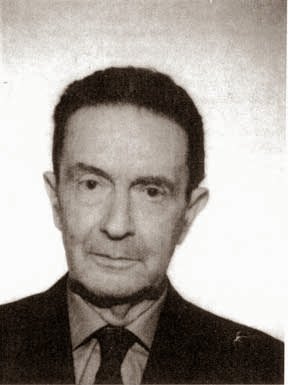
Ramkrishna Bhattacharya
Sebastiano
Timpanaro believed that ‘the agreement between materialism and
Leopardian pessimism had its basis in hedonism; and hedonism is the
basis of all scientific systems of ethics’ (On
Materialism p.66). I have already
critiqued Timpanaro’s concept of ‘materialist pessimism’
(Psyche and Society 11:
2 December 2013, 7-15). Let us now turn to the issue of hedonism1
vis-à-vis materialism,
particularly Marxism.
Timpanaro believed that ‘the agreement between materialism and
Leopardian pessimism had its basis in hedonism; and hedonism is the
basis of all scientific systems of ethics’ (On
Materialism p.66). I have already
critiqued Timpanaro’s concept of ‘materialist pessimism’
(Psyche and Society 11:
2 December 2013, 7-15). Let us now turn to the issue of hedonism1
vis-à-vis materialism,
particularly Marxism.
Like
optimism and pessimism, hedonism and asceticism or, in today’s
terms, consumerism and abstinence/self-denial, do not normally appear
in the studies of Marxism; nor has Terry Eagleton in his recent
delightful work, Why Marx was Right
(2011) included it as a query to be
answered.2 Similarly,
authors concentrating on Marxist morality, and, for that matter, the
ethical foundations of Marxism, generally do not seem to be concerned
with the issues that Timpanaro raises.3
Yet the issues themselves are not
of a trifling nature; they do demand a new look. It is all the more
necessary to review the matter, because Timpanaro does not refer to
Marxism alone but to materialism as a whole. Therefore a brief
historical overview of hedonism vis-à-vis materialism is called for.
optimism and pessimism, hedonism and asceticism or, in today’s
terms, consumerism and abstinence/self-denial, do not normally appear
in the studies of Marxism; nor has Terry Eagleton in his recent
delightful work, Why Marx was Right
(2011) included it as a query to be
answered.2 Similarly,
authors concentrating on Marxist morality, and, for that matter, the
ethical foundations of Marxism, generally do not seem to be concerned
with the issues that Timpanaro raises.3
Yet the issues themselves are not
of a trifling nature; they do demand a new look. It is all the more
necessary to review the matter, because Timpanaro does not refer to
Marxism alone but to materialism as a whole. Therefore a brief
historical overview of hedonism vis-à-vis materialism is called for.
#
Materialism
appeared in the west in the sixth/fifth century BCE with the advent
of ‘the first philosophers’ (Engels DN
p.186, George Thomson 1955) in
Greece. They have been given a collective title: ‘the
Presocratics.’ The contributions of Democritus (460-370 BCE),
Heraclitus (530-470 BCE), and the much-maligned post-Socratic
philosopher, Epicurus (c.341-270 BCE) were highly appreciated by Marx
(MECW 1:
25-76), Engels (AD p.401,
DN pp.44,
18690), and Lenin (CW 38:
267-70, 282, 291-297, 334, 346, etc.), all owing much to Hegel’s
History of Philosophy.
What attracted them most was their philosophy of nature, because it
was totally materialistic. Epicurus has generally been labelled by
some later writers as a thorough-going hedonist or eudaemonianist.
Horace (65-08 BCE), the Latin poet, for example, invites a friend:
‘When you want to smile then visit me: sleek, and fat I’m a hog,
well cared-for, one of Epicurus’ herd’ (Epistle
1.4.16). Many modern European
languages (I know of English, French, German, Italian, Portuguese,
and Spanish) have such words as Epicure, Epicurean or other
derivatives from Epicurus to suggest a gastronome, connoisseur of
good food and wine, and the like: in short, a person devoted to utter
sensualism. In spite of specific denials issued by the historians of
philosophy and contributors to the philosophical dictionaries and
encyclopedias (for some such examples, see R. Bhattacharya 2009/2011
pp.30, 124-26; 2010c p.21) this prejudice against the materialists
dies hard. It is all due to the bad name given to Epicurus by Horace,
the medieval Christian Church authorities, and others of the same
ilk. Apparently they knew nothing about Epicurus’ philosophical
views either of nature (atomism) or of humans (rational and
discriminating attitude towards life).4
Such ignorance, however, did not
prevent the fideists from slandering Epicurus and by implication
materialism as such.5
appeared in the west in the sixth/fifth century BCE with the advent
of ‘the first philosophers’ (Engels DN
p.186, George Thomson 1955) in
Greece. They have been given a collective title: ‘the
Presocratics.’ The contributions of Democritus (460-370 BCE),
Heraclitus (530-470 BCE), and the much-maligned post-Socratic
philosopher, Epicurus (c.341-270 BCE) were highly appreciated by Marx
(MECW 1:
25-76), Engels (AD p.401,
DN pp.44,
18690), and Lenin (CW 38:
267-70, 282, 291-297, 334, 346, etc.), all owing much to Hegel’s
History of Philosophy.
What attracted them most was their philosophy of nature, because it
was totally materialistic. Epicurus has generally been labelled by
some later writers as a thorough-going hedonist or eudaemonianist.
Horace (65-08 BCE), the Latin poet, for example, invites a friend:
‘When you want to smile then visit me: sleek, and fat I’m a hog,
well cared-for, one of Epicurus’ herd’ (Epistle
1.4.16). Many modern European
languages (I know of English, French, German, Italian, Portuguese,
and Spanish) have such words as Epicure, Epicurean or other
derivatives from Epicurus to suggest a gastronome, connoisseur of
good food and wine, and the like: in short, a person devoted to utter
sensualism. In spite of specific denials issued by the historians of
philosophy and contributors to the philosophical dictionaries and
encyclopedias (for some such examples, see R. Bhattacharya 2009/2011
pp.30, 124-26; 2010c p.21) this prejudice against the materialists
dies hard. It is all due to the bad name given to Epicurus by Horace,
the medieval Christian Church authorities, and others of the same
ilk. Apparently they knew nothing about Epicurus’ philosophical
views either of nature (atomism) or of humans (rational and
discriminating attitude towards life).4
Such ignorance, however, did not
prevent the fideists from slandering Epicurus and by implication
materialism as such.5
The same kind of
calumny has been directed against Carvaka, reputed to be the founder
of a materialist system of philosophy in India in or around the
eighth century CE. A verse has been attributed to him (or to the
supposed founder of the materialist system, Brihaspati) which
urges people to live happily, for nothing is beyond the ken of death;
once the body is reduced to ashes, there is no return.
Sayana-Madhava, a fourteenth-century south-Indian doxographer,
distorted a part of this verse by substituting ‘nothing is beyond
the ken of death’ by ‘consume clarified butter7
even by incurring debt’ (See
Bhattacharya 2009/2011 p.201-06). This unwarranted removal of a
clause and its replacement by a plea for crude self-indulgence by any
means, fair or foul, has proved to be highly effective. Even those
who do not know the ABC of philosophy, whether of the idealist or of
the materialist variety, think that the quintessence of the
Carvaka/Lokayata system is encapsulated in that gross counsel,
‘Consume clarified butter even by incurring debt’ (rinam
kritva ghritam pibet.)
calumny has been directed against Carvaka, reputed to be the founder
of a materialist system of philosophy in India in or around the
eighth century CE. A verse has been attributed to him (or to the
supposed founder of the materialist system, Brihaspati) which
urges people to live happily, for nothing is beyond the ken of death;
once the body is reduced to ashes, there is no return.
Sayana-Madhava, a fourteenth-century south-Indian doxographer,
distorted a part of this verse by substituting ‘nothing is beyond
the ken of death’ by ‘consume clarified butter7
even by incurring debt’ (See
Bhattacharya 2009/2011 p.201-06). This unwarranted removal of a
clause and its replacement by a plea for crude self-indulgence by any
means, fair or foul, has proved to be highly effective. Even those
who do not know the ABC of philosophy, whether of the idealist or of
the materialist variety, think that the quintessence of the
Carvaka/Lokayata system is encapsulated in that gross counsel,
‘Consume clarified butter even by incurring debt’ (rinam
kritva ghritam pibet.)
Since
all the works of all the materialist systems of India before the
Carvaka, such as the early Lokayata and bhutavada
(mentioned in the Tamil epic
Manimekalai (composed
between the fourth century and the seventh century CE) and those of
the Carvaka system itself (the base text, the commentaries or any
explicatory work of any kind), are lost to us up till now, no defence
put forward by the Pre-Carvakas or the Carvakas is known (For
sources, etc. see R. Bhattacharya 2013a). But as regards Epicurus,
even though almost all his writings are lost, a crystal-clear
explanation concerning what he meant by ‘living happily’ is
contained in a letter to a friend, which has fortunately come down to
us. He says:
all the works of all the materialist systems of India before the
Carvaka, such as the early Lokayata and bhutavada
(mentioned in the Tamil epic
Manimekalai (composed
between the fourth century and the seventh century CE) and those of
the Carvaka system itself (the base text, the commentaries or any
explicatory work of any kind), are lost to us up till now, no defence
put forward by the Pre-Carvakas or the Carvakas is known (For
sources, etc. see R. Bhattacharya 2013a). But as regards Epicurus,
even though almost all his writings are lost, a crystal-clear
explanation concerning what he meant by ‘living happily’ is
contained in a letter to a friend, which has fortunately come down to
us. He says:
‘When we say, then,
that pleasure is the end and aim, we do not mean the pleasures of the
prodigal or the pleasures of sensuality, as we are understood to do
by some through ignorance, prejudice, or wilful misrepresentation. By
pleasure we mean the absence of pain in the body and of trouble in
the soul. [131] It is not an unbroken succession of drinking-bouts
and of revelry, not sexual love, not the enjoyment of the fish and
other delicacies of a luxurious table, which produce a pleasant life
; it is sober reasoning, searching out the grounds of every choice
and avoidance, and banishing those beliefs through which the greatest
tumults take possession of the soul. Of all this the beginning and
the greatest good is prudence. Wherefore prudence is a more precious
thing even than philosophy; from it spring all the other virtues, for
it teaches that we cannot lead a life of pleasure which is not also a
life of prudence, honour, and justice ; nor lead a life of prudence,
honour, and justice, which is not also a life of pleasure. For the
virtues have grown into one with a pleasant life, and a pleasant life
is inseparable from them. (Letter to Menocoeus, in: Diogenes
Laertius, 10.131-32)’
Hedonism
in popular use means not only indulgence in food and drinks but also
Casanova-like licentiousness. This kind of willful misunderstanding
and hence conscious misrepresentation is not altogether new. Going
back to the fourth century BCE, we find Aristophanes, the Greek
comedian, in his play Ekklesizousai
(c.390 BCE, variously translated as
The Assemblywomen, Congresswomen,
Women in Parliament, Women Seize the Reins, etc.),
making fun of the idea of having everything in common, including
women. Any satire is expected to exaggerate the object that is being
held up for ridicule. Such a depiction therefore is only to be
expected in a satirical Aristophanic comedy. But it is not to be
taken as a truthful representation of what such ancient Greek
egalitarianists actually proposed.6
in popular use means not only indulgence in food and drinks but also
Casanova-like licentiousness. This kind of willful misunderstanding
and hence conscious misrepresentation is not altogether new. Going
back to the fourth century BCE, we find Aristophanes, the Greek
comedian, in his play Ekklesizousai
(c.390 BCE, variously translated as
The Assemblywomen, Congresswomen,
Women in Parliament, Women Seize the Reins, etc.),
making fun of the idea of having everything in common, including
women. Any satire is expected to exaggerate the object that is being
held up for ridicule. Such a depiction therefore is only to be
expected in a satirical Aristophanic comedy. But it is not to be
taken as a truthful representation of what such ancient Greek
egalitarianists actually proposed.6
The
picture in medieval India was no different. Krishnamishra (c.
eleventh century) in his allegorical play, Prabodha-candrodaya
(The rising of the moon of
Intellect), makes Carvaka say:
picture in medieval India was no different. Krishnamishra (c.
eleventh century) in his allegorical play, Prabodha-candrodaya
(The rising of the moon of
Intellect), makes Carvaka say:
‘Where
is the embrace of the long-eyed ones, the embrace pressing the
shoulder with one’s arms and which is pleasing because of the
prominent breasts compressed, and where is begging, fasting, penance,
exposure to the burning heat of the sun which emaciate the body of
these fools.’ (2.22 p.43. For a different translation, see C/L,
p.346)’
Sayana-Madhava in his
chapter on the Carvaka philosophy (chap.1) quotes the verse that
follows in this play:
chapter on the Carvaka philosophy (chap.1) quotes the verse that
follows in this play:
‘The pleasure which
arises to men from contact with sensible objects, Is to be
relinquished as accompanied by pain – such is the reasoning of
fools; The berries of paddy, rich with the finest white grains, What
man, seeking his true interest would fling away because these are
covered with husk and dust.’ (2.23 p.43; C/L p.249. For a
different translation, see C/L, p.346)
In
more recent times, socialists and communists have been similarly
attacked for advocating ‘free love,’ promoting freedom of women
from all social constraints, and abolishing such sanctimonious
institutions as marriage, family, etc. Marx and Engels in the
Communist Manifesto lashed
out against this unjust charge:
more recent times, socialists and communists have been similarly
attacked for advocating ‘free love,’ promoting freedom of women
from all social constraints, and abolishing such sanctimonious
institutions as marriage, family, etc. Marx and Engels in the
Communist Manifesto lashed
out against this unjust charge:
‘Abolition
[Aufhebung]
of the family! Even the most radical flare up at this infamous
proposal of the Communists…‘On what foundation
is the present family, the bourgeois family, based? On capital, on
private gain. In its completely developed form, this family exists
only among the bourgeoisie. But this state of things finds its
complement in the practical absence of the family among the
proletarians, and in public prostitution…The bourgeois family
will vanish as a matter of course when its complement vanishes, and
both will vanish with the vanishing of capital…The bourgeois sees his
wife a mere instrument of production. He hears that the instruments
of production are to be exploited in common, and, naturally, can come
to no other conclusion that the lot of being common to all will
likewise fall to the women…He has not even a
suspicion that the real point aimed at is to do away with the status
of women as mere instruments of production…For the rest, nothing
is more ridiculous than the virtuous indignation of our bourgeois at
the community of women which, they pretend, is to be openly and
officially established by the Communists. The Communists have no need
to introduce community of women; it has existed almost from time
immemorial.’ (Moscow ed. pp. 77-78)
All
this does not signify hedonism of any kind, neither in relation to
food and drinks, nor to man-woman relationship. In fact young Marx
and Engels had already taken their stand vis-àvis hedonism, as
evidenced in German Ideology. They
stated their view in no ambiguous terms:
this does not signify hedonism of any kind, neither in relation to
food and drinks, nor to man-woman relationship. In fact young Marx
and Engels had already taken their stand vis-àvis hedonism, as
evidenced in German Ideology. They
stated their view in no ambiguous terms:
‘The
philosophy which
preaches enjoyment is as old in Europe as the Cyrenaic school [see
note 1 below]. Just as in antiquity it was the Greeks
who were the protagonists of this
philosophy, so in modern times it is the French,
and indeed for the same reason, because their temperament and their
society made them most capable of enjoyment. The philosophy of
enjoyment was never anything but the clever language of certain
social circles who (sic) had the privilege of enjoyment. Apart from
the fact that the manner and content of their enjoyment was always
determined by the whole structure of the rest of society and suffered
from all its contradictions, this philosophy became a mere phrase
as soon as it began to lay claim to
a universal character and proclaimed itself the outlook on life of
society as a whole. It sank then to the level of edifying moralising,
to a sophistical palliation of existing society, or it was
transformed into its opposite, by declaring compulsory asceticism to
be enjoyment.’ (GI pp.469-70).
Marx and Engels, not to
speak of Lenin and his successors, did not deal with the question of
materialism vis-à-vis hedonism in their later writings. As shown
above, Marx and Engels had made up their mind about this in their
early phase, when they were engaged in the exercise of
‘self-clarification’.6 Yet Timpanaro states almost as
an established fact that hedonism is as much a part of materialism as
pessimism. This is an example of blatant revisionism in the domain of
philosophy. However, in order to refute Timpanaro’s claim, we need
to study the development of Marx-Engels’ approach through the
stages they underwent in formulating their approach to human life and
its goals. Let us examine the case against the backdrop of the
development of Marx’s and Engels’s outlook in this regard from
EPM (Economical and Philosophic
Manuscripts of 1844, also known and
often referred to as ‘Paris Manuscripts’), through GI
(The
German Ideology, 1845-46), to CM
(Communist
Manifesto, 1847-48).
Prof Ramkrishna Bhattacharya taught English at the University of Calcutta,
Kolkata and was an Emeritus Fellow of University Grants Commission. He is now a
Fellow of Pavlov Institute, Kolkata.
This paper was first published in Psyche and Society 12:1 May 2014, 4-1
speak of Lenin and his successors, did not deal with the question of
materialism vis-à-vis hedonism in their later writings. As shown
above, Marx and Engels had made up their mind about this in their
early phase, when they were engaged in the exercise of
‘self-clarification’.6 Yet Timpanaro states almost as
an established fact that hedonism is as much a part of materialism as
pessimism. This is an example of blatant revisionism in the domain of
philosophy. However, in order to refute Timpanaro’s claim, we need
to study the development of Marx-Engels’ approach through the
stages they underwent in formulating their approach to human life and
its goals. Let us examine the case against the backdrop of the
development of Marx’s and Engels’s outlook in this regard from
EPM (Economical and Philosophic
Manuscripts of 1844, also known and
often referred to as ‘Paris Manuscripts’), through GI
(The
German Ideology, 1845-46), to CM
(Communist
Manifesto, 1847-48).
Notes
To
the readers: Quotations from some
sources, more particularly from the works of Karl Marx and Frederick
Engels, unless otherwise mentioned, are taken from the texts
available in the Marxist Internet Archive. For facilitating
references and locating the exact place, the page numbers in the
print versions are also given, although the translations will vary to
some extent.
the readers: Quotations from some
sources, more particularly from the works of Karl Marx and Frederick
Engels, unless otherwise mentioned, are taken from the texts
available in the Marxist Internet Archive. For facilitating
references and locating the exact place, the page numbers in the
print versions are also given, although the translations will vary to
some extent.
-
In order to have a
general understanding of hedonism as a technical, philosophical
term, see ‘Aristippus of Cyrene (c. 435-350 BC),’
‘Cyrenaics,’ and ‘hedonism’ in Blackburn (or any other
dictionary/encyclopedia of western philosophy). See also Shields,
and Tännsjö. -
See, for instance,
Bottomore and others (eds.). There is no article on hedonism and no
reference to it in the article on ethics. See also Eagleton. -
See the works by
Ash, Kamenka, and Sayers, devoted exclusively to the place of ethics
in Marxism. -
It is interesting
to note that, while almost all the Presocratic and post-Socratic
philosophers such as Plato, Aristotle, and Cicero are placed in the
first circle of Dante’s Inferno (Canto 4), Epicurus and his
followers are separated and assigned to the sixth circle (Canto 10),
their sin being that they ‘make the soul die with the body.’ But
Dante did not continue to hold the same view of Epicurus throughout
his life. See Mazzeo pp.106-20 -
For a bird’s-eye
view of Epicurus and his philosophical views, particularly ethics,
see Bogomolov, pp. 259-78 and Shields (ed.), pp. 237-50. -
It is interesting
to observe that in medieval England, of all persons, Plato and
Seneca were taken to be the advocates of communism! In Piers the
Plowman by William Langland (c.1332-c.1400 CE) a passage runs as
follows:
Envy
heard this and bade Friars go to college And learn logic and law and
also the contemplative life, And preach to men of Plato and prove it
by Seneca, That all things under heaven ought to be in common (Passus
XX, p.198)
heard this and bade Friars go to college And learn logic and law and
also the contemplative life, And preach to men of Plato and prove it
by Seneca, That all things under heaven ought to be in common (Passus
XX, p.198)
-
Marx and Engels
did not succeed in publishing German Ideology in book form in
their life time. The ms lay ‘abandoned to the gnawing
criticism of the mice’. But they were not overly concerned, for
the main purpose behind writing the book was to achieve
self-clarification, and they felt they had achieved it. See GI,
pp. 13 and 681-82 n1. -
In another edition
of Axel published by J. M. Dent et Fils, the sentence occurs
on p. 260. The play, otherwise insignificant, is widely known for
this speech alone. -
For a somewhat
different translation of this highly significant passage see Capital
(Penguin Books), vol.1, 7:1, p. 284. -
This note is given
by Marx on page V of the manuscript where it is separated by a
horizontal line from the main text, but according to its meaning it
refers to this sentence. (Note by Progress Publishers)
Works Cited
Aristophanes.
The Knights, Peace, The Birds, The
Assemblywomen, Wealth. Trans. David
Barrett and Alan H. Sommerstein. Harmondsworth: Penguin Books, 1978.
The Knights, Peace, The Birds, The
Assemblywomen, Wealth. Trans. David
Barrett and Alan H. Sommerstein. Harmondsworth: Penguin Books, 1978.
Ash,
William. Marxism and Moral Concepts.
New York: Monthly Review Press, 1964.
William. Marxism and Moral Concepts.
New York: Monthly Review Press, 1964.
Ash,
William. Marxist Morality.
London: Howard Baker, 1988.
William. Marxist Morality.
London: Howard Baker, 1988.
Bhattacharya,
Ramkrishna. Studies on the
Cārvāka/Lokāyata.
Firenze (Florence): Societa Editrice Fiorentina, 2009; London:
Anthem Press, 2011.
Ramkrishna. Studies on the
Cārvāka/Lokāyata.
Firenze (Florence): Societa Editrice Fiorentina, 2009; London:
Anthem Press, 2011.
Bhattacharya,
Ramkrishna. Lokāyata Darśana and a Comparative Study with Greek
materialism, in: Partha Ghose (ed.), Materialism
and Immaterialism in India and the West: Varying Vistas. New
Delhi: Centre for the Studies on Civilizations, 12:5, 2010, pp.21-34.
(2010c)
Ramkrishna. Lokāyata Darśana and a Comparative Study with Greek
materialism, in: Partha Ghose (ed.), Materialism
and Immaterialism in India and the West: Varying Vistas. New
Delhi: Centre for the Studies on Civilizations, 12:5, 2010, pp.21-34.
(2010c)
Bhattacharya,
Ramkrishna Development of Materialism in India: the PreCarvakas
and the Carvakas, Esercizi Filosofici 8, 2013, pp. 112. (2013a)
http://www2.units.it/eserfilo/art813/bhattacharya813.pdf
Ramkrishna Development of Materialism in India: the PreCarvakas
and the Carvakas, Esercizi Filosofici 8, 2013, pp. 112. (2013a)
http://www2.units.it/eserfilo/art813/bhattacharya813.pdf
Blackburn, Simon.
The Oxford Dictionary of Philosophy. Oxford: Oxford University Press,
1994.
The Oxford Dictionary of Philosophy. Oxford: Oxford University Press,
1994.
Bogomolov, A. S.
History of Ancient Philosophy: Greece and Rome. Moscow: Progress
Publishers, 1985.
History of Ancient Philosophy: Greece and Rome. Moscow: Progress
Publishers, 1985.
Bottomore,
Tom and others (eds). A Dictionary of
Marxist Thought. New Delhi. Maya Blackwell/ Worldview, 2000 (second
edition).
Tom and others (eds). A Dictionary of
Marxist Thought. New Delhi. Maya Blackwell/ Worldview, 2000 (second
edition).
C/L
Cārvāka/Lokāyata.
Ed. Chattopadhyaya, Debiprasad in
collaboration with Mrinal Kanti Gangopadhyaya.. New
Delhi: Indian Council of Philosophical Research/Rddhi India, 1990.
Cārvāka/Lokāyata.
Ed. Chattopadhyaya, Debiprasad in
collaboration with Mrinal Kanti Gangopadhyaya.. New
Delhi: Indian Council of Philosophical Research/Rddhi India, 1990.
Concise Oxford
English Dictionary. Twelfth Edition. Eds. Angus Stevenson and
Maurice Waite. Oxford: Oxford University Press, 2011.
English Dictionary. Twelfth Edition. Eds. Angus Stevenson and
Maurice Waite. Oxford: Oxford University Press, 2011.
Dante. The Divine
Comedy. Translated by J. A. Carlyle (Inferno), T.Okey
(Purgatario), and P.H. Wicksteed (Paradiso). New York: Vintage Books,
n.d.
Comedy. Translated by J. A. Carlyle (Inferno), T.Okey
(Purgatario), and P.H. Wicksteed (Paradiso). New York: Vintage Books,
n.d.
de
l’isle-Adam, Comte de Auguste Villiers. Axel.
Paris: Maison Quantin. 1890. (A copy
of this edition is to be found in the University of Toronto Library,
Call no. LF V758.2, accn. no. 153342, also available on the web).
Another copy of the play published by J. M. Dent et Fils from Paris,
London, and New York, n.d., can be read on the web:
http://www.archive.org/details/axelvill00vill
l’isle-Adam, Comte de Auguste Villiers. Axel.
Paris: Maison Quantin. 1890. (A copy
of this edition is to be found in the University of Toronto Library,
Call no. LF V758.2, accn. no. 153342, also available on the web).
Another copy of the play published by J. M. Dent et Fils from Paris,
London, and New York, n.d., can be read on the web:
http://www.archive.org/details/axelvill00vill
Eagleton,
Terry. Why Marx was Right.
Kolkata: Seagull Books, 2012.
Terry. Why Marx was Right.
Kolkata: Seagull Books, 2012.
Engels,
Frederick. Anti-Dühring.
Moscow: Progress Publishers, 1977.
Frederick. Anti-Dühring.
Moscow: Progress Publishers, 1977.
Engels, Frederick. The
Condition of the Working-Class in England. Moscow: Progress
Publishers, 1980.
http://www.marxists.org/…/Engles
(sic)
Condition of the Working-Class in England. Moscow: Progress
Publishers, 1980.
http://www.marxists.org/…/Engles
(sic)
Engels,
Frederick. Dialectics of Nature.
Moscow: Progress Publishers,
1982.
Frederick. Dialectics of Nature.
Moscow: Progress Publishers,
1982.
Engels,
Frederick. Ludwig Feurbach and the
End of German Classical Philosophy, in
Marx-Engels, On Religion, Moscow:
Foreign Languages Publishing House, n. d.
http://www.marxists.org/archive/marx/works/1886/ludwig-feuerbach/ch02.htm
Frederick. Ludwig Feurbach and the
End of German Classical Philosophy, in
Marx-Engels, On Religion, Moscow:
Foreign Languages Publishing House, n. d.
http://www.marxists.org/archive/marx/works/1886/ludwig-feuerbach/ch02.htm
Engels,
Frederick. The Peasants’ War in
Germany. Moscow: Progress
Publishers, 1969.
https://www.marxists.org/archive/marx/works/1850/peasant-war-germany/ch03.htm
Frederick. The Peasants’ War in
Germany. Moscow: Progress
Publishers, 1969.
https://www.marxists.org/archive/marx/works/1850/peasant-war-germany/ch03.htm
Hegel,
G.W.F. The Philosophy of History.
New York: Dover Publications, n.d.
G.W.F. The Philosophy of History.
New York: Dover Publications, n.d.
Horace.
Epistles.
Translated by A. S. Kline © 2005
http://www.poetryintranslation.com/PITBR/Latin/HoraceEpistlesBkIEpIV.htm
Epistles.
Translated by A. S. Kline © 2005
http://www.poetryintranslation.com/PITBR/Latin/HoraceEpistlesBkIEpIV.htm
Kamenka, Eugene. The
Ethical Foundations of Marxism. London and New York: Routledge
and Kegan Paul, 1962.
Ethical Foundations of Marxism. London and New York: Routledge
and Kegan Paul, 1962.
Kamenka,
Eugene. Marxism and Ethics.
London: Macmillan, 1969.
Eugene. Marxism and Ethics.
London: Macmillan, 1969.
Krishnamishra.
Prabodhacandrodaya.
Ed. and Trans. by Sita Krishna Nambiar. Delhi: MLBD, 1971.
Prabodhacandrodaya.
Ed. and Trans. by Sita Krishna Nambiar. Delhi: MLBD, 1971.
Langland,
William. The Book concerning Piers
the Plowman. Rendered into modern
English by Donald and Rachel Attwater. Ed. Rachel Attwater.
London: Dent/Everyman’s Library, 1967.
William. The Book concerning Piers
the Plowman. Rendered into modern
English by Donald and Rachel Attwater. Ed. Rachel Attwater.
London: Dent/Everyman’s Library, 1967.
Lenin. V.I.
Philosophical Notebooks. Collected Works, Vol. 38. Moscow:
Foreign Languages Publishing House, 1961.
Philosophical Notebooks. Collected Works, Vol. 38. Moscow:
Foreign Languages Publishing House, 1961.
Marx, Karl. Capital.
Vol. I. Trans. Samuel Moore and Edward Aveling. Moscow: Progress
Publishers, n.d.
https://www.marxists.org/archive/marx/works/1867-c1/ch07.htm
Vol. I. Trans. Samuel Moore and Edward Aveling. Moscow: Progress
Publishers, n.d.
https://www.marxists.org/archive/marx/works/1867-c1/ch07.htm
Marx,
Karl. Capital.
Vol. I. Trans. Ben Fowkes. Harmondsworth: Penguin Books, 1976.
Karl. Capital.
Vol. I. Trans. Ben Fowkes. Harmondsworth: Penguin Books, 1976.
Marx,
Karl. Difference between the
Democritean and Epicurean Philosophy of Nature in:
Marx-Engels, Collected Works (MECW), Vol. 1.
Moscow: Progress Publishers, 1975.
Karl. Difference between the
Democritean and Epicurean Philosophy of Nature in:
Marx-Engels, Collected Works (MECW), Vol. 1.
Moscow: Progress Publishers, 1975.
Marx, Karl. Economic
and Philosophic Manuscripts of 1844. Moscow: Foreign Languages
Publishing House (FLPH), 1961.
https://www.marxists.org/archive/marx/…/1844/manuscripts/preface.htm
and Philosophic Manuscripts of 1844. Moscow: Foreign Languages
Publishing House (FLPH), 1961.
https://www.marxists.org/archive/marx/…/1844/manuscripts/preface.htm
Marx, Karl [and
Frederick Engels]. Critique of the Gotha Programme. Peking:
Foreign Languages Press, 1976. Marx, Karl and Frederick Engels.
Critique of the Gotha Programme, etc. Moscow: Foreign
Languages Publishing House (FLPH), n.d.
https://www.marxists.org/archive/marx/works/1875/gotha/ch01.htm
Frederick Engels]. Critique of the Gotha Programme. Peking:
Foreign Languages Press, 1976. Marx, Karl and Frederick Engels.
Critique of the Gotha Programme, etc. Moscow: Foreign
Languages Publishing House (FLPH), n.d.
https://www.marxists.org/archive/marx/works/1875/gotha/ch01.htm
Marx,
Karl and Frederick Engels. The German
Ideology. Moscow: Progress
Publishers, 1968.
www.marxists.org/archive/marx/works/1845/german…/ch01a.htm
Karl and Frederick Engels. The German
Ideology. Moscow: Progress
Publishers, 1968.
www.marxists.org/archive/marx/works/1845/german…/ch01a.htm
Marx,
Karl and Frederick Engels. Manifesto
of the Communist Party. Moscow:
Foreign Languages Publishing House (FLPH), n.d.
Karl and Frederick Engels. Manifesto
of the Communist Party. Moscow:
Foreign Languages Publishing House (FLPH), n.d.
Marxist update: Anon.
Philosophy of hedonism.
http://marxistupdate.blogspot.in/2011/10/philosophy-of-hedonism.html
downloaded on 27.2.2014.
Philosophy of hedonism.
http://marxistupdate.blogspot.in/2011/10/philosophy-of-hedonism.html
downloaded on 27.2.2014.
Mazzeo, Joseph Anthony.
Dante and Epicurus, Comparative Literature, 10:2 Spring 1958,
pp.106-20.
Dante and Epicurus, Comparative Literature, 10:2 Spring 1958,
pp.106-20.
Packard,
Vance. The Hidden Persuaders.
New York: David McKay Co., 1960.
Vance. The Hidden Persuaders.
New York: David McKay Co., 1960.
Ryazanoff,
D (ed.). Communist Manifesto of Karl
Marx and Frederick Engels. Calcutta:
Radical Book Club, 1972.
D (ed.). Communist Manifesto of Karl
Marx and Frederick Engels. Calcutta:
Radical Book Club, 1972.
Sayana-Madhava.
Sarvadarsanasamgraha,
Chap. 1. See C/L.
Sarvadarsanasamgraha,
Chap. 1. See C/L.
Sayers, Sean. Marxism
and Morality -revised.doc -marxismandmorality.pdf
and Morality -revised.doc -marxismandmorality.pdf
http://www.kent.ac.uk/secl/philosophy/articles/sayers/marxismandmorality.pdf
downloaded on 27.2.2014
downloaded on 27.2.2014
Shields, Christopher
(ed.). The Blackwell Guide to Ancient Philosophy. Malden MA:
Blackwell Publishing, 2006.
(ed.). The Blackwell Guide to Ancient Philosophy. Malden MA:
Blackwell Publishing, 2006.
Tännsjö, Rorbjörn.
Hedonistic Utilitarianism. Edinburgh: Edinburgh University
Press, 1998. [Extracts available on the net.]
Hedonistic Utilitarianism. Edinburgh: Edinburgh University
Press, 1998. [Extracts available on the net.]
Thomson,
George. The First Philosophers
(Studies in Ancient Greek Society,
vol. 2). London: Lawrence & Wishart, 1955.
George. The First Philosophers
(Studies in Ancient Greek Society,
vol. 2). London: Lawrence & Wishart, 1955.
Timpanaro, Sebastiano.
On Materialism. London: Verso, 1980.
On Materialism. London: Verso, 1980.
Acknowledgements:
Amitava Bhattacharyya, Amlan Dasgupta, Chinmay Guha, Debapriya Pal,
and Sunish Kumar Deb. The usual disclaimers apply.
Amitava Bhattacharyya, Amlan Dasgupta, Chinmay Guha, Debapriya Pal,
and Sunish Kumar Deb. The usual disclaimers apply.
Prof Ramkrishna Bhattacharya taught English at the University of Calcutta,
Kolkata and was an Emeritus Fellow of University Grants Commission. He is now a
Fellow of Pavlov Institute, Kolkata.
This paper was first published in Psyche and Society 12:1 May 2014, 4-1
Leave a Reply