 |
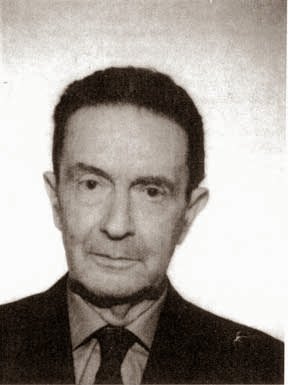
Sebastiano Timpanaro |
One of the novel and surprising concepts proposed by Sebastiano Timpanaro (1923-2000), the well-known Marxist philologist-cum-philosopher, is that of ‘materialist pessimism’ (p.66). His plea is to recognize this concept as a part of the Marxist worldview. Time and again he comes back to it in his book, Sul Materialismo (1970, translated as On Materialism with an Introduction to the English edition). In what follows we intend to critique his view in some detail.
Optimism is generally accepted to be inherent in Marxism, although its founding fathers, Marx and Engels, never declared it in so many words. Engels in his Anti-Dühring somewhat ecstatically declared: ‘It (sc. socialism) is humanity’s leap from the realm of necessity into the realm of freedom’ (p.344).1 Such a statement might suggest to the unwary reader the negation of necessity, of specific patterns of causation as a whole. Marx in Capital was more cautious in his formulation although he used the same terms:
‘The realm of freedom really begins only where labour determined by necessity and external expediency ends; it lies by its very nature beyond the sphere of material production proper….The true realm of freedom, the development of human power as an end in itself begins beyond it, though it can only flourish with this realm of necessity as its basis.’ (3: pp.958-59)
[T]he juxtaposition of a historical and social optimism (communism as a now certain goal of human history, even if the price paid with Stalinism seemed even at that time excessive to many of us, despite our inability to see any alternative to Stalinism other than a social-democratic one) and a pessimism with respect to nature’s oppression of man, which would continue to be a cause of unhappiness even in communist society.’ (pp.10-11)
Timpanaro does not think in terms of any illusory emancipation from the clutch of the three adversaries. Hence he prefers to call his view ‘materialist pessimism’, for there is no real escape from them. Humans have to submit to the scourge resulting from disease, old age, and finally the inevitability of the cessation of life. Whether in the preclass society or the class society or the classless society, these three enemies will always dog the footsteps of humans, irrespective of all other differences that mark off one individual from the other. It is the forced admission of the inevitability of the human condition that makes Timpanaro believe that, instead of attempting to find any escape route, humans must accept ‘man’s biological frailty’ (p.18). He further observes:
‘“Physical ill”… cannot be ascribed solely to bad social arrangements; it has its zone of autonomous and invincible reality’ (p.20). He cautions: ‘To maintain that, since the ‘biological’ is always presented to us as mediated by the ‘social’, the ‘biological’ is nothing and the ‘social’ is everything, would once again be idealist sophistry. If we make it ours, how are we to defend ourselves from those who will in turn maintain that, since all reality (including economic and social reality) is knowable only through language (or through the thinking mind), language (or the thinking mind) is the sole reality, and all the rest is abstraction?’ (p.45)
‘Using these same dialectics, he (sc. Fourier) argues against the talk about illimitable human perfectibility, that every historical phase has its period of ascent and also its period of descent, and he applies this observation to the future of the whole human race. As Kant introduced into natural science the idea of the ultimate destruction of the earth, Fourier introduced into historical science that of the ultimate destruction of the human race.’ (p.315).2
‘Nevertheless, “all that comes into being deserves to perish”. Millions of years may elapse, hundreds of thousands of generations be born and die, but inexorably the time will come when the declining warmth of the sun will no longer suffice to melt the ice thrusting itself forward from the poles; when the human race, crowding more and more about the equator, will finally no longer find even there enough heat for life; when gradually even the last trace of organic life will vanish; and the earth, an extinct frozen globe like the moon, will circle in deepest darkness and in an ever narrower orbit about the equally extinct sun, and at last fall into it. Other planets will have preceded it, others will follow it; instead of the bright, warm solar system with its harmonious arrangement of members, only a cold, dead sphere will still pursue its lonely path through universal space. And what will happen to our solar system will happen sooner or later to all the other systems of our island universe; it will happen to all the other innumerable island universes, even to those the light of which will never reach the earth while there is a living human eye to receive it.’ (pp.35-36)
…till man’s exhausted progeny
Confined beneath the equator
By the call of fleeting warmth
Has a single female, one man.
Not only Carducci but also Giacomo Leopardi (1798–1837), another Italian poet, is brought in to reinforce the theme of pessimism. Leopardi’s pessimism, Timpanaro asserts, is ‘radically different’ from that of all earlier romantics and existentialists from Schopenhauer to Kierkegaard. But Timpanaro makes a distinction between Leopardi’s idea of ‘materialist pessimism’ and the pessimism of all the central European thinkers. All of them had ‘an anti-materialist, anti-Enlightenment, anti-jacobin orientation, and, as expected, all end up in, or at least tend towards, more or less exclusively religious positions’ (p.19), whereas Leopardi’s pessimism flowed in a different terrain.
Timpanaro also warns his readers that he does not propose ‘yet another marriage of Marxism and “Frankfurt” pessimism, of existentialist or Freudian ancestry’ (p.18). His conception of materialist pessimism, he claims, is derived from the classics of Marxism itself and, notwithstanding such pessimism, the struggle for the betterment of humanity will continue.
#
I hope I have not distorted Timpanaro’s view in any way. In order to avoid all willful or unintentional distortion, I have tried to make him propound his view as much as possible in his own words. Now let us examine his view in some detail.
Marx, on the other hand, understood that every person has his or her own limitations and, therefore, even in the communist society he did not expect everyone to contribute in equal measures to social welfare. That is why he spoke of ‘from each according to his ability to each according to his needs’. In the Critique of the Gotha Programme, Marx also emphasized that the needs of every person cannot be the same: some will need more, some less:
‘Further, one worker is married, another not; one has more children than another, and so on and so forth. Thus, with an equal performance of labour, and hence an equal share in the social consumption fund, one will in fact receive more than another, one will be richer than another, and so on. To avoid all these defects, right instead of being equal would have to be unequal.’ (p.22)
Notwithstanding this very practical view Lenin did assert: ‘Progress, if we leave out for the moment the possibility of temporary steps backward, can be made only in the direction of socialist society, only in the direction of the socialist revolution.’ (1974: p.316. Emphases in the original)
And the true socialist society will not appear immediately after the socialist revolution; it will take time. One should be prepared for facing ‘occasional gigantic leaps back’ at every step. In any case, there will be a first stage when the society can ensure only this much: ‘from each according to his ability, to each according to his work.’ After traversing a long way humankind will reach the second stage. Marx in his Critique of the Gotha Programme said:
‘In a higher phase of communist society, after the enslaving subordination of the individual to the division of labour, and therewith also the antithesis between mental and physical labour, has vanished; after labour has become not only a means of life but life’s prime want; after the productive forces have also increased with the all-around development of the individual, and all the springs of co-operative wealth flow more abundantly – only then can the narrow horizon of bourgeois right be crossed in its entirety and society inscribe on its banners: From each according to his ability, to each according to his needs!’ (p.22)
When Engels spoke of ‘the ultimate extinction of humanity’, he was not at all being pessimistic. He accepted the fact quite calmly as something inevitable, and as unavoidable as the death of every single individual member of the human species (and of every other species which has animal as its genus). When Marx spoke of ‘a higher phase of communist society’, he was not being optimistic to the extent that humans will then be able to overcome the perils of old age, disease, and death. The natural or biological terrain was not at issue. Keeping into mind the possibility, nay the certainty of the ultimate setback, Marxists take upon themselves the task of studying human society, a human construct, and seek to transform the world.
Limitless progress (in which even a utopian socialist like Fourier did not believe) is a grand idea, but it has to be understood in terms of the limited nature of humankind. Humans do not have wings but that does not mean that they can never move in air. Aeroplanes were invented to overcome the ‘natural’ limitation. What mythographers imagined could not go beyond the limits of their experience. The Greeks conceived of Daedalus and his son, Icarus, flying with artificial wings. The wings closely resembled those of birds with the difference that they had to be attached to the body with wax. Quite naturally, when Icarus, defying his father’s advice, soared higher and higher, the wax got melted by the heat of the sun. Consequently, he fell down and died. Apparently, the mythographers too knew or rather felt that flying like birds in their own fashion was not destined for humans. Indian mythographers, on the other hand, conceived the idea of a chariot with wings. Such a chariot, however, was meant for Indra, the king of the gods or for Kubera, a demi-god in charge of wealth lying underground. Royalties like Rama (as said in the Uttarakanda of the Ramayana) or Dushyanta (as stated in Kalidasa’s play, Abhijnana-Sakutalam, The Signet Ring of Sakuntala) were sometimes offered the service of such aerial chariots, but that was all. Common humans were excluded from such a privilege. There was always a belief underlying such fancies that flying was after all something to be wished for but never to be attained. However, by inventing the aeroplane, all limits set by nature in this sphere were successfully bypassed. What was not supposed to happen eventually did happen, not however by defying necessity but by appreciating or recognizing it (in the sense of getting insight into it) and circumventing it by other means.4
Nevertheless, all limitations set by nature cannot be overcome or subverted or bypassed by inventing novel gadgets. The three archetypal enemies, namely, old age, disease, and death, are of such kind. Thanks to the giant strides made in the world of medicine and surgery, human longevity has been immensely extended. Yet immortality is a dream till now. The fanciful idea of ‘the philosopher’s stone’ or that strange ‘elixir of life’ that would ensure immortality drove hundreds, if not thousands, of medieval alchemists to search for such magic objects. Yet it was no better than a wild goose chase. Neither old age nor death nor disease can as yet be exterminated, although old age can be made more bearable than before; even such diseases that had been regarded as incurable in the past can now be cured to a large extent, and death too in some cases at least can be less painful than it had been even a few years back. Further inventions in medicine and surgery may bring further consolations and comforts which we cannot conceive at the present juncture, but such faith in further improvements is not at all unjustified.
What I wish to emphasize is that recognizing the inevitability of the presence of the three inescapable adversaries of humankind need not lead to pessimism. On the contrary, a stoic-like acceptance of decay and death is to be strongly recommended for every rationalist. Death after all is not something for which man alone is predestined. Without death, the population of the whole living world would go on increasing, so much so that there would inevitably be a population explosion that would cause famines and disasters. It would lead to inconceivable chaos. Death is necessary in order to make room for the next generations: the old must yield to the new. Thus decay and death are a necessary part of nature’s schema. There is nothing to be pessimistic about it.
It is rather surprising that Timpanaro who, against the concerted campaign of some self-styled Marxologists, defended Engels’s rightful claim to be regarded as a cofounder of Marxism, did not care to remember what Engels had said about life and death in his Dialectics of Nature. Let me quote the whole passage:
‘Life and death. Already no physiology is held to be scientific if it does not consider death as an essential element of life (note, Hegel, Enzyklopädie, I, pp. 152-53), the negation of life as being essentially contained in life itself, so that life is always thought of in relation to its necessary result, death, which is always contained in it in germ. The dialectical conception of life is nothing more than this. But for anyone who has once understood this, all talk of the immortality of the soul is done away with. Death is either the dissolution of the organic body, leaving nothing behind but the chemical constituents that formed its substance, or it leaves behind a vital principle, more or less the soul, that then survives all living organisms, and not only human beings. Here, therefore, by means of dialectics, simply becoming clear about the nature of life and death suffices to abolish an ancient superstition. Living means dying.’ (p.295)
It would be absurd to think that no human ever thought in terms of hope or despair before these too words were coined. There was Heraclitus, a Presocratic philosopher in the sixth century BCE, who was branded as ‘the weeping philosopher’ (as opposed to Democritus, ‘the laughing philosopher’).6. But such an appellation (the weeping philosopher) does not entail any grievance against death as if it was a conspiracy of nature to deny humankind of immortality which is our species’ birthright!
We may in this connection think of the (e)utopia (both ‘good place’ and ‘noplace’) of ancient India, the mythical land called Uttarakuru. Right from the Vedic times down to the epics and the Puranas, we read of this land of plenty and prosperity.9 Uttarakuru differs from the then world (and today’s world too) in two major respects: (a) there is no private property (amama, literally, not-mine. Cf. Latin meum and teum, mine and yours), and (b) there is no marriage (aparigraha) there. These two features reflect the justified yearning for the abolition of private property and of patriarchy which imposes marriage as the only approved form of male-female sexual relationship. The second is not unrelated to the first, for marriage entails the domination of husband over wife, and inheritance of property from fathers to their legitimate children. Thus the legend of Uttarakuru points to a valid form of society, free from the bondage of private property and the laws of inheritance. The demand for the abolition of these two evils is nothing impossible to achieve. The socialist programme proposed by such late eighteenth- and early nineteenth-century social thinkers as Fourier, Owen, St. Simon and others, culminating in the Communist Manifesto by Marx and Engels (1848) leads to the same direction.
Timpanaro’s concept of pessimism, drawn from Carducci and Leopardi, seems to be a yearning for something which is against the laws of nature. The concept of pessimism is thereby overextended: it transgresses the limits set by nature, ‘the natural terrain’ to which humans belong and must belong. Instead of thinking in terms of either optimism or pessimism, a rationalist should rather pay more attention to what is necessary and achievable, whether in the short or in the long run, rather than crave for what is neither required nor probable to happen.
Notes and References
1 In the extract from Anti-Dühring published as a separate book, Socialism: Utopian and Scientific, the sentence reads: ‘It is the ascent of man from the kingdom of necessity to the kingdom of freedom’ (p.82).
2 This translation by Clemens Palme Dutt, as found in the Moscow edition (1977), differs a little from what has been reproduced in the English rendering of Timpanaro’s book (p.98) from the New York edition of Anti-Dühring (1940 p.285).
3 Speaking of the ‘giants’ who appeared during the Renaissance, Engels said: ‘The heroes of that time were not yet in thrall to the division of labour, the restricting influence of which, with its production of one-sidedness we so often notice in their successors’ (1982 p.22). In Holy Family Marx and Engels observed: ‘There is no need for any great penetration to see from the teaching of materialism on the original goodness of man, the omnipotence of experience, habit and education, and influence of environment on man, …how necessarily materialism is connected with communism and socialism’ (1975 p.154).
4 Engels in Anti-Dühring quoted from Hegel a sentence, ‘…ist die Freiheit, die Einsicht in die Notwindigkeit’. Emile Burns translated it as ‘Freedom is the appreciation of necessity’ (Moscow ed. p.140). But there is ‘recognition’ in place of ‘appreciation’ in the Peking translation (p.144). In the Moscow translation of Lenin’s Materialism and Empirio-Criticism, in rendering the same sentence from Engels/Hegel, there is ‘recognition’ in the New York edition of Lenin’s Collected Works (vol. 13 p.154) whereas in the Moscow edition of the same (vol.14 p.187) and in the text published in separate book form (n.d., p.190) there is ‘appreciation’. All this has caused and still causes a lot of confusion. John Somerville in a seminal essay suggested: ‘The word “insight,” much closer to ‘Einsicht” than is “appreciation” or “recognition,” pointedly suggests, as part of its meaning, a basis for better action and control (which was central to Engels’ thought)…’ (p.20).
5 All references are to the Oxford English Dictionary (compact edition).
6 See Bogomolov, pp.52, 152. The source may be Seneca, p.50 n17 (as stated in Wikipedia).
7 For the importance of utopias in history see Morton, and Bloch.
8 Literally utopia in Latin signifies ‘no place’, u topia. The generic name of all such imaginary lands has been adapted from the title of More’s work. Some specimens of earlier and later utopias are available in J.W. Johnson (ed.), and More’s Utopia (ed. R.M. Adams).
9 See R. Bhattacharya 2000 and 2004 for details.
Works Cited
Bhattacharya, Ramkrishna. (E)utopia and (E)uchronia in Trisasti-salaka-purusa-carita, Sambodhi. Vol. 27, 2004, pp.37-49.
Bhattacharya, Ramkrishna. Uttarakuru: The (E)Utopia of Ancient India, Annals of the Bhandarkar Oriental Research Institute. Vol. 81, 2000, pp.191-201.
Bloch, Ernst. Something Missing: A Discussion between Ernst Bloch and Theodor W. Adorno on the Contradictions of Utopian Thinking (1975). The Utopian Function of Art and Literature: Selected Essays. Cambridge, Mass. and London: The MIT Press, 1988.
Bogomolov, A. S. History of Ancient Philosophy. Moscow: Progress Publishers, 1985.
Engels, Frederick. Anti-Dühring. Moscow: Progress Publishers, 1977. (Unless mentioned otherwise, all quotations are from this edition.)
Engels, Frederick. Anti-Dühring. Peking: Foreign Languages Press, 1976.
Engels, Frederick. Dialectics of Nature. Moscow: Progress Publishers, 1982.
Engels, Frederick. Socialism: Utopian and Scientific. London: George Allen & Unwin, 1925.
Johnson, J.W. (ed.). Utopian Literature: A Selection. New York: The Modern Library, 1968.
Lenin, V.I. Junius Pamphlet, Collected Works. Vol.22. Moscow: Progress Publishers, 1974.
Lenin, V.I. Materialism and Empirio-Criticism in: Collected Works. Vol.13. New York: International Publishers.
Lenin, V.I. Materialism and Empirio-Criticism in: Collected Works. Vol.14. Moscow: Progress Publishers, 1972.
Lenin, V.I. Materialism and Empirio-Criticism. Moscow: Foreign Languages Publishing House, n.d.
Marx, Karl. Capital. Vol.3. Harmondsworth: Penguin Books, 1981.
Marx, Karl. Critique of the Gotha Programme. Moscow: Foreign Languages Publishing House, n.d.
Marx, Karl and Frederick Engels. The Holy Family. Moscow: Progress Publishers, 1975.
More, Thomas. Utopia. Ed. Robert M. Adams. New York and London: W.W. Norton & Co., [1992].
Morton, A.L. Utopia as a Reflection of Social Ideas. MarxismToday, November 1962, pp.336-42.
Oxford English Dictionary, The. The Compact Edition. Oxford: Clarendon Press, 1971.
Seneca, Lucius Annaeus. Moral and Political Essays. Trans. John M. Cooper and J.F. Procopé.
Cambridge: Cambridge University Press, 1995.
Somerville, John. Marxist Ethics, Determinism, and Freedom. Philosophy and Phenomenological Research. Vol.28 No.1 September 1967, pp.17-23 (available on the net). Reprinted in Psyche and Society. Vol.10 No.2, December 2012.
Timpanaro, Sebastiano. On Materialism. London: Verso, 1980.
Prof Ramkrishna Bhattacharya taught English at the University of Calcutta,
Kolkata and was an Emeritus Fellow of University Grants Commission. He is now a
Fellow of Pavlov Institute, Kolkata.
This paper was first published in Psyche and Society 11:2 December 2013 pp.7-15.
Leave a Reply