times, to cite an old cliché. The present socio-political scenario in India
compels one to remember that history repeats itself and in doing so serves the
role of a teacher― it throws a welcome light on the contemporary events and
helps negotiate and overcome an otherwise baffling crisis. Indeed, quite a few
recent events in India do appear in an altogether new perspective when seen in
the context of one of the darkest episodes of modern world history― Hitler’s
rule in Germany. It is true, of course, that the BJP-led central government has
to work within the framework of a democratic set-up and, therefore, the
conditions in India and Nazi Germany cannot be identical. But there are
certainly signs that are strikingly similar.
 Nazism (or for that
matter, fascism) resorted to a dual mechanism to consolidate itself. The
repressive regime propagated lies and exerted brute force by an invidious
exploitation of the state machinery, besides letting loose its rank-and-file
cadres (under various organizations like SA, SS, etc.) on its political
opponents. To make things clear and simple, I shall limit myself to refer to only
one event that bears obvious resemblance to the present picture― the Reichstagfire (27 February 1933) and its direful consequences. The attack on the
parliament building in Berlin was regarded by the Nazis as an act of
incendiarism and communists were held responsible for plotting to revolt
against the German government. This event was used as a pretext to strengthen
Hitler’s power before the elections in March. He passed an emergency decree to
suspend civil liberties (which were never reinstated during Nazi reign) and
ordered mass arrests of communists, social democrats and other progressives.
Nazi newspapers helped his cause by propagating the ‘news’ of insurrection and
moulded public opinion which eventually isolated the communists from the
masses. Five communists (including Georgi Dimitrov, a member of the Bulgarian
Communist Party and head of all Comintern operations in western Europe) were
arrested in connection with the Reichstag fire and were tried in the Supreme
Court at Leipzig. At the end of the trial, however, only one (Marinus van der
Lubbe, a half-wit and formerly a Dutch communist) was found guilty and beheaded
by guillotine. The 2 rest were acquitted and sent to the then USSR (after a
sustained effort of the anti-fascist forces of the world) where they were
greeted as Soviet citizens with immense enthusiasm.
believed that van der Lubbe was a part of the Nazi conspiracy ― a poor Faustus
who stood before the court but the Mephistophilis behind him had disappeared.
The proceedings of the trial can be regarded as a battleground of ideologies
where Dimitrov had to defend himself (the Court rejected all the eight defence
counsels of his choice) at all odds in a trial which was far from being fair.
Dimitrov, in spite of being kept manacled in a prison known for torture, took
the opportunity to expose the witnesses (including Goering and Goebbels) and
the prosecutor and gave an impassioned call for a united front of all
progressive forces against fascism.
onwards the 1933 verdict has been overturned by several courts in Germany and
van der Lubbe has been posthumously acquitted by the reason of insanity and
under the general law passed in 1998 which states that whoever convicted under
the Nazis is officially not guilty because the laws of Nazi Germany flouted the
basic concept of justice. But all said and done the Nazis were successful at
least for the moment― they had staged a drama and managed to justify their
action to come down heavily on the political opponents by effective propaganda.
It was an orchestrated effort to silence the voice of dissent in which
agencies, both public and private took equal and active part.
Leipzig trial let us now turn, one after another, to three recent incidents
that attracted much attention here in India.
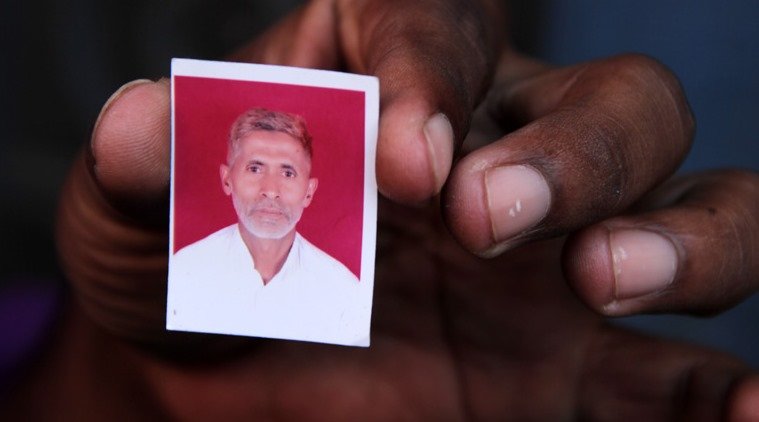 |
| Mohammad Akhlaq |
On 28 September 2015 two
young men, using the local temple’s public announcement system in Dadri, a
small town in Uttar Pradesh, announced that the family of Mohammad Akhlaq had
killed a cow and consumed beef on the occasion of Eid. This was the immediate
cause why a violent Hindu mob broke into Akhlaq’s house in the middle of that
night, dragged all the members of that family (including women, young and old)
out into the open and assaulted 3 them. The police arrived an hour after Akhlaq
had died on the spot and Danish, his son, critically injured. The family had
been living in Dadri for almost seventy years but the neighbours did not even
think twice before launching a brutal attack. The amicable feeling towards a
neighbor was relegated to the background as the ugly head of communal hatred
raised its head. The event aroused national attention and caused enormous
debate. Soon it gained political overtones too when a man, the son of a local BJP
leader, was arrested in connection to the case. Not only that, it was also
confirmed later by the forensic experts that the meat found in the refrigerator
in Akhlaq’s house was not beef but mutton. Dadri incident came to be seen as
one of the many recent examples of the BJP-backed heinous design to use rumour
to gain political advantage by dividing the nation along communal lines. It is
part of their agenda that the Muslims (and other religious minority
communities) will have to accept the diktat of the Hindutva brigade to stay in
India. This goes against one of the cardinal points of the Indian ConsCtuCon ―
secularism.
student at the central University of Hyderabad and a member of the Ambedkar
Students Association (ASA), had to bear the brunt for participating in a
demonstration against the death penalty for Yakub Memon (a convict in 1993
Bombay bombings) on 3 August 2015 at the campus. Following the complaint made
by the students’ wing of the RSS, ABVP, to the Vice Chancellor, P. Appa Rao,
that the students of the ASA were involved in “casteist” and “anti-national”
activities, Rohith and four others were suspended and barred from their hostel.
As a consequence of severe financial crisis Rohith (as his scholarship was also
cancelled) committed suicide on 17 January 2016. The ABVP leader, Nandanam
Susheel Kumar, who had taken an active role against ASA and who claimed that he
was admitted to a hospital after he was roughed up by around 40 ASA members was
later found to have been operated for an acute appendicitis. Besides, the role
of the BJP MP from Secunderabad and the Union Minister Bandaru Dattatreya and
the Union HRD Minister Smriti Irani behind the suspension of the students also
came to light.
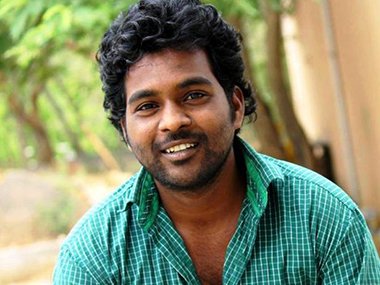 |
| Rohit Vemula |
suicide sparked protests and outrage across India and gained widespread media
attention as yet another case of discrimination against Dalits and low castes
in India in the BJP regime. It was apprehended that the BJP was not only
against the Muslims (and Christians) but also against the Dalits who fall under
the general category of the Hindu community. But why is it so? One must
understand that the right-wing political philosophy of the RSS-BJP strongly
resembles Brahminism which gained and held supremacy only by oppressing the
so-called lower castes of the Hindu population in a feudal set-up. In fact,
intercaste tensions within the Hindu society were often the results of an
unconscious class conflict that went on for ages. Therefore, the attempt to present
a homogenized Hindu society is to ignore the dynamics of a society ruled by a
powerful few. It was against such an unjust system that Bhimrao Ambedkar (and
other activists both before and after him) had waged a life-long struggle.
Ambedkar thought that the Hindu society was a conglomeration of castes without
any binding ideological force. No wonder then that the RSS and the BJP would
run an orchestrated campaign based on lies against the Ambedkarites like
Rohith.
Raucous
29-year old President of the Jawaharlal Nehru University Students’ Union and a
leader of the All India Students Federation (AISF), the student wing of the
Communist Party of India (CPI), was arrested on the charge of sedition by the
Delhi police on 12 February for raising anti-India slogans in a rally to
protest the hanging of Mohammed Afzal Guru convicted for the Indian Parliament
attack in 2001. The arrest was made following the complaints lodged by the
National Secretary of the BJP and an MP, Maheish Girri and members of the ABVP.
A nationwide hysteria was created when the BJP started branding a section of
the JNU (that included both teachers and students) apologists for the
independence of Kashmir (hence anti-Indians). Audio-visual clippings of the
event were also played on television channels as clinching evidence for
Kanhaiya and others’ anti-national ideologies. Emotions ran high as the nation
was caught in a debate between the ‘nationalists’ and their opponents (who were
singled out either as Muslims or communists). Demands for closing down the JNU
were also raised citing it as a hotbed of sedition run on the taxpayers’ money.
Kanhaiya was even beaten 5 up by some lawyers (read the BJP cadres) inside the
courtroom where he was brought for trial. On 2 March 2016, however, he was
granted interim bail for 6 months by the Delhi High Court on a 10,000 rupee
bail bond and an undertaking that he would not “participate in any
antinational activity” (though the judge had said that there were no recordings
of Kumar raising anti-national slogans). Interestingly, out of the seven videos
of the event sent to forensic laboratory, three crucial ones were found to be
doctored including a clipping of a news channel.
has brought into focus many issues at the same time: chauvinism, suppression of
dissenting voices, organized propaganda (where a section of the media joined
hands with the ruling party) based on false and/or doctored reports, etc. Best
efforts to commence an academic debate surrounding the topics of either
nationalism in its totality or Kashmir issue and the hodgepodge trial of Afzal
Guru got drowned in a momentary frenzy of blind nationalism. Of course, the BJP
was behind all this. It wanted only to broaden its political base by staging
this drama. And many apparently innocent Indians could not keep their cool and
judge things properly.
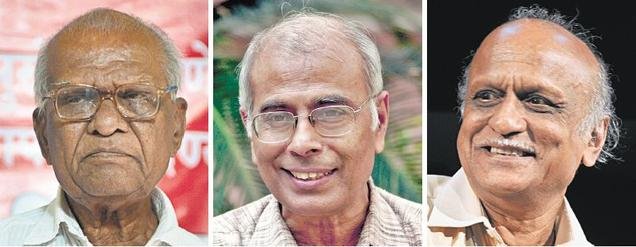 |
| Govind Pansare, Narendra Dabholkar, MM Kalburgi |
manifest an important characteristic of the RSS-BJP: their attitude towards the
religious minorities, the Dalits and the Leftists. Add to this their treatment
of the rationalists like Govind Pansare, Malleshappa Kalburgi and Narendra
Dhabholkar or doctors like Saibal Jana. Depending on the state machinery and a
fanatical band of cadres the Sangh brigade has launched a war on those who
resist their right-wing campaign. What is equally important is their
simultaneous attempt to use rumour and propaganda to mould public opinion in
their favour. But it does not become a matter of discomfiture for them when a
particular venture receives a jolt on account of its falsity. In fact, they
will continue to make the most of the situation in order to broaden their
political base among the middle-class population. And it will not be much
difficult particularly when the mood of desperation is acute among the
so-called educated Indians and the opposition (both ideological and political)
is somewhat disarrayed.
reiterated at the end is that this undemocratic contingent has a conscious plan
to turn India into a monolithic structure decimating the diverse elements that
make it so unique in the whole world. There are plenty of signs that suggest
Nazi Germany or Fascist Italy or Spain may not always remain matters of distant
past. And it will indeed be a living reality soon unless we stand guard and
fight a relentless baOle raising the determined slogan ― “Fascism shall not
pass”.
Frontier [14 May, 2016, Vol 48, No. 44]
Leave a Reply