-
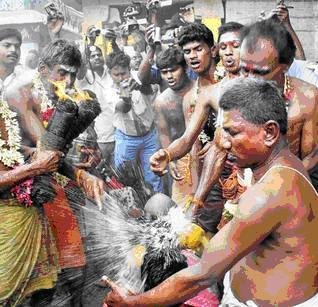
Science versus Miracles: Breaking coconuts on the head
B Premanand In the 1980’s a godman from Jaffna in Sri Lank came to Kerala, broke 101 coconuts on his head, and distributed the coconut water as prasad to devotees. He claimed that he lived only on coconut water Mathrubhumi Weekly published a cover page article with pictures of this godman and challenged our committee to…
-

Science versus Miracles: Fire by Mental Power
B Premanand In 1980 a number of yajnas were conducted on behalf of our Prime Minister, Indira Gandhi, for her long life. But the yajnas could not save her. She was assassinated in 1984. A yajna was performed at Delhi by one Sadachari Sai Baba, a youth with black beard and long hair. Millions of…
-
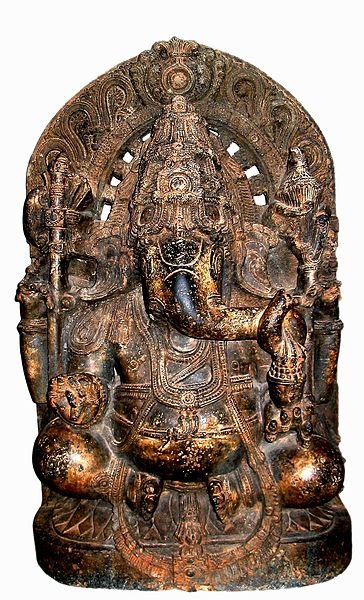
Ganapathi and the Trinity
A N Moorthy Rao Ganapathi ranks between the deities just mentioned and the divine Trinity of Brahma, Vishnu and Maheswarahe is not a force of nature but possesses certain unique characteristics He is reverred and worshipped more than all the gods mentioned before. Not only this; He is close to us and dear to us; and…
-

Science versus Miracles: Ash from Coins
B Premanand While on a vijnan yatra in Maharashtrn in 1981, Vilas Baba, a godman from Phelton, challenged us that if we proved that his miracle ia false he would pay us Rupees five lakhs. His challenge was published by many vernacular dailies in Maharashtra. We agreed to investigate his clim and fixed a day…
-

Rape: Patriarchy and Selective Historiography
Ram Puniyani The spate of horrific rapes in Haryana in particular (Sept 2012) has drawn the national attention to this abominable phenomenon. Various diagnosis and prescriptions have also come forward about the causes and as to how to prevent these rapes is also being suggested by different people. Interestingly the world view of those advising…
-
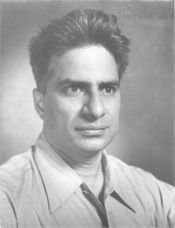
Remembering D. D. Kosambi
Ramkrishna Bhattacharya Progressive circles in India have been late in remembering D. D. Kosambi in 2007, the centennial year. Of course Pune, where Kosambi lived and died, led the way to centenary celebrations. A committee was formed with R. P. Nene and Meera Kosambi, daughter of D. D. Kosambi, to pay homage to the savant…
-

Miracles of Godmen, Psychics and Tantriks
B Premanand Once while in Bombay, a youth approached me to help him. His mother, a widow, was not able to get her daughter married without dowry and was approaching many godmen to bless her. At that time, a particular godman was visiting their home to conduct -prayers. The youth needed my help to expose…
-
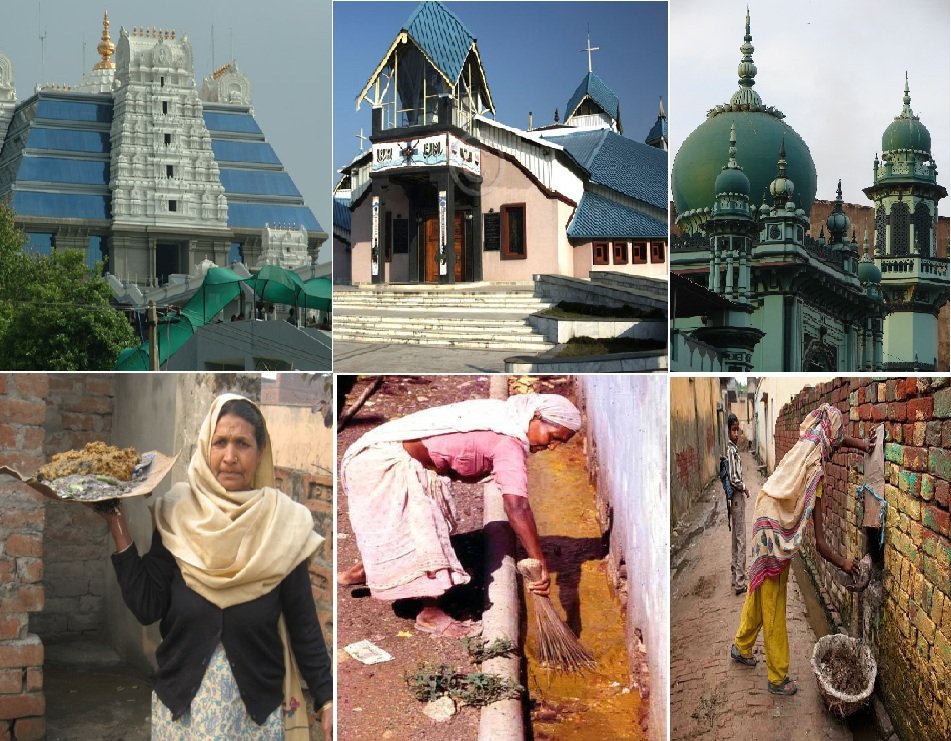
Faith versus Sanitation: Jairam Ramesh’s Remarks on Temple, Toilets
Ram Puniyani The Union Rural development Minister’s remark that “toilets are more important than temples” (October 2012) was met with diverse responses. Ramesh was speaking at a launch of campaign to sensitize people about the ill effects of open defecation, a practice very common in rural areas and city slums, where sanitation facilities are poor…
-
D. D. Kosambi and the Sociology of Literature: A Critique
Ramkrishna Bhattacharya D. D. Kosambi (1907-66) was trained as a mathematician and used to teach and research in mathematics till 1941. Then he wrote an ‘exasperating essay’ on the Sanskrit epigrams attributed to Bhartrihari. This essay, Kosambi says, ‘caused every godfearing Sanskritist to shudder’ and consequently ‘I fell into Indology, as it were, through the…
-

Salman Rushdie, The Satanic Verses, and Critique of Religion
Ayatolah Khomenini’s fatwa sentencing Slaman Rushdie to death for writing the ‘blasphemous’ novel The Satanic Verses was perhaps the curtain raiser for the religious extremism, intolerance, and violence that would mark the dying decades of twentieth century and the birth of the next. The ugly, hydra-headed religious fanaticism of every variety continues to threaten the…
-
Secularism and BJP’s Dilemmas
Ram Puniyani Putting on masks with changing times are the compulsions of electoral politics for many parties, more so with a party like Bhartiya Janta Party. BJP so far has been doing this with great amount of ease, but lately its dilemmas are increasing in intensity due to its track record in the political arena…
-
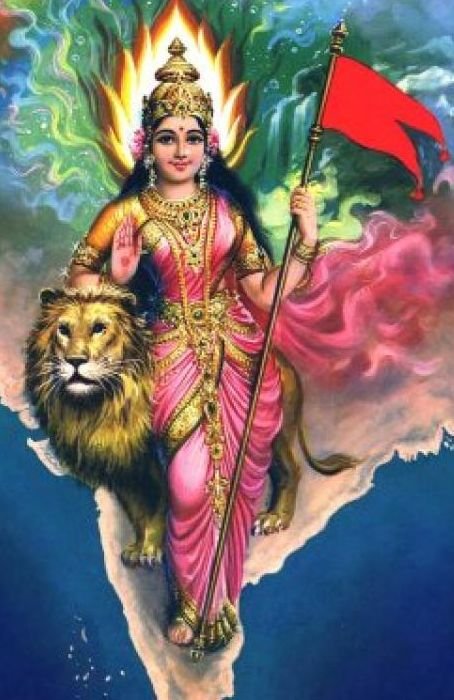
Is ‘Hindu’ our identity and Nationalism?
Ram Puniyani Religious identity has come to the bigger prominence in the social-political space during last few decades. The rise of communal and fundamentalist politics has vitiated the popular perceptions about ‘who are we’ and this in turn has deepened the divides in the society. Recently RSS supremo, Sarsanghchalak, Mohan Bhagwat stated (September 2012) that,…
-
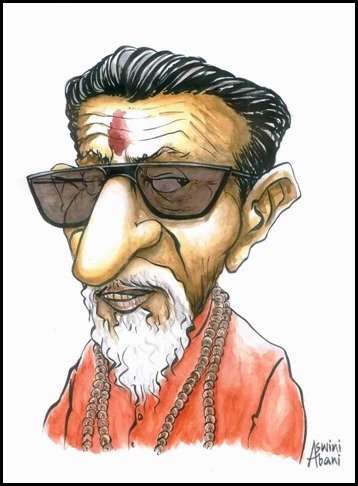
Who is in Whose Land? Thackeray Family’s Bihar Connection
Ram Puniyani India is facing lot of communal-ethnic strife where the place of origin and religion of people is the marker due to which they are attacked. Many a retrograde political ideologies are based on the ‘first comer’ assertions. The deeper problems related to social resources, economic deprivations and socio-political inequalities are being presented as…
-
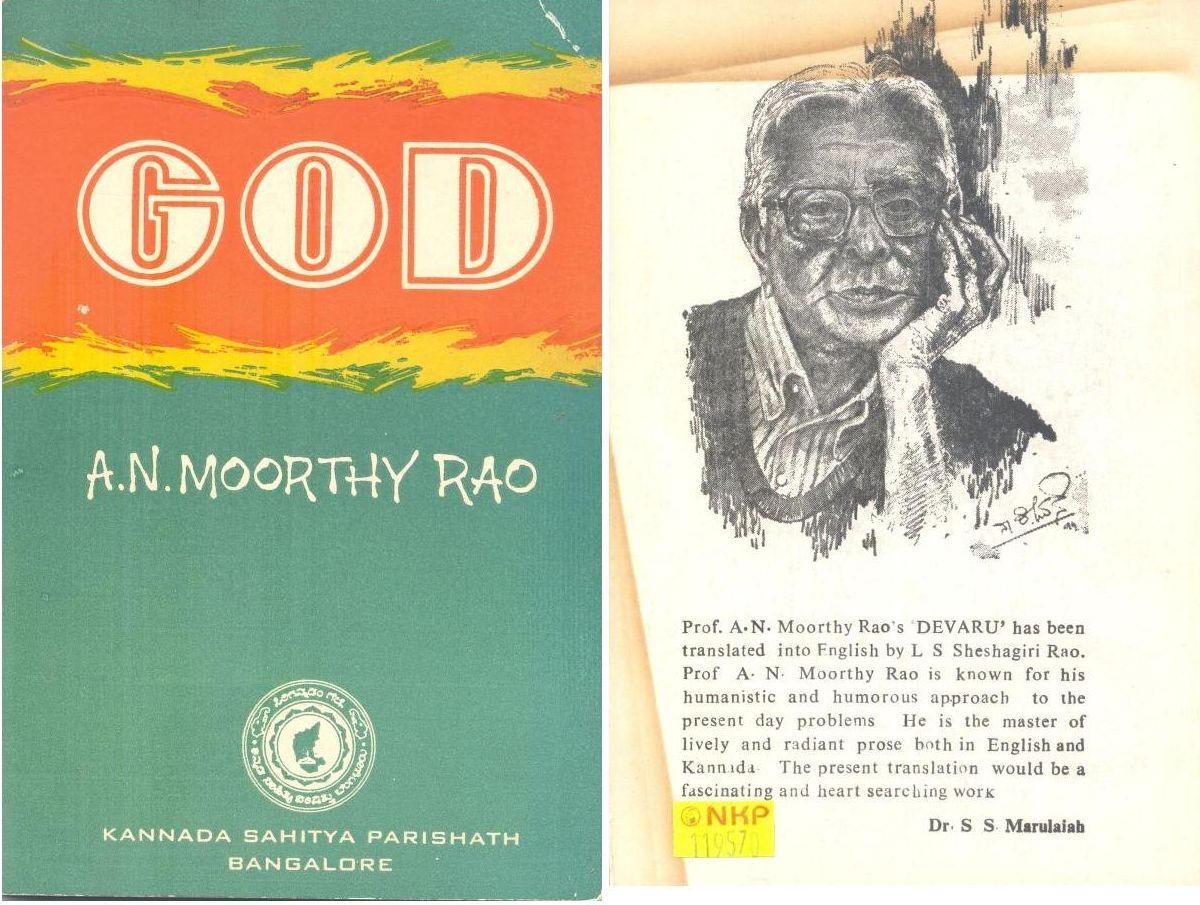
God: Early Concepts
A.N.Moorthy Rao Thousands of years ago, when self-consciousness blossomed in man and he began to look at the world around him with curiosity, what did he see? Volcanic flames leaping into the sky: molten lava racing down, reducing to ashes everything in its way: blinding lightning: forests devoured by huge fires: turbulent oceans, and…
-

The Lokayata School
Explore the historical foundations of the Lokāyata tradition in this excerpt from S. K. Belvalkar and R. D. Ranade (1927). Tracing its origins back to Bṛhaspati and its mentions in the Kauṭilīya Arthaśāstra and Mahābhārata, the authors highlight its reliance on perception (Pratyakṣa), its rejection of causality, and its positive program for human welfare.
-
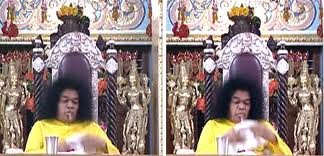
Satya Sai Baba Miracle: Producing Shiva Linga from the Mouth
B Premanand On the night of Shivarathri, while the devotees are engaged in singing bhajans, Satya Sai Baba goes into labour. He squirms with pain, his right hand pressing on his stomach, heart and neck. While wiping the tears sweat and saliva with a towel, he suddenly “gives birth” to an oval gold or stone…
-
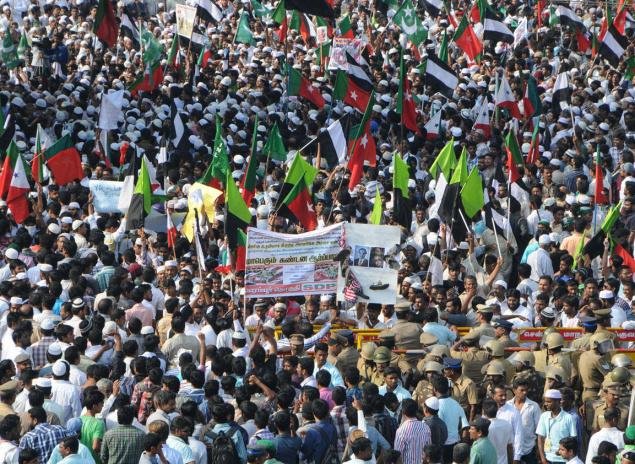
Vicious Cycle of Islamophobia
Ram Puniyani We are going through strange times. While the science, technology and rationalism has given us physical and intellectual tools to better the lot of humanity, we are witnessing the production of provocative material, literature and films in particular, which demonize the particular religion, Islam to be precise, and the prophet of Islam. On…
-
Materialism in Indian Philosophy
Tracing its roots from early Upanishadic heterodoxy and Ajita Keśakambalin’s radical elemental philosophy to the formal Lokāyata school, this compiled selection from S. K. Belvalkar and R. D. Ranade’s landmark 1927 volume presents Indian materialism as an influential, systematic framework of ancient rationalist thought that challenged orthodoxy and shaped early secular philosophy.
-
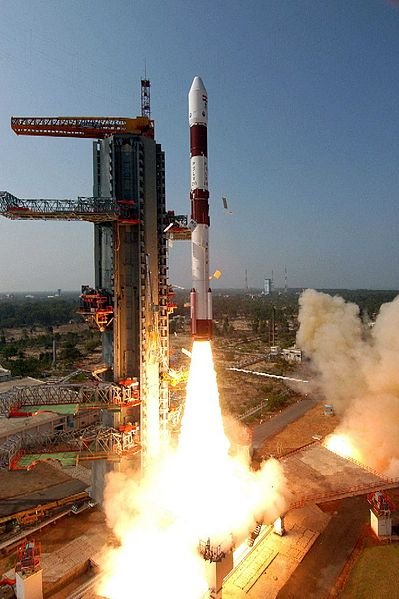
Promoting Scientific Temper – A Letter to the Chairman, ISRO
Nikhil Joshi We reproduce an email Dr. Nikhil Joshi sent (on 17 September 2012) to the Chairman of Indian Space Research Organisation (ISRO) after witnessing the nauseating spectacle of none other than the ISRO Chairman himself carrying a replica of PSLV-C21 (Polar Satellite Launch Vehicle – C21) to a hill shrine at Tirupati and placing…
-
Ajita Kesa-Kambalin
Extracted from S. K. Belvalkar and R. D. Ranade’s History of Indian Philosophy (1927), this study examines the radical radicalism of Ajita Keśakambalin. Drawing from the Sāmaññaphala Sutta, the authors explore his rejection of ritualism, his four-element physicalism, and his place as an early precursor to full-fledged Cārvāka thought.
-
Producing Vibhuti on Satya Sai Baba’s Photographs ‘miraculously’!
B Premanand Satya Sai Baba’s paternal uncle (father’s younger brother, Chinna Venkappa Raju) was a magician and it was he who taught him magic tricks. The first trick which Satya Sai Baba performed at his school was to take out pencils, rubber, sweets etc., from an empty bag and surprise his class-fellows and teachers. Then…
-

Striving for Just Society
Ram Puniyani The verdict of magistrate Dr. Jyotsna Yagnik, sentencing Dr. Maya Kodnani, Babu Bajrangi and others to long imprisonment (31 August, 2012) has come as a big relief to the victims of Naroda Patiya, for whom it was like return of Eid to their houses. Naroda Patiya had witnessed horrific carnage and acts of rape in…
-
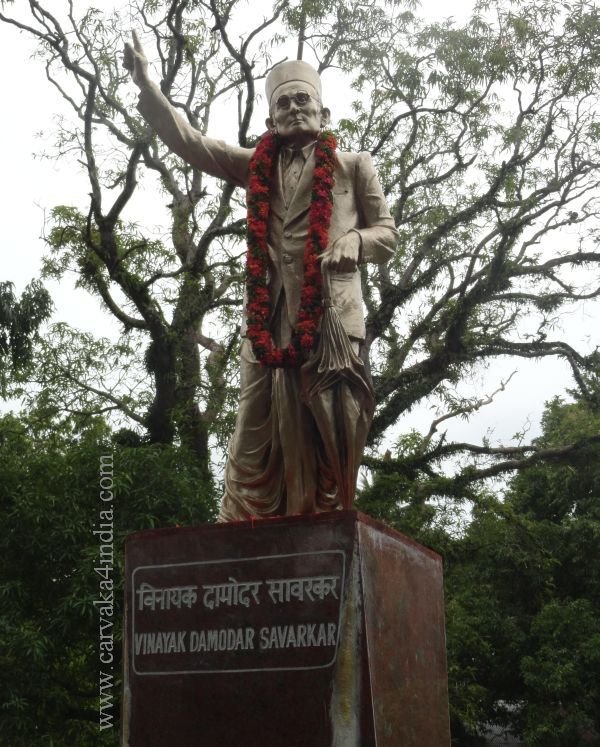
Was Veer Savarkar Really “Veer”?
R.A Jahagirdar For generations the Hindutvavadis have venerated Vinayak Sawarkar as Veer Savarkar. The writings of Savarkar, especially in Marathi, show great valour and heroic sentiments. In language that is both beautiful and brave, the writings of Savarkar – in prose and poetry – display heroic qualities but of Hinduism. Savarkar wrote an essay, “Hindutva”…
-
The Social Outlook of the Cārvāka/Lokāyata
A ReconstructionRamkrishna Bhattacharya explores how the Cārvāka/Lokāyata school opposed caste and gender discriminations in ancient India. Reconstructing its social outlook from hostile Vedāntin sources like Kṛṣṇamiśra and Śrīharṣa, he demonstrates that its materialist rejection of scriptural authority produced an egalitarian, anti-śāstric philosophy with enduring democratic relevance for modern secular society.