-
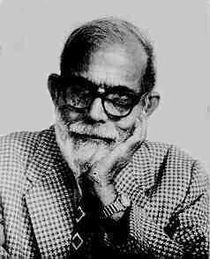
Abraham Kovoor’s Case Diary: A Religio-Maniac’s Threat
Abraham Kovoor (Selections from the Writings of Abraham Kovoor) On 25th January, 1969, the following challenge from an anonymous religious fanatic appeared in The Times Weekender:- “CHALLENGE TO MR. K. To Face the Unknown Terrors of an Unseen World? Abraham T. Kovoor, rationalist, has from time to time over the years laughed to scorn all…
-
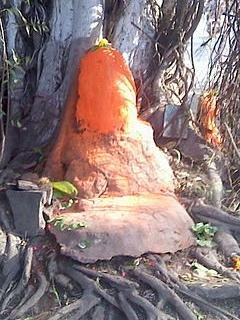
Swayambhu: Making Idols Appear by themselves from Earth!
B Premanand Experiment: 55 Effect: Producing Ganga water from hands or beard. Props: Cloth or sponge dipped in water. Method: Hide the cloth or sponge where you sit. Show your hands empty and palm the sponge or cloth. Press the hands together, or with the beard, and the water in the sponge or cloth is squeezed…
-
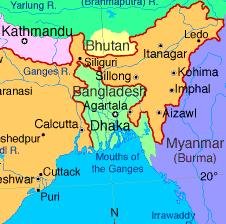
Bangladeshis in India: Myth and Reality
Ram Puniyani The Assam violence between Bodos and Muslims, alleged by many to be Bangldeshi infiltrators, has a long chain of repercussions. The number of dead is nearly eighty. Killings are continuing and the people who have been displaced have been over 4 lakhs. There is no exact statistics to tell us how many of…
-
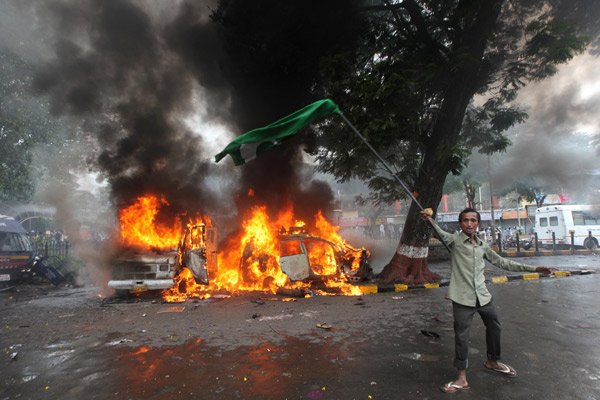
Riot with Many Contrasts
Ram Puniyani India has been the victim of divisive-sectarian violence from more than a century, more particularly after the British implemented their policy of ‘divide and rule’ and encouraged communal formations to flourish. These communal formations, Muslim and Hindu both, in turn spread hatred against the ‘other religious community’ and violence in the name of…
-
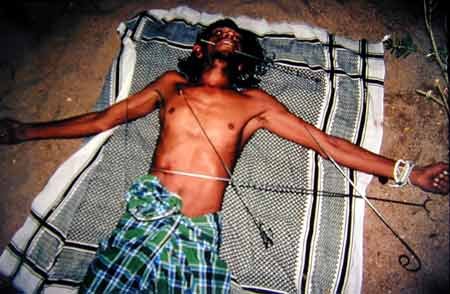
Abraham Kovoor’s Case Diary: Rifai Ratheeb – Unravelling a Muslim Miracle!
Abraham Kovoor (Selections from the Writings of Abraham Kovoor) My interest in Rathib ceremony was first aroused when I read a reference to it in the book “Far Off Things” by Dr. R.L. Spittel. In that book he mentions how he, in the company of Messrs. R.H. Basset and J.R. G. Bantock, witnessed a Rathib…
-

Uddalaka and Yajnavalkya: Materialism & Idealism
Walter Ruben argues that Indian philosophy began with Uddālaka Āruṇi, a hylozoist and primitive materialist in the Chāndogya Upaniṣad. Comparing Uddālaka’s empirical naturalism on death, sleep, mind, and monism with Yājñavalkya’s religious idealism, Ruben places Indian hylozoism alongside Thales in Greece, establishing a universal historical trajectory for the origin of philosophy.
-
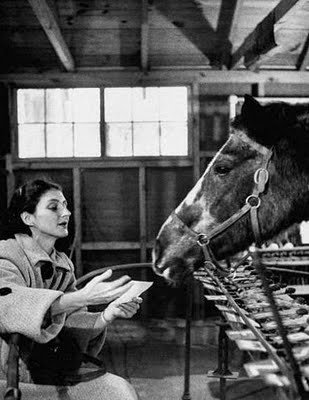
Abraham Kovoor’s Case Diary: Lady Wonder: A Mind-Reading Horse!
Abraham Kovoor In Richmond, Virginia, one Mrs. C.D. Fonda owned a horse named ‘Lady Wonder’ reputed to possess psychic powers. In the journal of ‘Abnormal and Social Psychology’, Volume 23 (1929), on page 449-466 there appeared an article headed “An investigation of a Mind-reading Horse” by Dr. J.B. Rhine and Dr. Lousia E. Rhine of…
-
Abraham Kovoor’s Case Diary: Science of Charms!
Abraham Kovoor (Selections from the Writings of Abraham Kovoor) “What really are manthras? They are a certain co-ordination of words, sounds and phrases which, when chanted a required number of times, harmonize to produce an ethereal vibration. This vibration causes ripples in the Pancha Maha Bhutha (five elements). As all living beings are composed of…
-
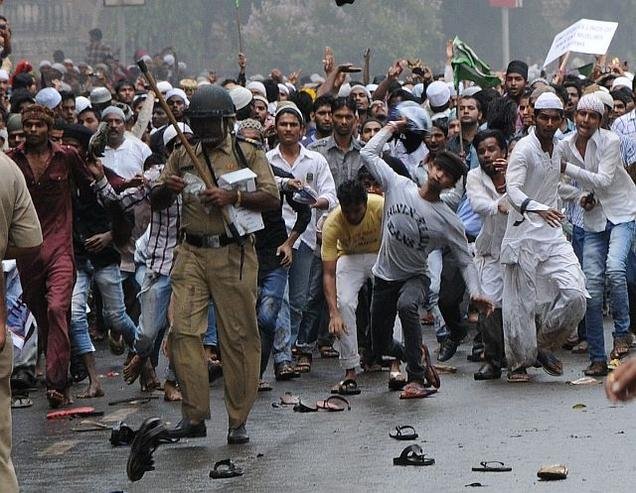
Status of Minorities: A Tale of Two Neighbors
Ram Puniyani Pakistan and India, these neighbors got Independence in the mid August 1947. Today 55 years after the Independence where do these two major countries of the subcontinent stand vis a vis their religious minorities, is the question which we need to answer to ensure a better and more democratic area. On August 11, 2012, a mob of…
-
Lokāyata Materialism:
Classification of Source MaterialsThis paper analyzes five commentators of the lost Cārvākasūtra—Aviddhakarṇa, Udbhaṭabhaṭṭa, Kambalāśvatara, Purandara, and Bhāvivikta. It contrasts traditional, literal explications with Udbhaṭa’s revisionist interpretations, which introduced Nyāya-Vaiśeṣika categories and near-idealist stances. Despite these divergent developments, all commentators consistently upheld the foundational Cārvāka principle of the primacy of empirical perception.
-
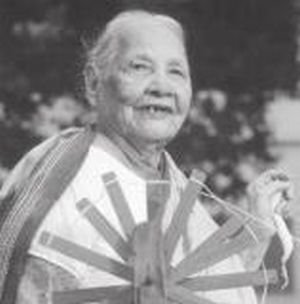
Atheist Centre to Celebrate Birth Centenary of Saraswathi Gora
We reproduce a communication received from Atheist Centre, Vijayawada which is celebrating the Birth Centenary of Saraswathi Gora on September 28 – 29, 2012. Saraswathi Gora Centenary International Conference Atheist Centre is celebrating Saraswathi Gora’s Birth Centenary by organizing an international conference on the theme, ‘Be Bold Be Human: March towards Equality’, at Vijayawada, Andhra Pradesh,…
-
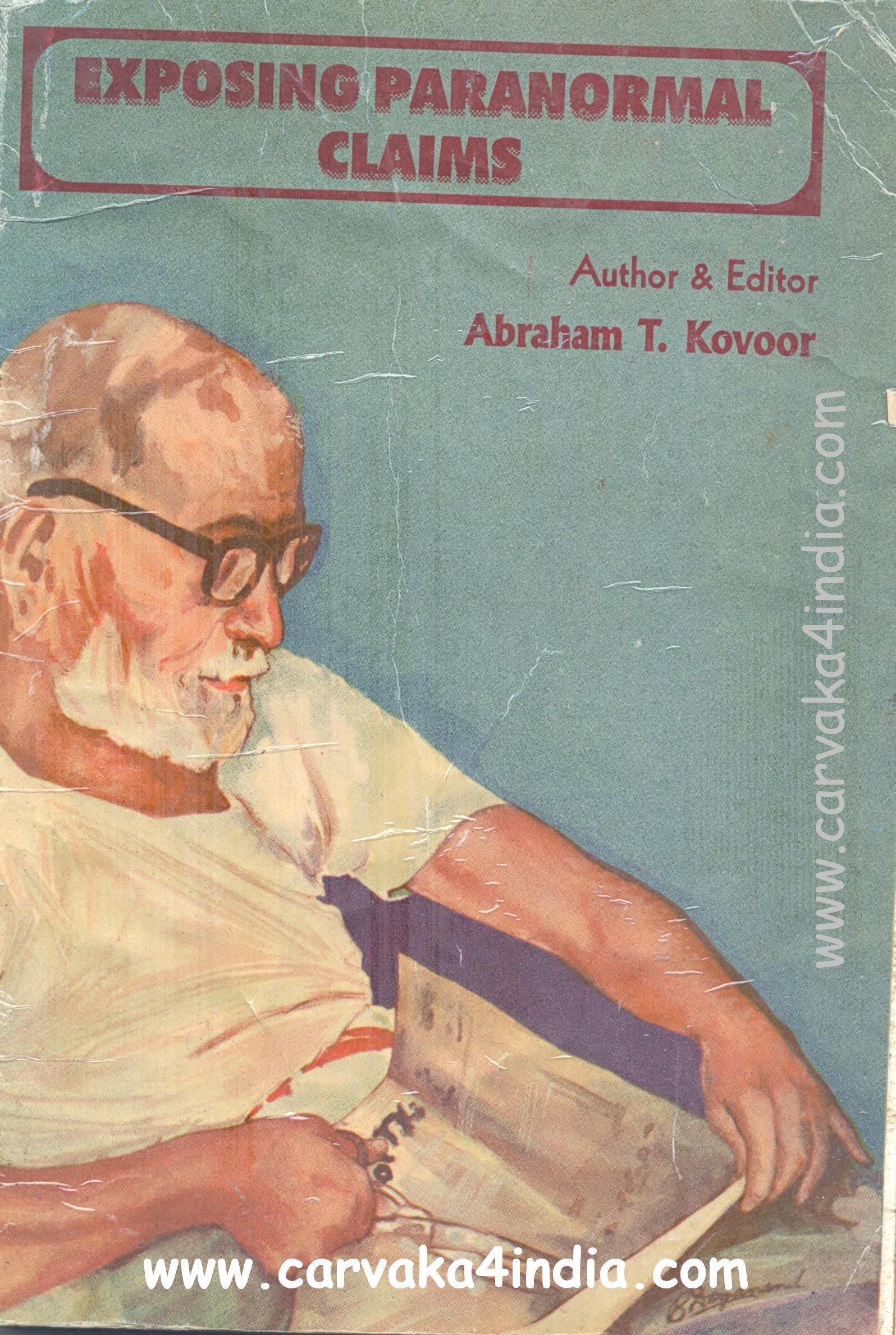
Abraham Kovoor’s Case Diary: Apparitions
Abraham Kovoor In an article on Sai Baba Dr. T. Nallainathan, President of the Bhagavan Sri Sathya Sai Baba Manram, wrote in the Tamil daily Thinakaran (4.11.1966) thus:- “A yogi is capable of leaving his physical body in one place and appearing in a distant place in his spiritual body. It was like this that…
-
Christian Miracles: How Christianity Came To India
B Premanand About one thousand nine hundred and odd years ago, when St. Thomas visited Kerala, he saw Kerala Brahmins (Namboodiri Brahmins) performing shraadha ceremony. He enquired as to what they were doing throwing water upwards. They replied that they were sending water to the Pithrus, the dead ancestors. St. Thomas smiled and said that…
-
Preventing Sectarian Violence: Role of State
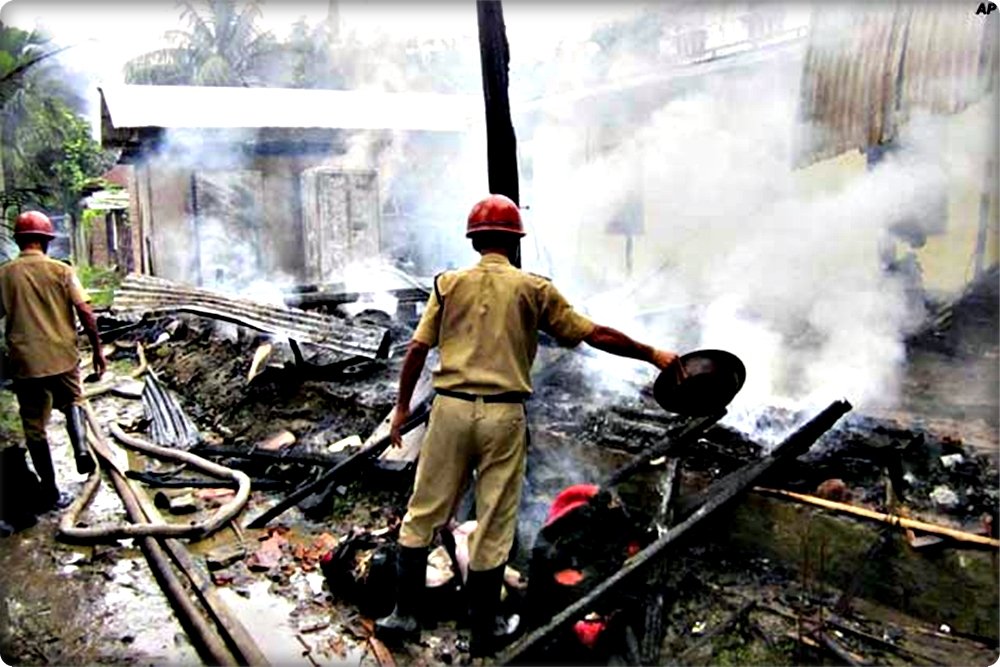
Ram Puniyani The horrific violence in Assam has once again brought our attention to the malaise of communal violence in India. In the recent times one has witnessed such a violence in parts of UP, (Kosi Kalan, Barailly, Pratapgarh) and also in Gopalgargh in Rajasthan. In most of these acts of violence one has to…
-
Cārvāka/ Lokāyata: Some Common Misrepresentations Examined
This lecture refutes common misconceptions surrounding Cārvāka/Lokāyata philosophy. It demonstrates that Cārvākas did not reject inference entirely, but accepted empirical reasoning while rejecting transcendent claims. Furthermore, it dispels the caricature of Cārvākas as unrestrained sensualists, showing that orthodox critics misrepresented their rejection of asceticism and ritualism as moral depravity.
-
The Community of Reason, a Self-Assessment and a Manifesto
Massimo Pigliucci My experience (anecdotal, yes, but ample and varied) has been that there is quite a bit of un-reason within the Community of Reason (henceforth, CoR). This takes the form of more or less widespread belief in scientific, philosophical and political notions that don’t make much more sense than the sort of notions we…
-
Why I Left Islam
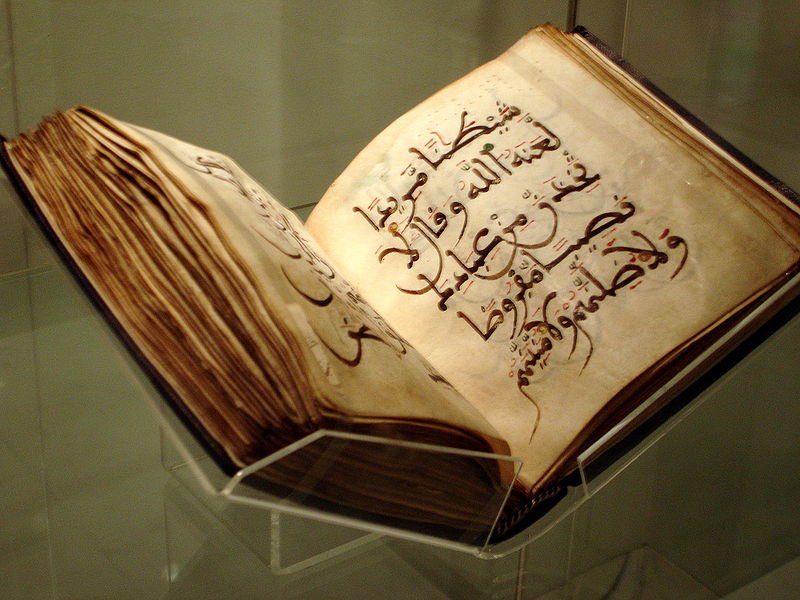
Ali Sina I am often asked, Why I left Islam? As absurd as it may be, some Muslims cannot even allow themselves to think that leaving Islam is an option, or even possible. They rather think that those who leave Islam are paid Jewish agents than accept the fact that people have freedom to think…
-
Lokayata Darsana and a Comparative Study with Greek Materialism
This paper defines materialism, contrasting the Indian Cārvāka/Lokāyata school with Presocratic Greek philosophy. It examines primary Cārvāka aphorisms and fragments, refuting long-standing misrepresentations regarding their epistemological stances. The author demonstrates that Cārvākas admitted empirical inference and rejected unrestrained hedonism, establishing their rigorous scientific and logical framework.
-
A Sketch of Indian Materialism
In this 1925 paper, Italian Indologist Giuseppe Tucci challenges the European belief in an exclusively mystical India. He demonstrates that ancient Lokāyata and Cārvāka traditions developed a robust materialist epistemology and political realism, proving that empirical science, secular statecraft, and hedonism were integral to India’s rich philosophical heritage. Read more on Charvaka.net!
-
Assam Violence: A Wake up call
Ram Puniyani The raging violence in Assam’s Bodo Territorial Autonomous Districts, Khokrajhar and Chirang (July 2012) has shaken the conscience of the nation. The Prime Minister has rushed to the area and called it as a Kalank, a shame for the nation. He also reprimanded the Chief Minister from his own party for the violence.…
-
Play with thy Neighbour: Indo-Pak Cricket Series
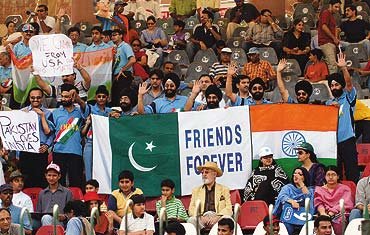
Ram Puniyani There has been mixed response to the BCCI’s decision to host Pakistan Cricket Team in December-January for a limited-over’s series (July 2012). Ex cricketers like Sunil Gavaskar and Kirti Azad are critical of this decision of BCCI, while many others on both sides of the divide have welcomed this idea. Imran Khan, ex-cricketer turned…
-

Eating Glass & Drinking Nitric Acid: Hata Yogi’s Other Tricks!
B Premanand (Note: Some of the items described in this series should be performed only under proper expert guidance. One should never try them on one’s own) Experiment No. 49 Effect: A thread is put in one nostril and taken out through the other. Props: 12″ twine thread. Method: There is a connection between the…
-
Lt. Col Purohit: Acts of Terror and Finding Escape Route
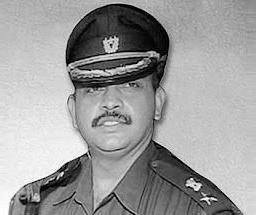
Ram Puniyani In the wake of the various acts of terror and Sadhvi Pragya Singh Thakur’s motor cycle being traced, it became clear that the investigating agencies are acting on the wrong thesis that ‘all terrorists are Muslims’. A Pandora’s box opened and the link of ex-ABVP activist, Pragya Thakur, Swami Dayanand Pandey, retired Major…
-

Walking on Water
B Premanand In the history of miracles Jesus Christ is said to have walked on water without any props. In 1968 Hata Yogi L.S. Rao, with the connivance of Blitz Weekly, set out to fool a gullible public. Week after week articles published by R.K. Karanjia, told of the supernatural powers of this Hata Yogi.…