-
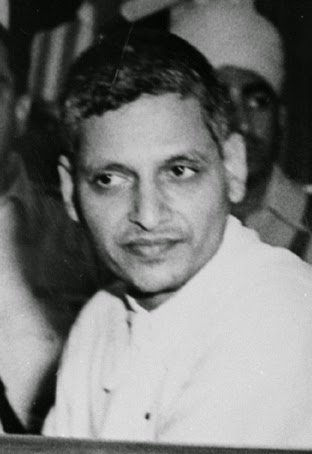
Resurgence of Godse Worship
Ram Puniyani Times are a changing; and changing fast. During last many decades most Hindu nationalists have kept the appreciation of their hero, Nathuram Godse under wraps. The programs appreciating his politics did use to make small news here and there some time; but as such it was a muted act not much publicized…
-
How is Ghar Vapasi Different from Forcible Conversions?
Ram Puniyani Propaganda around conversions has been one of the major political tools during last few decades. It was Niyogi Commission report which investigated the conversions in Adivasi areas in 1950s, then the Meenaxipuram conversions of Dalits into Islam, the and then the gruesome murder of Pastor Graham Stewart Stains on the charges that he…
-

Lectures on the Cārvāka/Lokāyata (Part I) :
An Overview of the Cārvāka/Lokāyata MaterialismThis lecture provides an overview of philosophical materialism, examining its foundational tenets and unique emergence within ancient India. It traces the development of Cārvāka/Lokāyata as a systematized, indigenous school, contrasting its empirical epistemology, materialist ontology, and anti-ascetic ethics with Presocratic Greek thought, pre-Cārvāka proto-materialism, and various regional folk-tradition cults.
-

Skepticism
Ancient ‘East’ and Modern ‘West’Explore the fascinating parallels between ancient Cārvāka materialism and David Hume’s empiricism in this unified comparative study. This article examines how both traditions challenged conventional metaphysics, questioned the validity of inferential knowledge, and reshaped critical philosophy by placing sense-perception at the very center of their skeptical inquiries into truth and reality.
-
The Wolf’s Footprints: Indian Materialism in Perspective – PART II
An Annotated Conversation with Ramkrishna Bhattacharya Krishna Del Toso Krishna Del Toso: Indeed, we meet with materialistic perspectives in texts belonging to quite different fields: Āyurveda, Mahābhārata, Upaniṣads… I would also add Ṛgveda and Atharvaveda just to stress antiquity of Indian Materialism in general. In this respect, one of the aspects that first impressed me…
-
Are all Indians Sons of Ram?
Ram Puniyani During the anti colonial movement, Mahatma Gandhi emerged as the tallest of leaders and was called, ‘Father of the nation’ Rashtrapita. This term was first used by Subhash Chandra Bose in a Radio address in 1944 and later approved, accepted and upheld by majority of Indians. Of course he was not accepted…
-
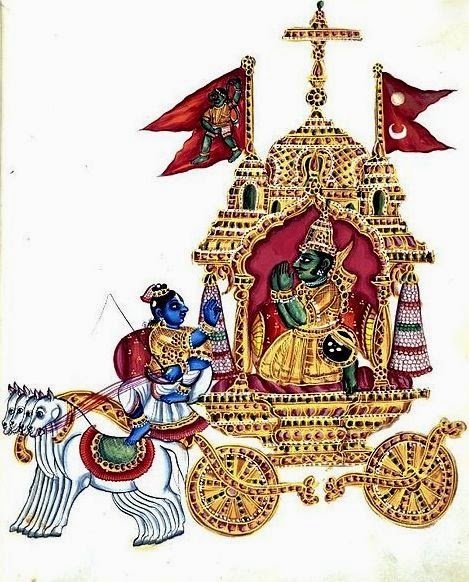
Social and Economic Aspects of the Bhagavad Gita – PART I
DD Kosambi The Bhagavad-Gita, “Song of the Blessed One”, forms part of the great Indian epic Mahabharata. Its 18 adhyaya chapters contain the report by Sanjaya of a dialogue between the Pandava hero Arjuna and his Yadu Charioteer Krsna, the eighth incarnation of Visnu. The actual fighting is about to begin when Arjuna feels revulsion…
-
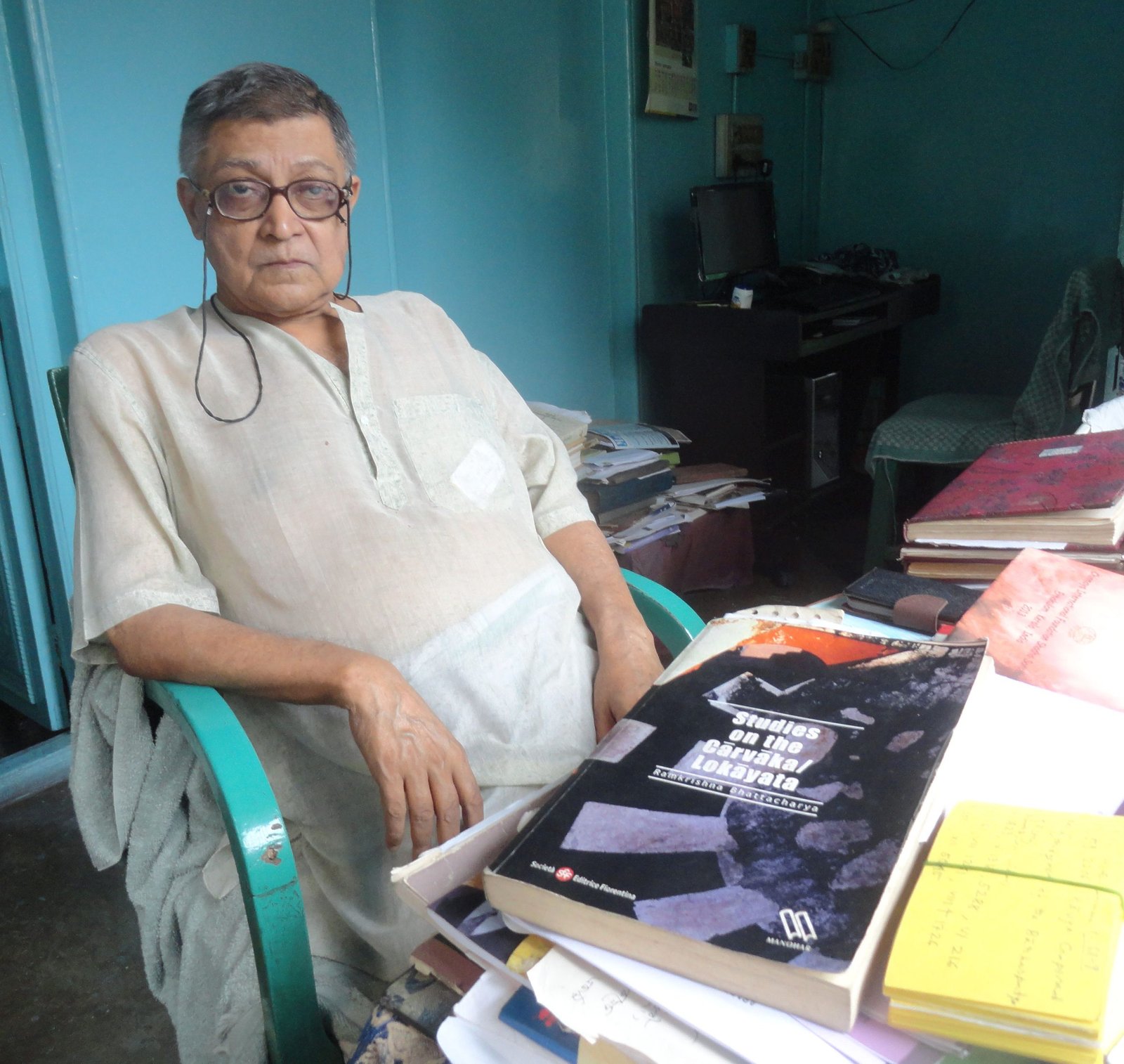
The Wolf’s Footprints: Indian Materialism in Perspective
This scholarly conversation between Krishna Del Toso and Ramkrishna Bhattacharya explores the core tenets of Cārvāka/Lokāyata philosophy. Bhattacharya refutes long-standing misconceptions regarding gross hedonism, clarifies epistemological views on perception and inference, rejects Jayarāśi’s affiliation with materialism, and highlights the enduring historical relevance of rationalist thought within Indian tradition.
-
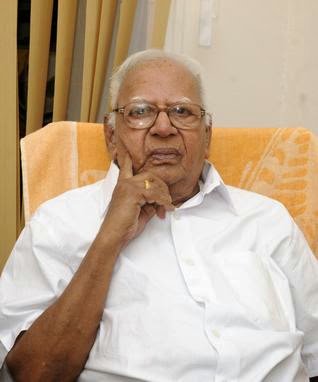
Supreme Court Judgment on Banning of EVR’s Booklet on Ramayana
In 1970 the Government of Uttar Pradesh passed an order, under Section 99-A of the Cr.P.C, forfeiting the book “Ramayana: A True Reading” (and its Hindi translation) authored by EVR, the legendary rationalist thinker and social activist from Tamil Nadu. The High Court of Allahabad quashed the Government Order. The Government of Uttar Pradesh filed…
-
Indian Philosophy – Melody and Millstone: PART III
G Ramakrishna The murky record of idealism as a vicious weapon on the one hand and philosophical obscurantism on the other has a shining contrast in materialism. Once again the historical limitations of the ancient Indian materialist philosophers cannot be overlooked. The rudiments of materialism are quite clear in many anti-idealist schools of though and…
-
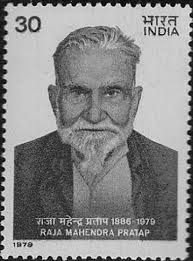
Aligarh Muslim University, Raja Mahendra Pratap and Attempts of Polarization
Ram Puniyani Those resorting to communal politics have not only perfected their techniques of polarizing the communities along religious lines, but have been constantly resorting to new methods for dividing the society. On the backdrop of Muzzafar nagar, where ‘Love Jihad’ propaganda was used to enhance the divisive agenda, now in Aligarh an icon…
-
Men and Godmen
G Ramakrishna India, like many other countries, has produced luminaries of great repute. They have blazed the path of their successors. The illumination that they have provided has been a beacon of light for many a pathfinder. Every age has its own ‘prophets’ who, through their identification with the struggling people and consciousness for a…
-
Indian Philosophy – Melody and Millstone: PART II
G Ramakrishna A total rejection of idealism means the acceptance of a secular, rational and scientific approach, while idealism has religion-orientation, faith in the scriptures, and superstitions in most of its major forms, for its accessories (p 234). The other major contribution of the anti-idealist schools of thought consists of the defence of practice as…
-

Asoka and the Basic Values in Indian Culture
Ramkrishna Bhattacharya To deliver the key-note address in a seminar with such a majestic title1 is an uphill task. The topic touches so many areas of such vast dimension that it call for a person of encyclopedic erudition, which I do not possess. So, instead of addressing each and every aspect of this grandiose title,…
-
Indian Philosophy : Melody and Millstone
Comprehensive review of Debiprasad Chattopadhyaya’s What is Living and What is Dead in Indian Philosophy by Dr. G. Ramakrishna. Utilizing Marxist methodology, the text exposes how idealist philosophy served ruling class interests, while defending India’s materialist traditions—Lokāyata, Sāṁkhya, and Nyāya-Vaiśeṣika—which championed rationalism, empirical practice, and scientific inquiry.
-
The Cārvākas and The Jains: An Overview
Ramkrishna Bhattacharya explores the complex historical relationship between Cārvāka materialists and Jain philosophers. Although both rejected Vedic authority and ritual sacrifice, Jain writers branded Cārvākas as nāstika for denying rebirth. Crucially, Jain canonical texts, commentaries, and compendia preserved vital fragments, aphorisms, and lost commentators of the Cārvākasūtra, safeguarding Indian materialist history.
-
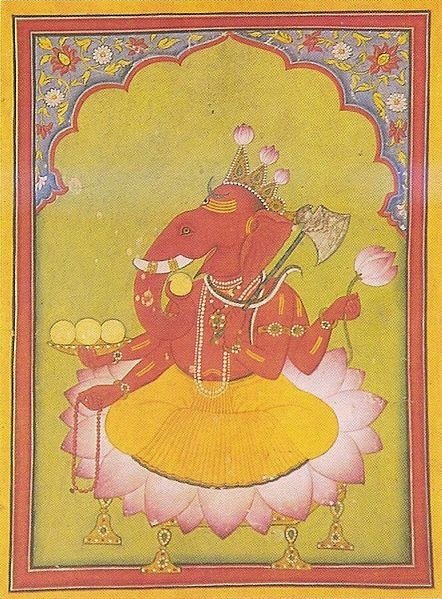
Transplanting Elephant Head on Human Body – The Magic of Mythological Fiction
Ram Puniyani One of the best parts of childhood for me was to enjoy the mythological tales and become aware of the world where Lord Hanuman could fly, as the emergency herbal treatment is to be delivered to his master’s brother; Laxman. Lord Ram travelling by Pushpak Viman (aero plane), Lord Ganesha being planted with…
-
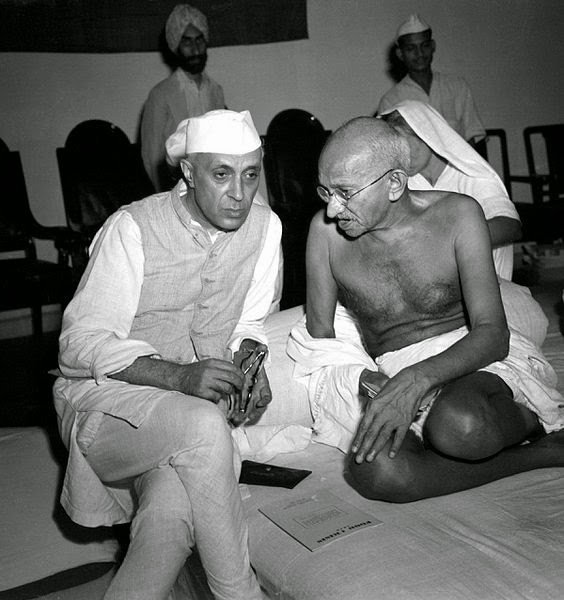
Targeting Nehruvian Legacy?
Ram Puniyani The debates about India’s partition, Gandhi murder and politics of Nehru have been a matter of ceaseless debates. Each political tendency has their own interpretation of these events, which in a way are landmarks of sorts in modern Indian History. As such the phenomenon of Partition of India and assassination of Gandhi are…
-
Doctoring History for Political Goals: Origin of Caste System in India
Ram Puniyani Caste hierarchy is the major obstacle to the goal of social justice and it continues to be a major obstacle to social progress even today. There are many a theories, which have tried to understand its origin. The latest in the series is the attempt of RSS to show its genesis due to…
-
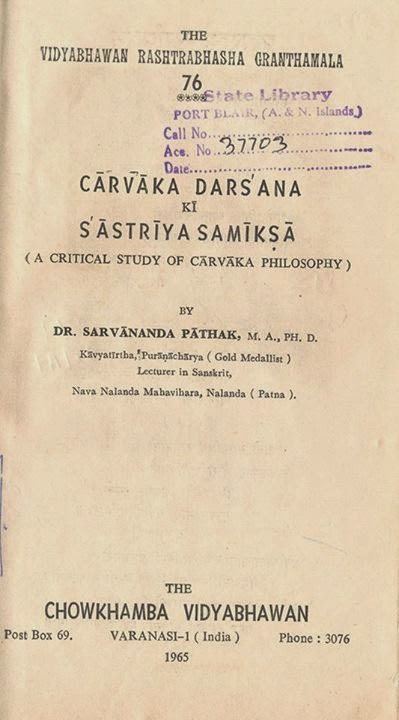
Cārvāka Darśana kī Śāstrīya Samīkṣā (1965) – An Overview
Although Dr. Sarvananda Pathak takes a critical stance against Cārvāka philosophy, his book’s fifth chapter compiles extensive primary Sanskrit sources with Hindi translations. Sourced from ancient texts like the Rāmāyaṇa, Viṣṇupurāṇa, and Sarvadarśanasaṃgraha, these selections preserve materialist writings attributed to thinkers including Kapila, Gautama, Jaimini, and Vātsyāyana.
-
Modi Sarkar: Politics through Culture
Ram Puniyani The change in the ruling dispensation (May 2014) has more than one aspect which is likely to affect the very social-cultural-political map of India. Narendra Modi won the last elections with an electoral success, 282 seats for BJP, with 31% of votes polled, which is a landmark for a party. There was a…
-
History of Materialism in India
World-renowned Indologist Fyodor Shcherbatskoy explores ancient Indian materialism. He analyzes how schools like Cārvāka and Lokāyata rejected karma and transcendental souls, showing how their radical emphasis on physical reality, empirical observation, and political realism shaped the broader trajectory of Indian philosophical thought.
-

The Mind-Reader’s Ash Revelation
This article deconstructs the “mind-reading” ash revelation stunt used by street performers. By pre-writing numbers 1 through 9 with dry soap across indexed zones, a performer relies on fatty-acid adhesion to trap fine charcoal or ash particles. The dramatic revelation depends on optical contrast and surface chemistry, not telepathy.
-
Reading a Message in a Sealed Cover
This article deconstructs the psychic trick of reading messages sealed inside envelopes. By wetting opaque paper with volatile diethyl ether, a performer matches cellulose’s refractive index to temporarily create a translucent window. The illusion relies on optical light scattering, rapid solvent evaporation, and theatrical misdirection rather than genuine clairvoyance.