Tamil Nadu Chief Minister Stalin, based on new research about pre-modern history, stated that archaeologists have concluded that the Iron Age first began in Tamil Nadu. Melting iron was introduced in Tamil Nadu 5,300 years ago. Precise dating indicates iron was first introduced in the region in 3345 BC. Stalin emphasized this finding to be pivotal to understanding the historical timeline of the Indian subcontinent and said proudly, “I’m constantly saying that the history of India will be written from Tamil Nadu,” highlighting the research’s potential to reshape historical narratives. Should it matter so much to the present time?
In a way, proving that ‘we’ were the ‘firstcomers’ here, many ‘nationalist’ and ‘ethnic’ tendencies used it to dominate society in various countries. One recalls that in the Sinhala assault on Tamils (Hindus) in Sri Lanka, the latter had to suffer a lot at the hands of Sinhala ethnic nationalism, which claimed that Sinhalas are the firstcomers on that island, so the nation belongs to them!
Here in India, Hindu nationalism is no different. It did raise the bogey of ‘foreign religions’, Islam and Christianity. It regarded Hindus as synonymous with Aryans and went on to claim that Aryans are the original inhabitants of this land. This claim was articulated by the second Sarsanghchalak of the RSS, M. S. Golwalkar, who in his book, We or Our Nationhood Defined, wrote that, “We—Hindus—have been in undisputed and undisturbed possession of this land for over 8 or even 10 thousand years before the land was invaded by any foreign race” and therefore, “this land came to be known as Hindustan, the land of the Hindus” (Golwalkar, 1939, page 6).
This was in contrast to Lokmanya Bal Gangadhar Tilak, who had said that Aryans came from the Arctic region (The Arctic Home in the Vedas). Golwalkar solved this dilemma without contradicting Tilak by saying that the Arctic area itself was here in the Orissa-Bihar region, which later shifted to the north: “…that then it moved north-east and then by a sometimes westerly, sometimes northward movement, it came to its present position. If this be so, did we leave the Arctic Zone and come to Hindustan or were we all along here and the Arctic Zone left us and moved away northwards in its zigzag march?”
These acrobatics had to be performed to prove that the Aryans are native to this land. If this is not emphasized, the propaganda against Muslims that they came from outside falls to the ground and the whole purpose is defeated—that Hindus are the natives.
Many theories prevail about this. Many European scholars, including the Indophile Max Müller, believed that Aryans had invaded India. This theory is baseless, as it was the era of a pastoral society, where migrations were the norm and not invasions. Invasions came up later with the formation of kingdoms. The other, most logical theory, based on linguistic and geological evidence, argued that Aryans came here in a series of waves of migration.
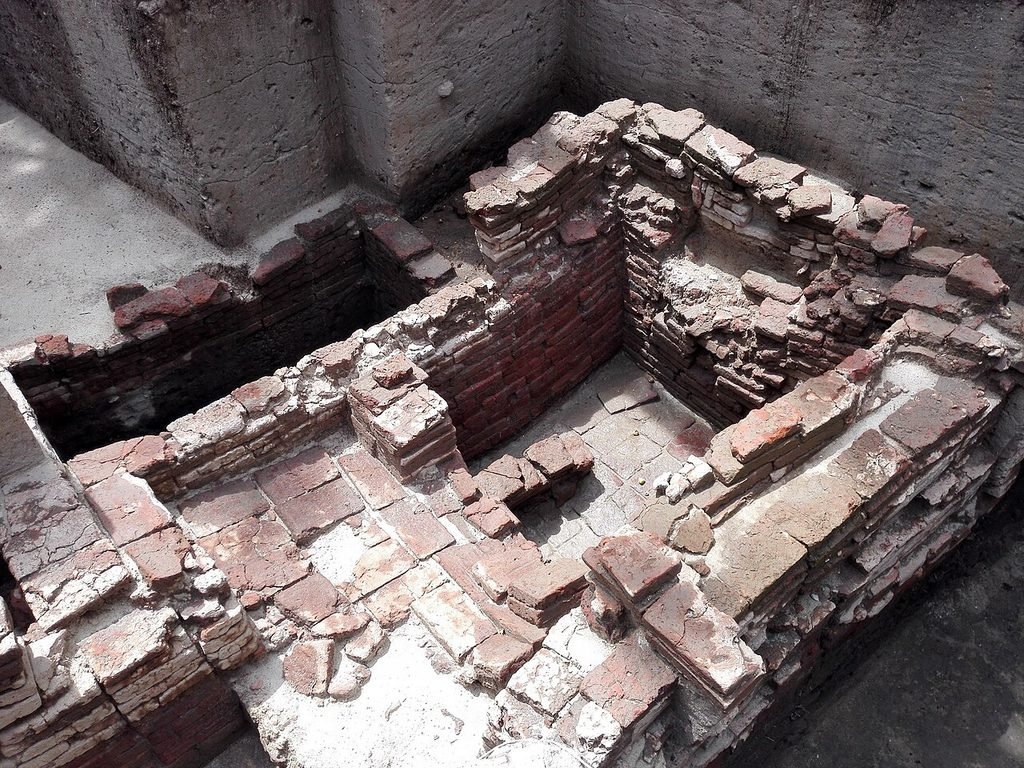
The Aryans being the natives of this land had a major obstacle to overcome in the form of the Indus Valley Civilization, which dates before the Aryans’ arrival here. This civilization was distinctly different from Aryan habitations and was there before the Aryans arrived. It had an urban setting, unlike Aryan habitations. By undertaking a lot of acrobatics, an attempt was made to concoct a seal with a horse alleged to have been found in the Indus Valley region. As per a Frontline article, the horned bull seal was modified to look like a horse—the symbol of Aryan culture. It was a computer-distorted image of a unicorn bull.
The whole race theory stands discredited today. It was an attempt by colonial powers to show their racial superiority, giving them the right to rule. On similar lines, Brahmanical ideology also claimed Brahmins and upper castes to be descendants of a superior race, entitled to a superior position in society.
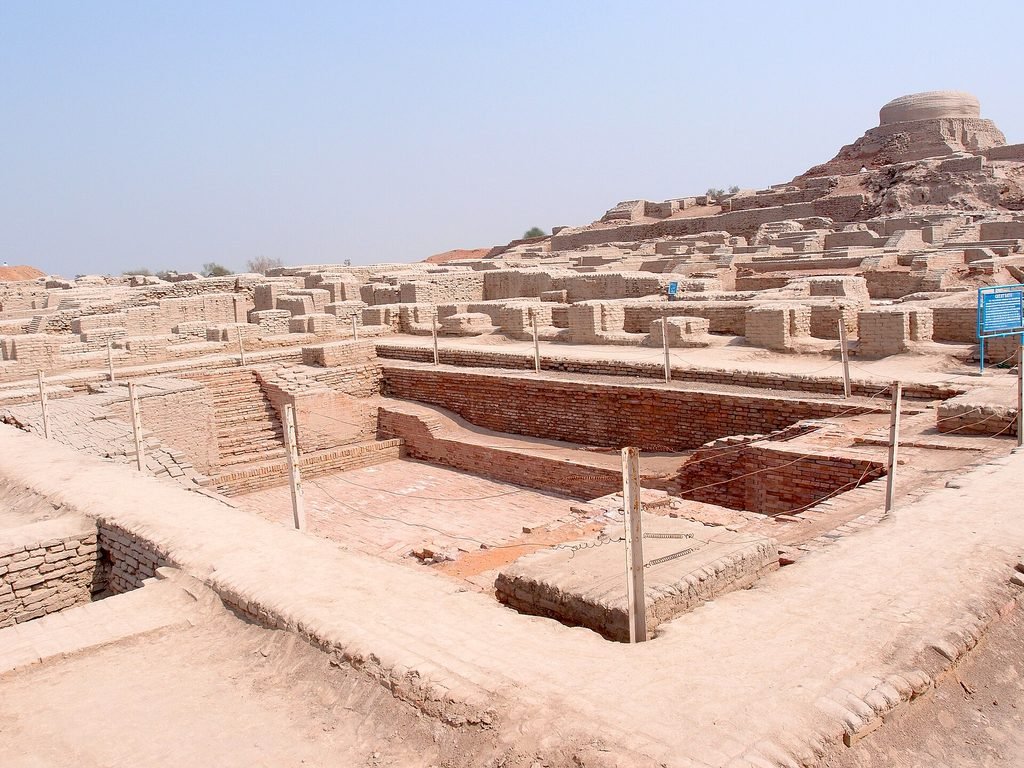
The Indus Valley Civilization preceded the Aryans’ arrival here. A natural calamity wiped out this civilization, and many of its inhabitants moved down south. So where do we stand today vis-à-vis the Aryan debate and the Indus Valley Civilization? Earlier archaeological and linguistic studies have been supplanted by impeccable DNA genetic studies. ‘Population genetics’ is the most foolproof method to understand pre-modern societies.
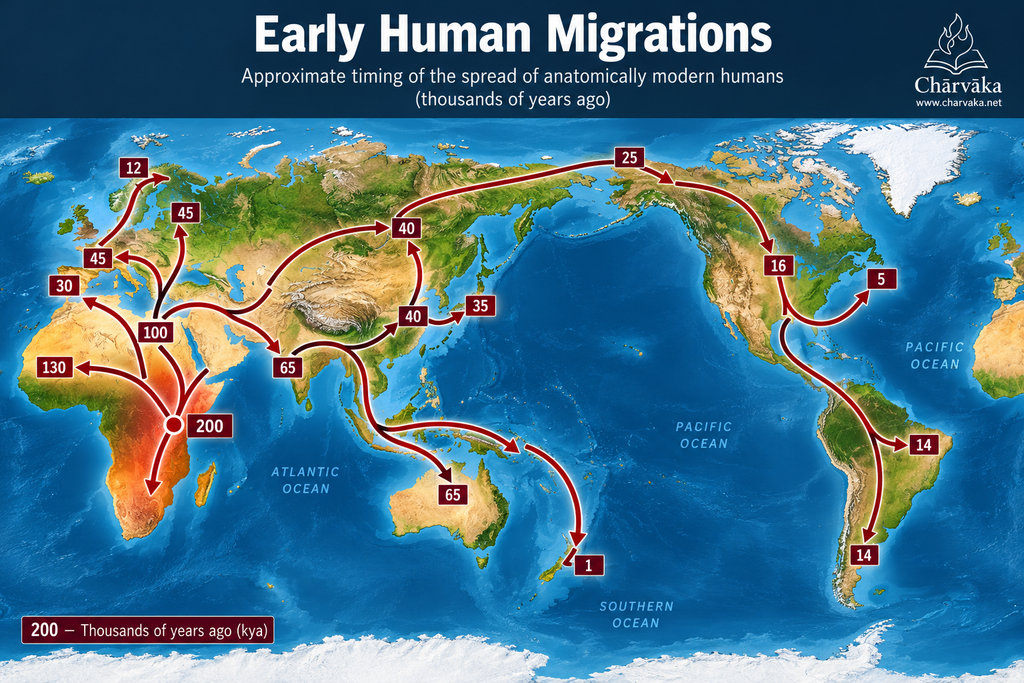
Just a few years ago, Tony Joseph (in his book Early Indians), an Indian writer, put together population genetics studies along with prevalent linguistic and archaeological findings. This book, on the one hand, shows that we are all mixed up. Migration to India took place in various stages. He outlines that it was 65,000 years ago that Homo sapiens made their way to India from Africa. Citing DNA studies, he shows that subsequent large migrations to India took place between 7000 and 3000 BCE, and lastly, between 2000 to 1000 years ago, pastoralists came from the Central Asian Steppe. As such, Aryan and Dravidian stand for groups of languages rather than distinct races.
The BJP-led central government has formed a committee to document the 12,000-year-old history of India. As things are so crystal clear from DNA genetic studies about the fact that we are all a mixed-up people, why such a committee? The idea is to prove that Hindus (Aryans) are the original inhabitants of this land. After the results of population genetics, not much remains to dig into this issue, except for claiming the ‘land’ and asserting greater rights here.
Society has gone through many transformations over the centuries. Pastoral society, the boundaries of kingdoms, and now national boundaries are what constitute reality. One can stand with Tagore to see the impact of national boundaries and dream of a world without boundaries, which seems ultra-utopian today.
Assertions of being the ‘firstcomer’ are the hallmark of sectarian nationalism. Such tendencies are contrary to the values of the Indian Constitution and the United Nations Universal Declaration of Human Rights. Equality of all citizens irrespective of language and religion is what we need to aspire to for the future. Digging into the past with a warped ideology should have no place in today’s politics; it can best be left to academics and professionals of those disciplines rather than made the base of a political ideology.
Leave a Reply