-
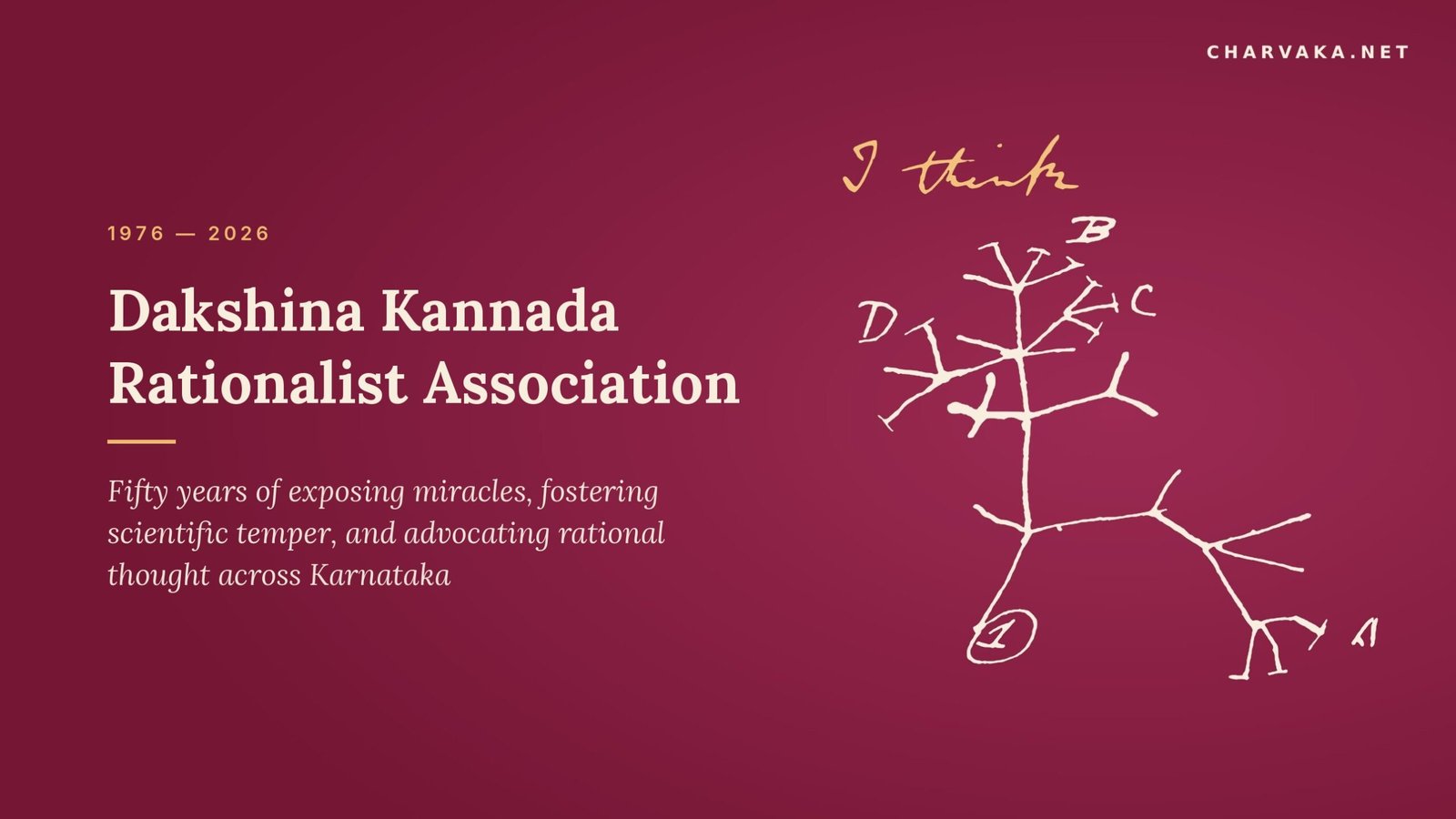
Dakshina Kannada Rationalist Association
In 1976, amid the Emergency, a group of young rationalists in coastal Karnataka formed the South Kanara Rationalist Association to host Abraham Kovoor. Fifty years on, the Dakshina Kannada Rationalist Association has exposed miracles, trained thousands in scientific temper, and stood firm against threats. Read the story of five decades of reason.
-
Reading With Your Eyes Shut?The “Mid-Brain” Mystery
Children in blindfolds read books and name colours, and their trainers say a course has “activated” their mid-brain. Parents pay thousands of rupees for it. With a scarf, some cotton and a paper bag, find the secret gap, and the simple test that has exposed this trick again and again. Ages 9–14. Try the activity…
-
Dakshina Kannada Rationalist Association – Golden Jubilee
Golden Jubilee The DKRA turns fifty, and the next generation is invited Half a century of questioning, demonstrating and refusing to take miracles on faith. Now the Dakshina Kannada Rationalist Association turns fifty, and it isn’t looking back so much as looking for who carries it forward. The golden jubilee year begins in Mangaluru, and…
-
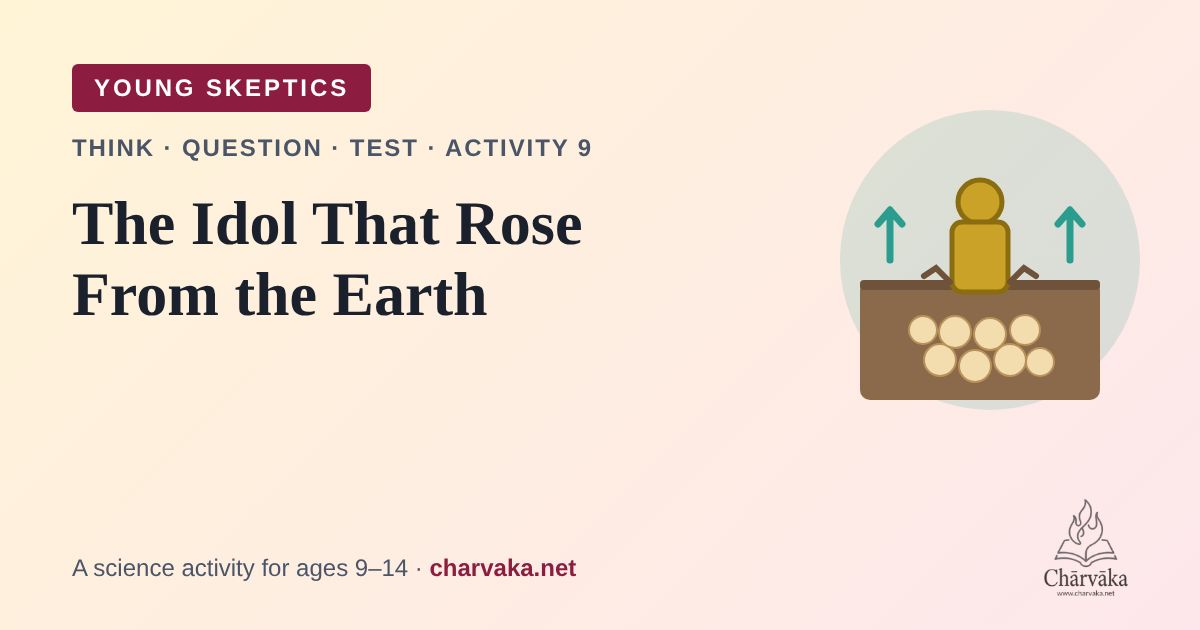
The Idol That Rose From the Earth
A holy man dreams that an idol will rise from the earth. Prayers begin, water is sprinkled; days later, the idol pushes up through the soil as donations pour in. With chickpeas, a cup and soil, recreate the “miracle” and discover what was hidden underneath. A Young Skeptics activity for ages 9–14. Try the activity…
-
HOLY ASH FROM AN EMPTY HAND!
A holy man waves his empty hand, rubs his fingers, and sacred ash pours into a devotee’s palm. His followers call it a miracle. Where was the ash hiding? Make a secret pellet, learn the trick Abraham Kovoor used to expose godmen, and test it. A Young Skeptics activity for ages 9–14. Try the activity…
-
Bending SpoonsWith Mind Power?
A performer strokes a spoon, stares hard, and slowly it bends. He says his mind is doing it. Spoon bending once amazed television audiences around the world. Learn two simple ways to make a spoon seem to bend, and the test that stops the trick. A Young Skeptics activity for ages 9–14. Try the activity…
-
The Magic Banana: Sliced by a Jinn?
In September 2026, a “healer” in Malappuram auctioned a banana that a jinn had sliced inside without cutting the peel. Then villagers brought their own banana. Learn the trick with a toothpick, and the simple test that made the magic disappear. A Young Skeptics activity for ages 9–14, with a printable worksheet. Try the activity…
-
The 1995 Milk Miracle:Can a Statue Drink?
On 21 September 1995, statues across India seemed to drink milk, and millions queued to watch. Where did all the milk really go? With a spoon, a white figure and a little colour, solve the mystery that fooled a whole nation. A Young Skeptics activity for ages 9–14, with a printable worksheet. Try the activity…
-
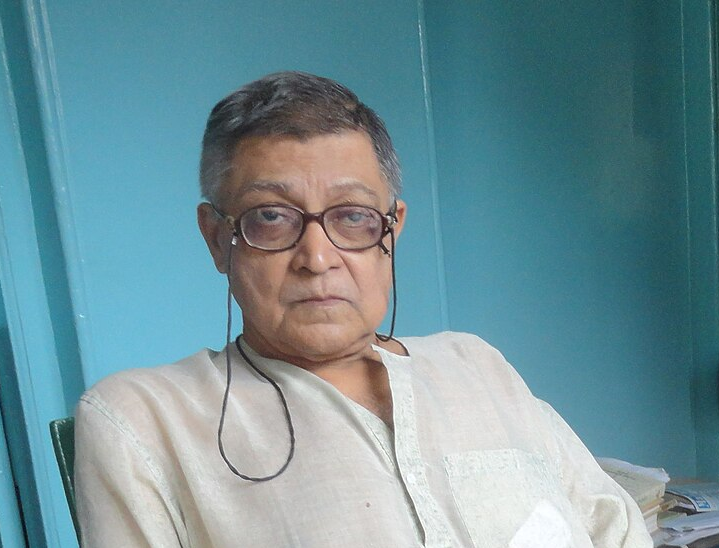
Ramkrishna Bhattacharya
A Marxist in Search of Indian MaterialismRationalist-Marxist scholar Ramkrishna Bhattacharya dedicated his life to rescuing ancient Indian materialism from historical distortions and orthodox dogma. Uncovering authentic Cārvāka aphorisms and tracing rationalist traditions through the Bengal Renaissance, his accessible writing and rigorous scholarship remain a powerful defense against irrationality, myth-making, and intellectual subjugation in contemporary society.
-
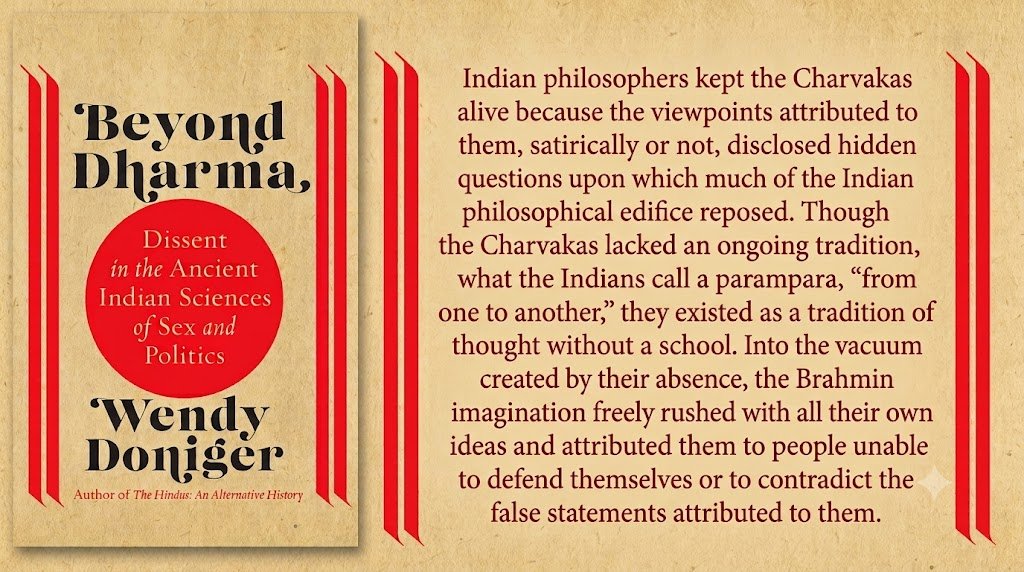
Charvaka and the Tradition of Dissent
A Review of Wendy Doniger’s Beyond DharmaBy reading Beyond Dharma through a skeptical and rationalist lens, the reviewer reframes Wendy Doniger’s survey of dissent into a focused study of Indian materialism. What Doniger treats as an intriguing chapter becomes, in this review, the logical culmination of ancient skepticism—where practical statecraft and pleasure give way to radical epistemology.
-
Ramar’s Herbal Petrol:Oil From Leaves?
In 1996, a man in Tamil Nadu claimed he could turn leaves and water into petrol, and even ministers watched his show. Using cooking oil, a straw and a little butter, recreate his trick safely, and learn the test that exposed it. A Young Skeptics activity for ages 9–14, with a worksheet. Try the activity…
-
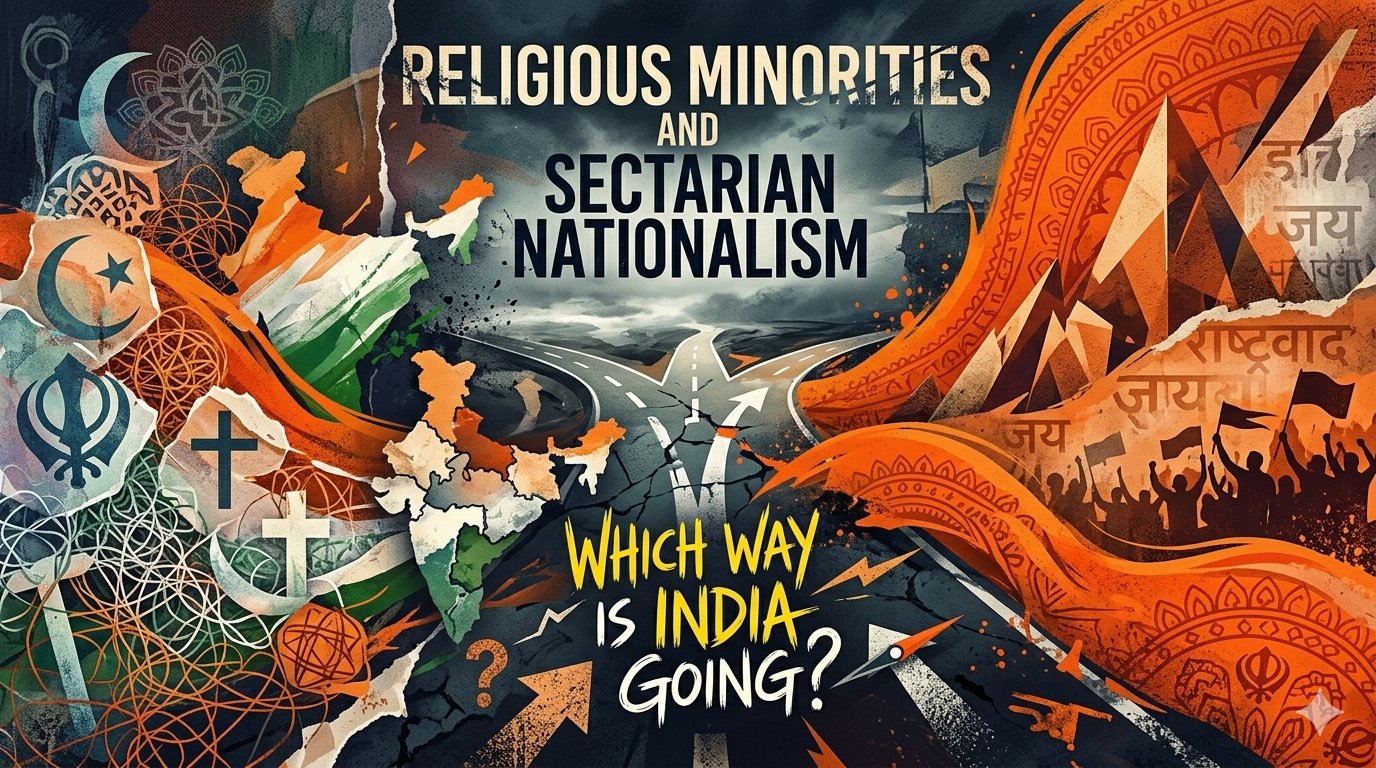
Religious Minorities and Sectarian Nationalism: Which Way is India Going?
As RSS chief Mohan Bhagwat concludes his international tour praising Hindutva’s inclusive vision, a stark reality unfolds at home. From systematic voter disenfranchisement and anti-conversion laws to target-driven violence against Christians and Muslims, state actions tell a very different story. Can Hindutva truly embrace India’s rich pluralism, or is “diversity” merely an ornamental slogan?
-
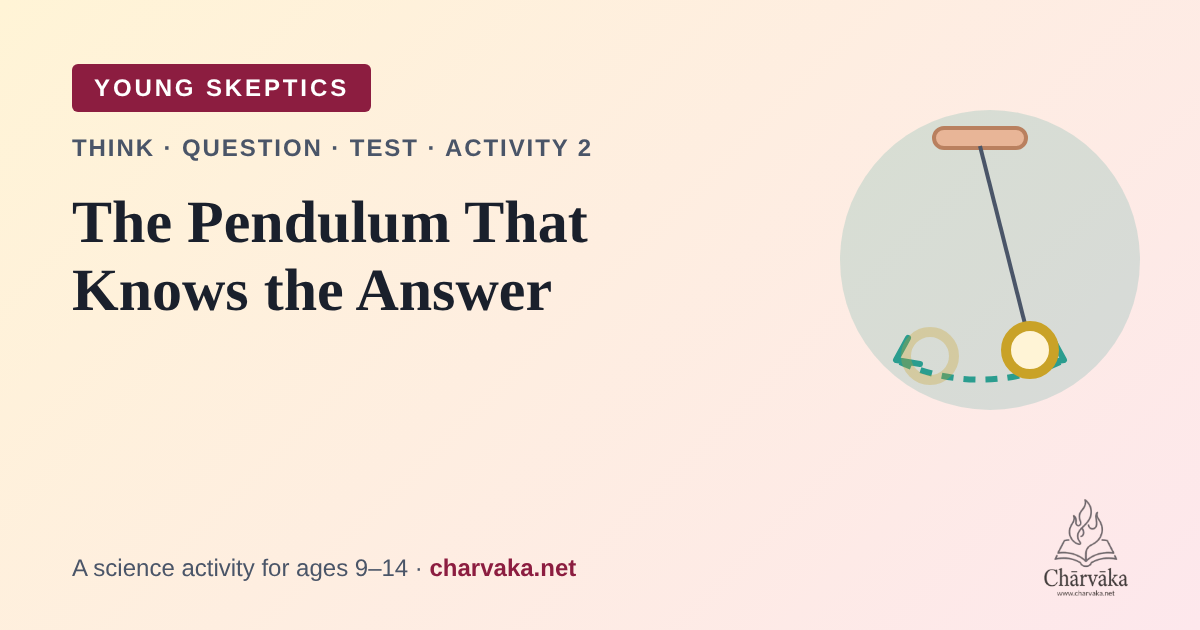
The Pendulum That Knows the Answer
A ring on a thread swings “yes” or “no”. People use it to find lost things, choose medicines and even predict a baby’s sex. Nobody seems to push it. So who does? With a thread, a ring and a blind test, discover the surprising answer. A Young Skeptics activity for ages 9–14. Try the activity…
-
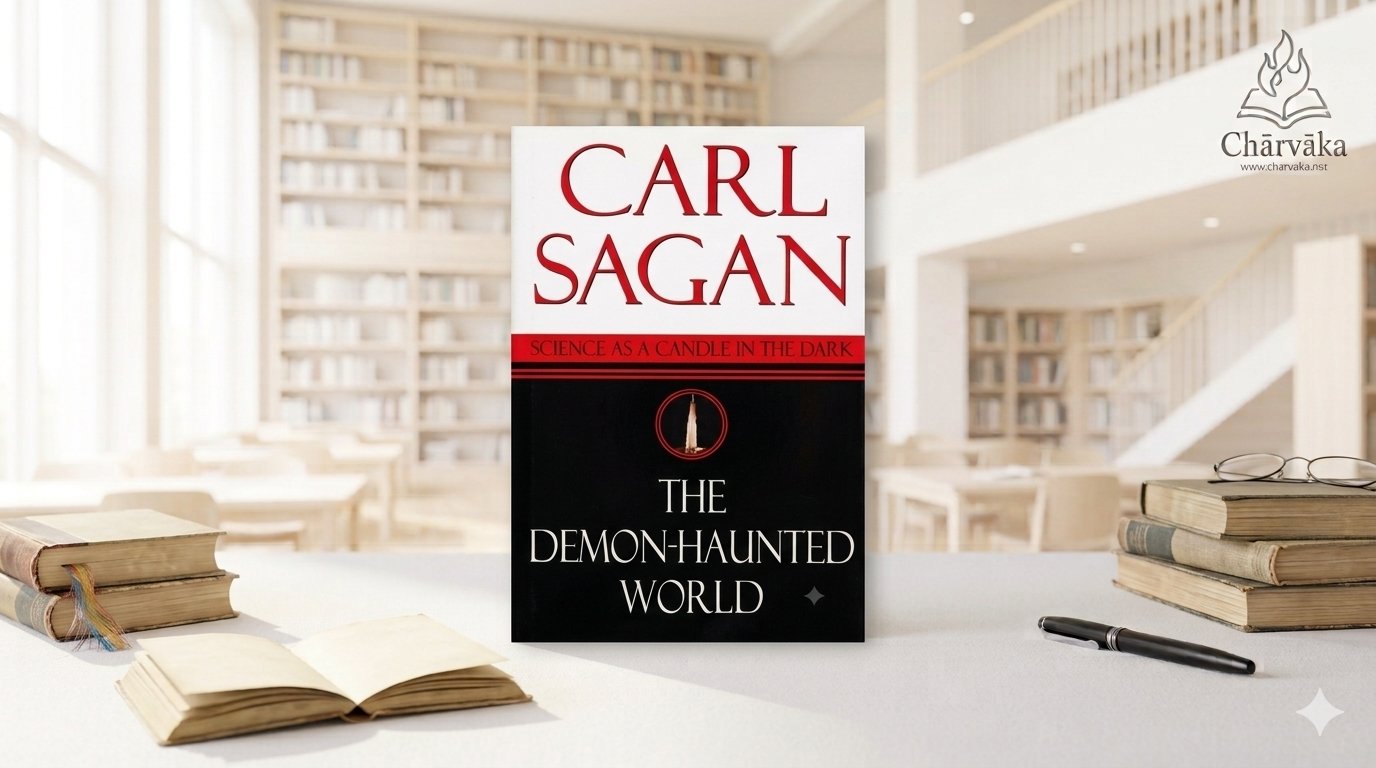
An Activist’s Guide to The Demon-Haunted World
Carl Sagan’s 1995 masterwork, The Demon-Haunted World: Science as a Candle in the Dark, stands as one of the most vital manifestos for critical thinking ever written. While framed around scientific skepticism, its message is profoundly radical: without the tools to spot deception, question authority, and resist pseudoscience, a society cannot remain free.
-
The Balloon That Won’t Burst
A man hands out balloons and needles, and every balloon goes BANG. Then he slowly pushes a needle into his own balloon, and nothing happens. “My mind protects it,” he says. Can you find his secret and do the trick yourself? A Young Skeptics activity for ages 9–14, with a printable worksheet. Try the activity…
-
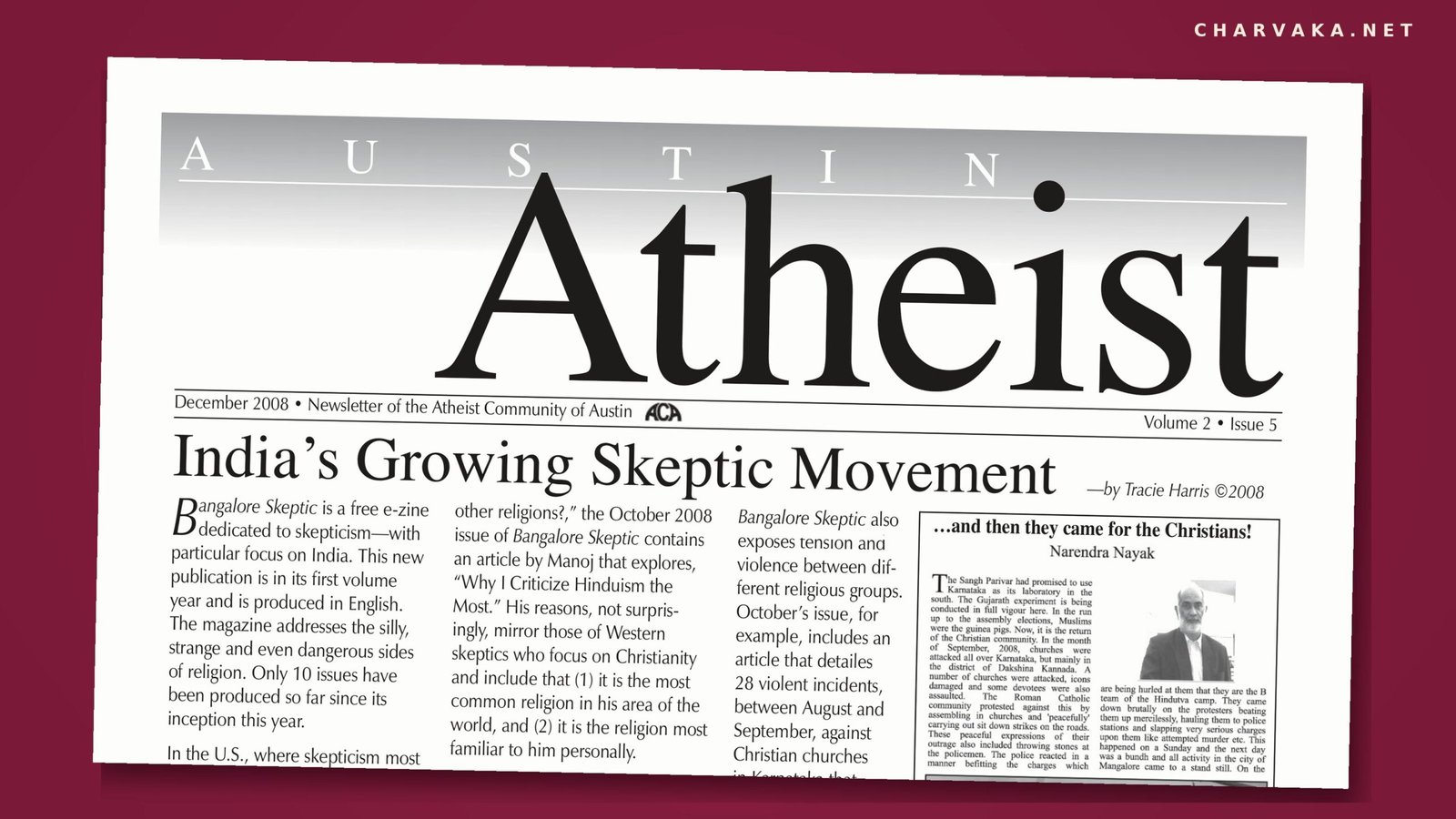
India’s Growing Skeptic Movement
Tracie Harris’s “India’s Growing Skeptic Movement,” first published in the Atheist Community of Austin’s newsletter in December 2008, is reproduced here as an important archival document on India’s rationalist movements. Cited in Johannes Quack’s Disenchanting India, it offers a valuable outsider’s snapshot of Indian skepticism and of Bangalore Skeptic, this website’s forerunner.
-
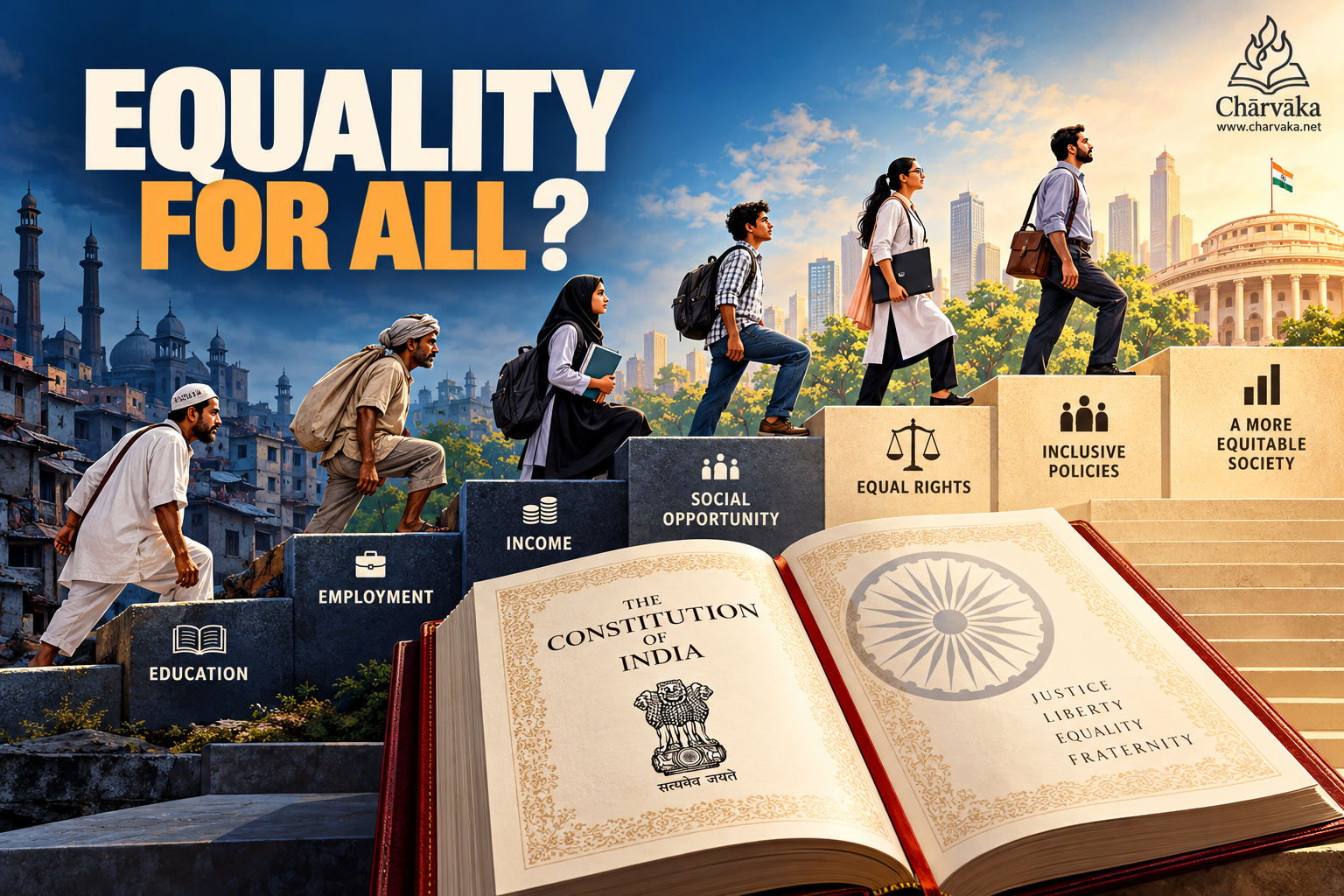
Economic Condition of Religious Minorities: Quota or Affirmative Action
Muslims in India continue to face economic deprivation, social exclusion and the consequences of communal violence. A new report proposes a religion-neutral approach to affirmative action, focusing on caste, occupation and socio-economic disadvantage. Can the recommendations overcome political resistance and help build a more equitable society rooted in constitutional values and social justice?
-
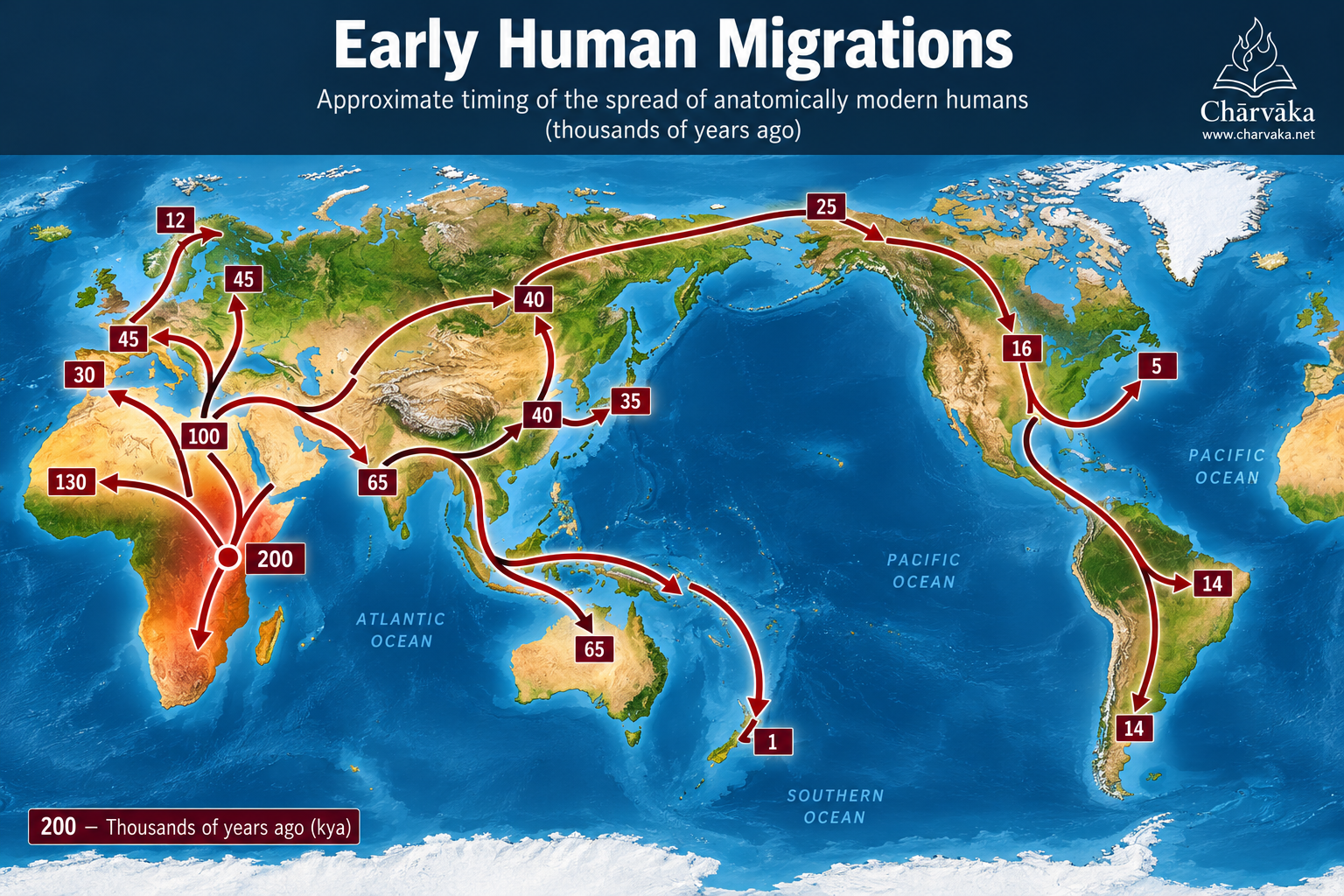
To whom does this land belong?
As new archaeological discoveries and DNA genetics reshape ancient history, politicians rush to claim native roots while weaponizing the “firstcomer” myth. From ancient iron tool discoveries to migrant pastoralist waves, modern science shatters sectarian narratives. Digging into the past for political dominance ignores who we actually are today.
-
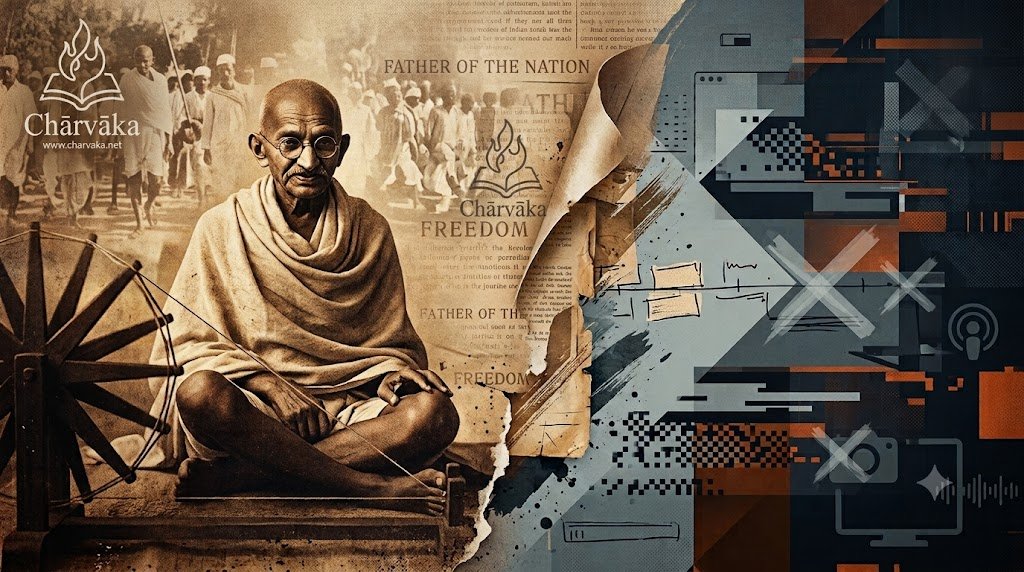
Undermining Gandhi’s Legacy: Reflections on Martyrdom Day
In an era where systematic efforts attempt to erase Mahatma Gandhi’s monumental role in shaping a united India, this essay critically examines recent distortions around his legacy. From historical revisionism to ideological attacks, explore how his vision of secularism and mass consciousness built the foundation of an independent nation.
-

Cārvāka Miscellany – Part II
Like Presocratic Greece, Indian materialism must be reconstructed from textual fragments found across philosophical and non-philosophical works. Expanding on earlier pre-Cārvāka sources, Ramakrishna Bhattacharya examines further instances: Patañjali’s anti-Vedic tradition, rationalism in the Purāṇas, Jābāli’s proto-materialism, the reception of Cārvāka/Lokāyata in modern Indian literature, and Lokāyata in Jain texts and the Rājataraṅgiṇī.
-
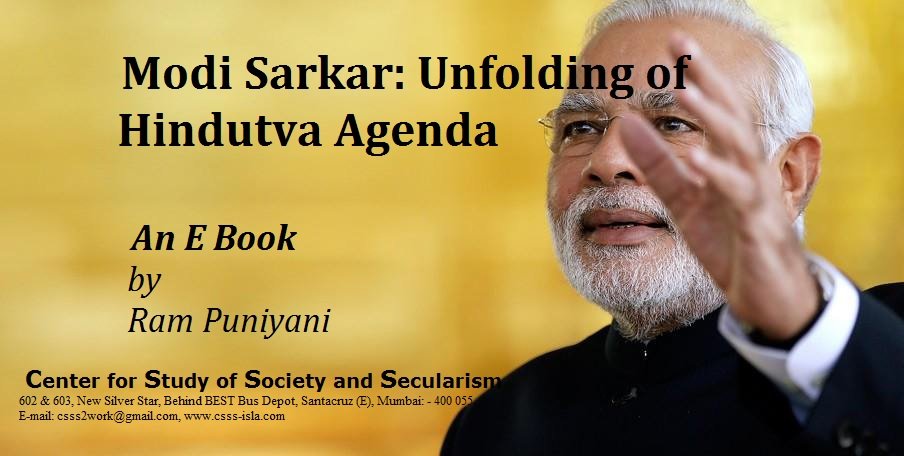
Modi Sarkar: Unfolding of Hindutva Agenda
Ram Puniyani’s new e-book offers a critical assessment of the Modi administration’s initial tenure. It contrasts political rhetoric with reality, detailing economic shortcomings, rising social intolerance, and the RSS-led push for Hindu nationalism, while highlighting the regime’s impact on India’s pluralist and democratic ethos. Click through to read the full analysis
-
Specimens of Philosophico-Religious Literature in Tamil: The Maṇimēkalai and the Nīlakēci
Ramkrishna Bhattacharya explores how ancient Tamil epics like the Maṇimēkalai and Nīlakēci document the spread of northern heterodox philosophies into South India. Challenging notions of historical harmony, the article examines intense debates surrounding early Buddhism, Jainism, and materialism, highlighting how southern thinkers transformed these imported traditions into vibrant intellectual powerhouses.
-
Election Season and Return of Lord Ram
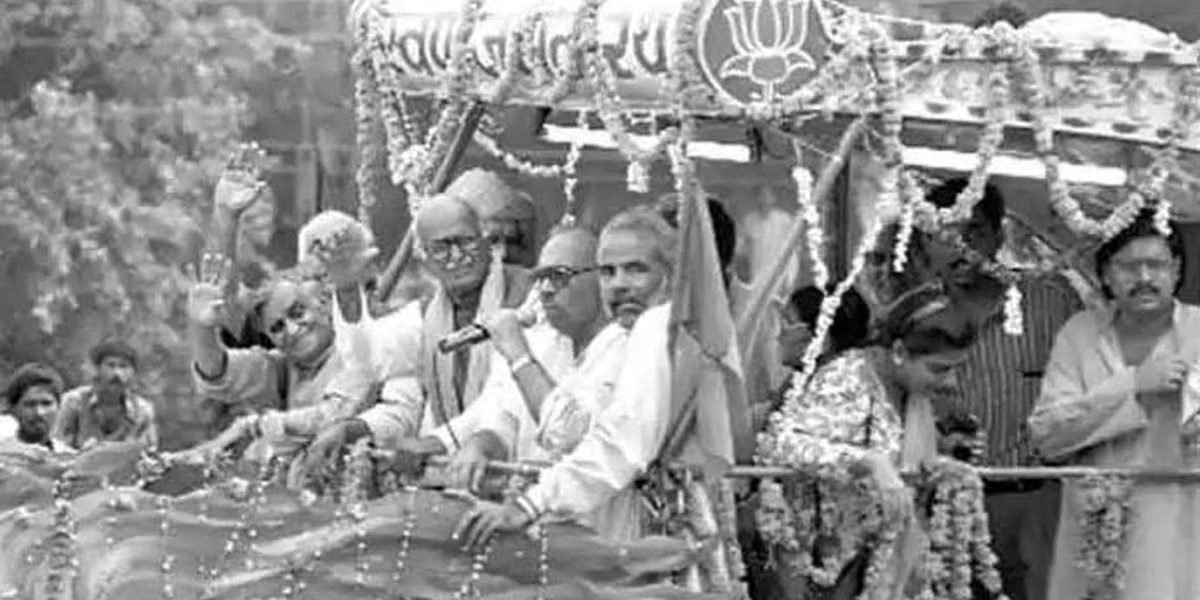
Discover how the BJP and RSS strategically deployed the Ram Temple issue and religious identity to polarize voters and consolidate political power. Highlighting the shift from socio-economic governance to emotive communal rhetoric, the piece demonstrates how this electoral strategy impacts India’s democratic values. Click through to read the complete analysis.
-
Confusions around the term Hindutva
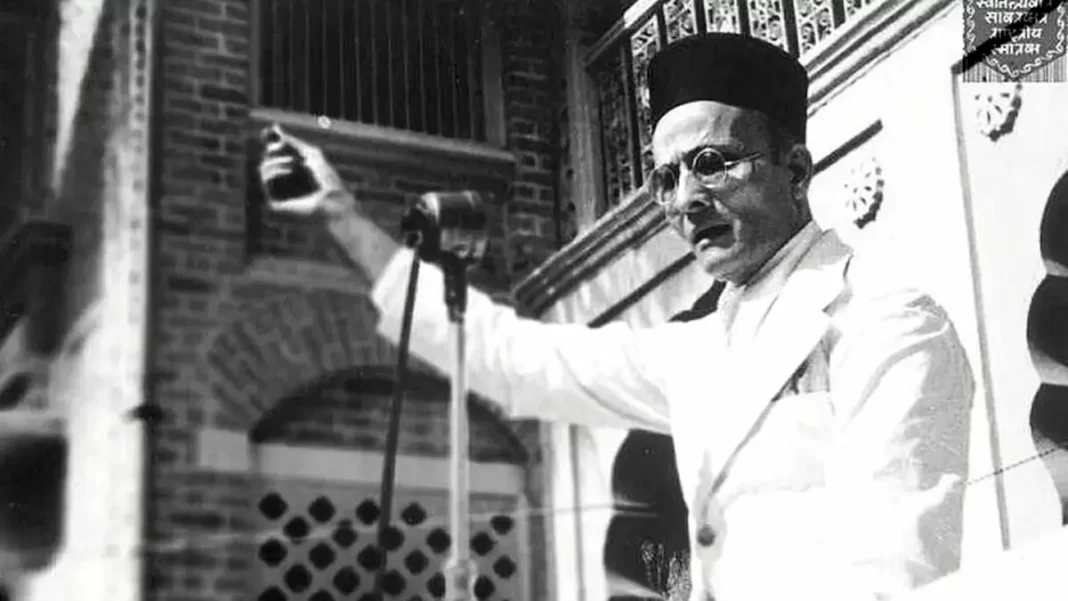
Is “Hindutva” a cultural way of life or a political tool altering India’s secular fabric? As the Supreme Court revisits its landmark rulings, this case presents a historic opportunity to reinforce constitutional secularism. Because Hindutva centres fundamentally on religion, strict separation of faith and politics is essential to safeguard the basic structure of Indian democracy.